
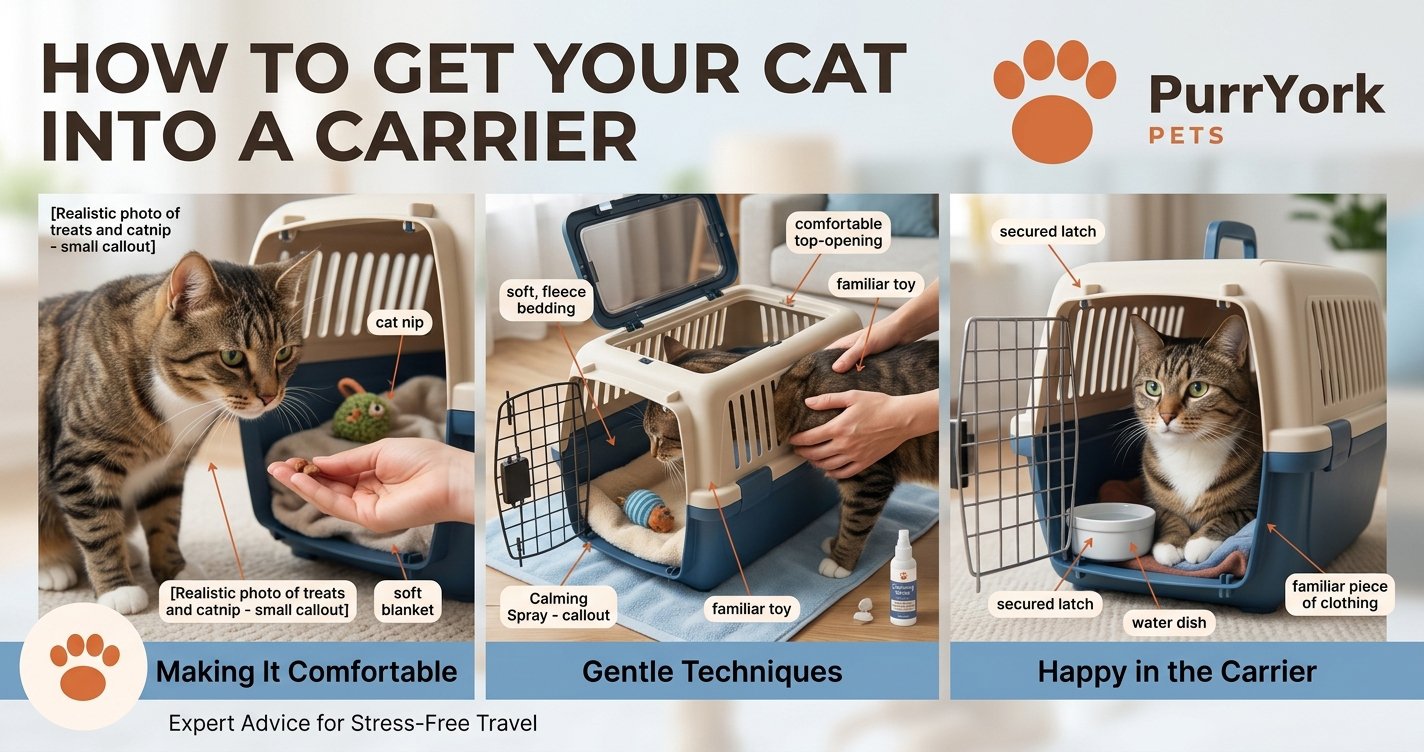
Does your cat disappear the moment the carrier comes out? You’re not alone. Many cats connect the carrier with an unpleasant trip, so seeing it can be enough to send them under the bed.
The kindest fix is to make the carrier a familiar, ordinary part of home before you need it. Go at your cat’s pace, reward small steps, and avoid turning carrier time into a chase. Veterinary guidance from the AAFP and ISFM recommends helping cats associate the carrier with positive experiences and enter it voluntarily.
If you’re still choosing a carrier, start with our complete cat-carrier buying guide.
Start Carrier Training Before You Need to Leave
Carrier training works best when there’s no rush to get out the door. Leave the carrier somewhere your cat likes to spend time, with the door secured open or removed if the model allows it. Put a familiar blanket inside and let your cat investigate without coaxing them in.
Keep the carrier out between practice sessions, too. The aim is for it to become familiar furniture, not a signal that a vet visit is coming.
Help Your Cat Build a Good Association
1. Let Them Investigate
Give your cat time to sniff and walk around the carrier. If they only approach it at first, that’s a good start. Don’t push them inside or close the door behind them.
2. Add Treats or a Favorite Toy
Place a treat near the carrier, then move it just inside when your cat seems comfortable. You can also use a favorite toy or feed a few treats near the entrance. Let your cat choose whether to go further in.
3. Reward Small Steps
If your cat puts their head inside, steps in with their front paws, or walks all the way in, reward them with something they enjoy. Keep practice sessions short and relaxed. If your cat seems worried, end the session and try an easier step another time.
4. Practice Closing the Door
Once your cat is comfortable resting inside, close the door for a moment, then open it and reward them. Gradually leave it closed for a little longer. If your cat becomes tense or tries to escape, open the door and return to an easier step.
5. Add Short, Calm Practice Trips
When your cat is relaxed with the closed carrier, lift it briefly and set it down. Later, practice walking a few steps or sitting in a parked car before attempting a short drive. Keep the carrier stable and follow its instructions for safe use.
Cats Protection also advises leaving an open carrier in a quiet area and letting the cat explore it at their own pace. Read its carrier guidance for more ideas.
On the Day You Need to Go
- Give yourself extra time, so you can stay calm.
- Put a familiar blanket inside the carrier.
- Bring the carrier into a small, quiet room with few hiding places.
- Keep the carrier steady and open while you invite your cat in with a treat or toy.
- Once your cat is inside, close and secure the door before lifting the carrier.
- Covering the carrier with a light towel may help some cats feel more settled, as long as there is good airflow and your cat isn’t overheating.
If your cat is already frightened, avoid chasing them around the house. A chase can make the carrier feel even scarier. If you need to transport your cat urgently and can’t safely get them in, call your veterinary clinic for advice.
If Your Cat Won’t Go In
Try a Top-Opening or Removable-Top Carrier
Some cats find it easier to enter a carrier from above or to be examined in a carrier with a removable top. When buying, check that the model is secure and suitable for your cat’s size. Our guides to large cat carriers and hard-sided carriers can help you compare designs.
Ask Your Veterinarian About Severe Travel Anxiety
If your cat panics, becomes aggressive, or cannot be transported safely despite gradual practice, talk with your veterinarian. They can help you plan low-stress handling and discuss whether prescription medication is appropriate for your cat. Don’t give your cat human medication or use a sedative unless your veterinarian specifically directs you to.
Consider a Towel Only if Needed
For an urgent trip, a towel may help you calmly guide a frightened cat into a carrier, but it’s not a substitute for training and may not suit every cat. If handling your cat this way increases their distress or puts either of you at risk, pause and call your veterinary team for help.
Frequently Asked Questions
How long does it take to train a cat to use a carrier?
There’s no fixed timeline. It depends on your cat’s comfort and past experiences. Practice a little at a time and move on only when your cat is relaxed with the current step.
Should I leave the carrier out all the time?
If you have room, yes. Leaving it open with familiar bedding can help it feel like an ordinary resting place rather than something that only appears before travel.
Should I feed my cat inside the carrier?
You can offer treats or food inside if your cat is comfortable approaching it. Start near the entrance and move it farther in gradually. Don’t withhold food to make your cat enter.
What if my cat hides as soon as the carrier appears?
Put the carrier away between trips and reintroduce it gradually during calm times. Start with it visible at a comfortable distance, then build positive associations with treats or play.
Can I put my cat in the carrier backward?
Some carriers and cats may make this easier, but avoid wrestling or forcing your cat. Choose a calm method that works with the carrier’s design, and ask your vet for guidance if your cat is difficult to handle safely.
What kind of carrier should I buy?
Choose one that is sturdy, secure, appropriately sized, and easy for you to carry. For air travel, check the airline’s current rules before buying; requirements vary. Our guide to airline-friendly cat carriers can help you compare options, but the airline’s own policy is the final check.
Final Thoughts
Make the carrier part of everyday life: leave it open, add familiar bedding, and reward your cat for investigating it. Build up gradually from sniffing to stepping in, resting inside, and brief closed-door practice.
Some cats need more time or extra help, and that’s okay. If travel remains very stressful or you can’t safely get your cat into the carrier, ask your veterinarian for a plan that suits your cat.
1 thought on “How to Get Your Cat Into a Carrier”