
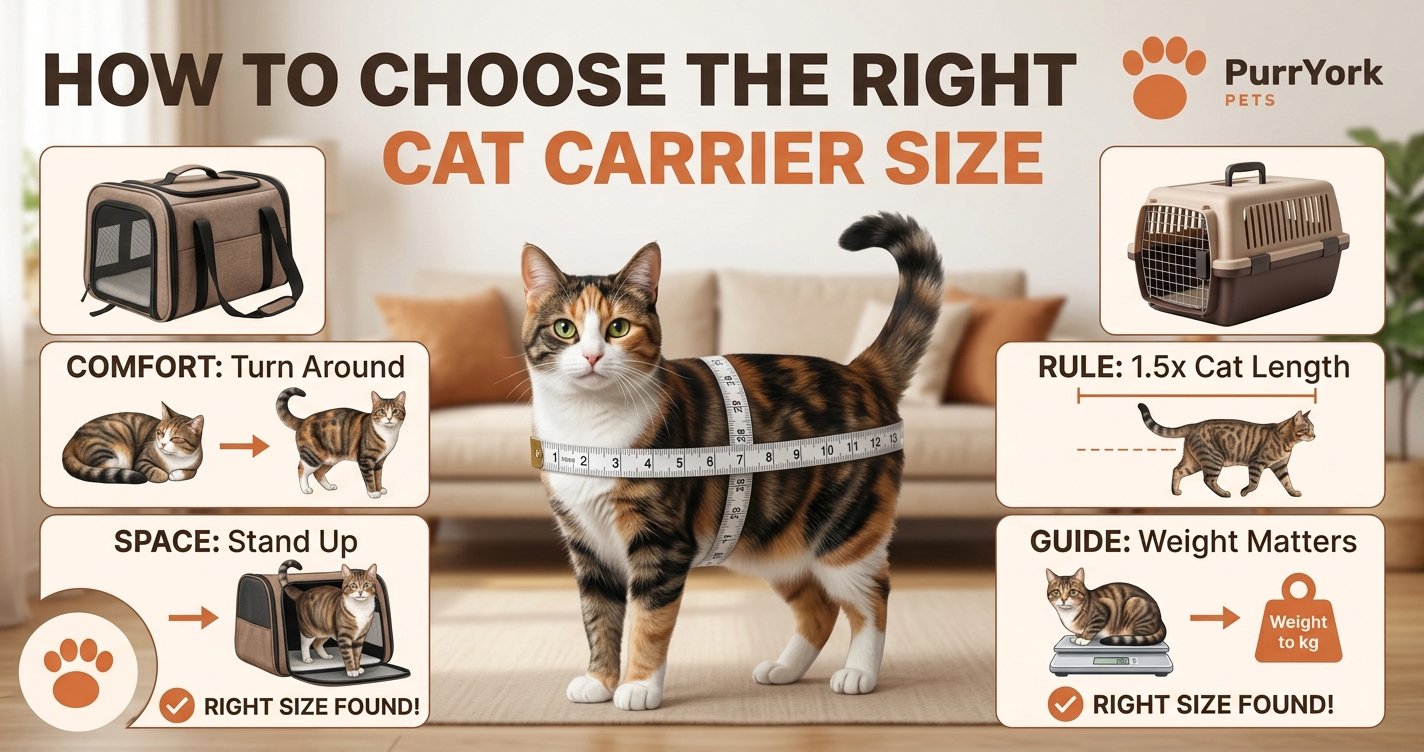
Choosing a carrier can feel tricky: you want your cat to have room to move, but a carrier that’s awkward to carry or doesn’t fit your trip won’t be much help. Start with your cat’s measurements, then check the carrier’s interior dimensions and try a few simple fit checks.
For everyday trips, a suitable carrier should allow your cat to stand, turn around, sit, and lie down comfortably. The American Animal Hospital Association recommends looking for enough room to do those things, along with good ventilation and easy cleaning. If you’re comparing carrier styles, see our complete cat-carrier buying guide.
How to Measure Your Cat
Use a soft measuring tape and measure your cat while they’re standing naturally. If your cat finds this stressful, try when they’re relaxed or ask someone to help.
- Length: Measure from the tip of the nose to the base of the tail.
- Height: Measure from the floor to the top of the head or ears, whichever is higher.
- Width: Check the widest part of your cat’s body, often across the shoulders or hips.
These measurements help you compare your cat with a carrier’s usable inside space. Don’t rely on the carrier’s exterior dimensions: thick walls, padding, and the door may reduce the room inside.
Check the Fit Before You Buy
Compare your cat’s measurements with the carrier’s interior, then check that your cat can:
- Stand without being forced into a crouch.
- Turn around without getting wedged.
- Sit and lie down in a comfortable position.
- Enter and exit without squeezing through an awkwardly small opening.
A quick way to check is to have your cat try the carrier at home, if returns and the carrier’s packaging allow it. Add the bedding you plan to use, then make sure it doesn’t take away too much headroom or floor space.
Choose a Carrier for the Trip
Everyday Trips
For a vet visit or a short car ride, look for a secure carrier that is easy to carry and clean. A removable top or an additional opening can make it easier for your cat to enter and may let a vet examine them while they stay in the carrier’s base.
Our guides to hard-sided cat carriers and soft-sided cat carriers compare different styles.
Air Travel
Don’t assume a carrier that fits your cat will automatically meet airline rules. Cabin carriers may need to fit under the seat, and size limits and other requirements vary by airline. Check the airline’s current pet policy before buying and confirm the dimensions they allow.
The International Air Transport Association advises that a travel container allow an animal to turn around while standing, stand and sit fully, and lie in a natural position. IATA also notes that airlines and countries may have additional requirements. Compare options in our guide to airline-friendly cat carriers, then check the rules for your specific trip.
Larger Cats
For a larger cat, compare the carrier’s interior length, width, height, and weight limit—not just the size label. Check that the opening is wide enough for your cat to enter comfortably. See our picks for cat carriers for large cats.
Signs a Carrier May Be the Wrong Size
The carrier may be too small if your cat can’t turn around, must stay hunched, or can’t lie down comfortably. It may not be suitable for the planned trip if it exceeds the airline’s dimensions or weight limit.
If it’s difficult for you to lift and secure the carrier, consider its total weight with your cat inside. A carrier that fits your cat but is unwieldy for you may be hard to manage safely.
Frequently Asked Questions
How much bigger should a carrier be than my cat?
There isn’t one simple measurement that works for every carrier. Check the interior size and make sure your cat can stand, turn around, sit, and lie down comfortably.
Should I buy a larger carrier so my cat has extra room?
Choose enough space for comfortable movement while keeping your cat secure. Think about how you’ll carry and secure it, and check any airline or travel requirements that apply.
Can two cats share one carrier?
For routine travel, use a separate carrier for each cat. A shared carrier can make it harder to keep both cats secure and comfortable, especially if one becomes frightened.
Does a cat carrier have to fit under an airplane seat?
For cabin travel, airlines set their own rules, including carrier dimensions. Check directly with the airline before buying or booking.
What if my cat hates the carrier?
Leave it open at home with familiar bedding and let your cat explore at their own pace. Add treats or a favorite toy if your cat enjoys them. For step-by-step help, see how to get your cat into a carrier.
Final Thoughts
Measure your cat, compare those measurements with the carrier’s interior, and check that your cat can move comfortably. Then consider how you’ll carry the carrier and whether your trip has additional size, weight, or design requirements.
For help comparing styles, browse our complete cat-carrier buying guide.
4 thoughts on “How to Choose the Right Cat Carrier Size”