
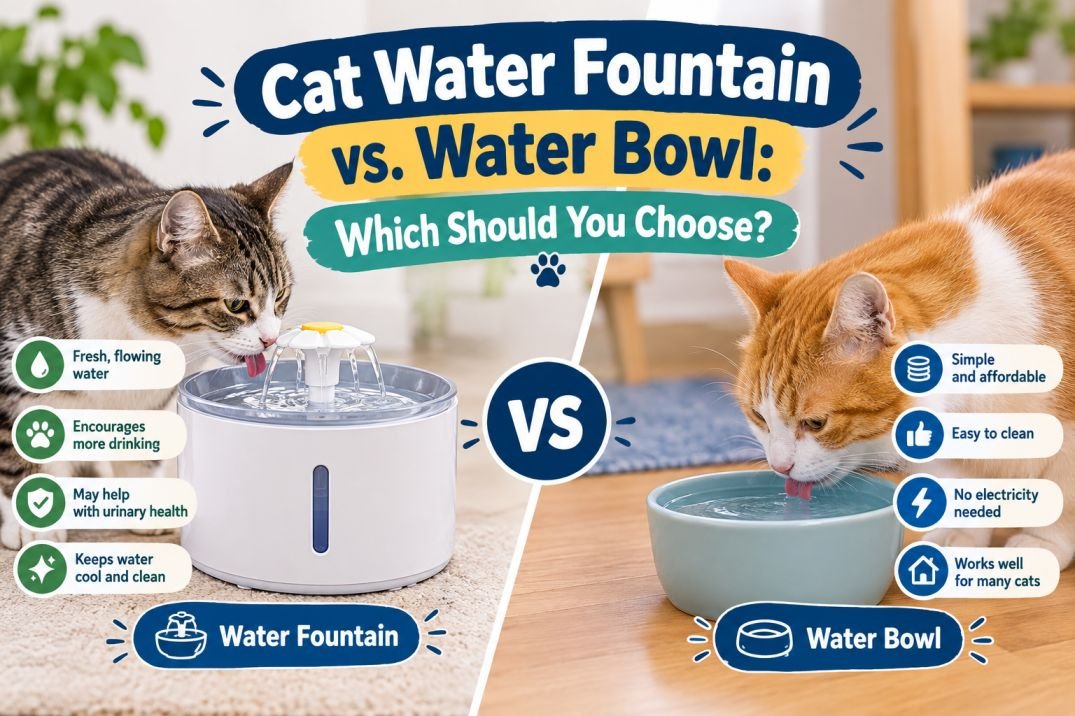
A cat water fountain keeps water moving, while a bowl is simple, quiet, and easy to clean. Neither is automatically better for every cat. Some cats are curious about flowing water; others avoid the pump noise or prefer a familiar, still dish. The right choice is the one your cat will use consistently and that you can keep clean.
This guide compares fountains and bowls, explains what matters for hygiene and placement, and offers a low-pressure way to find your cat’s preference. A fountain can be one way to make water appealing, but it is not a substitute for fresh water, suitable food, or veterinary care.
This post contains affiliate links. As an Amazon Associate, PurrYork Pets earns from qualifying purchases at no extra cost to you. See our Affiliate Disclosure for details.
Quick Answer
- Choose a bowl if your cat drinks comfortably from one and you want a quiet, low-maintenance option.
- Try a fountain if your cat shows interest in running water, or if you want to test whether movement encourages more drinking.
- Offer both if you are unsure. Keep the familiar bowl available while your cat gets used to the fountain.
- In a multi-cat home, provide multiple water locations. One fountain may be guarded or avoided by a cat who feels crowded.
There is no universal winner: individual cats have different preferences, and some cats do not drink more from a fountain. Cornell’s Feline Health Center recommends accessible fresh water and notes that some cats increase their intake with fountains, while preferences vary.
Cat Water Fountain vs. Water Bowl at a Glance
| Feature | Water bowl | Water fountain |
|---|---|---|
| Water movement | Still water | Circulating or flowing water, depending on the design |
| Noise | Silent | Pump and water sounds vary by model and water level |
| Daily care | Refresh water and wash the bowl regularly | Check the water level, refresh as needed, and clean the basin and pump as directed |
| Ongoing costs | Usually minimal | May need replacement filters and pump parts |
| Power | None | Most models need electricity or batteries |
| Best fit | Cats who prefer still water or owners who want simple care | Cats who are interested in moving water and owners comfortable with extra maintenance |
Benefits of a Water Bowl
Simple to use and maintain
A bowl does not need a pump, cord, or filter. You can quickly pour in fresh water, wash the dish, and put it back. This simplicity makes bowls useful as a primary water source and as a backup if a fountain loses power or needs cleaning.
Quiet and familiar
Some cats are wary of motor sounds, splashing, or unfamiliar objects. A still bowl may feel more predictable, especially for shy cats or those who have always drunk from a dish.
Easy to place in several locations
It is inexpensive to set up multiple bowls in quiet, accessible areas. Separate water stations can help cats avoid crowding and give a cat more choices around the home. Cornell recommends making fresh water easy to access and avoiding conflicts that prevent a cat from reaching it.
Bowls still need regular cleaning
Still water can collect food crumbs, dust, and hair. Wash the dish with soap and water regularly, rinse away residue, and refill it with fresh water. VCA recommends keeping water fresh and cleaning bowls daily to reduce buildup.
Benefits of a Cat Water Fountain
Moving water may interest some cats
Some cats investigate running water from faucets or fountains. The movement, sound, or stream may make water more appealing to an individual cat. That response is not guaranteed, so observe your cat rather than assuming a fountain will increase their intake.
A fountain can keep water circulating
Most electric fountains continuously move water through a pump and filter while they are running. The filter may capture some hair and debris, depending on the design. It does not make the fountain self-cleaning: the reservoir, drinking surface, pump, and filter still need care.
Some models offer larger reservoirs
A larger reservoir can mean fewer top-ups, especially in a home with more than one cat. It does not mean the water can be left unchanged indefinitely. Check the level each day and follow the maker’s cleaning and filter schedule.
Fountains add parts and maintenance
Fountains need assembly, a suitable power source, and regular disassembly for cleaning. Hair and residue can build up around the pump, and a low water level may make some pumps noisier. Replacement filters and pump parts may add to the ongoing cost. If those tasks are difficult to keep up with, a clean bowl may be the better everyday option.
Which One Should You Choose?
A bowl may be the better choice if:
- Your cat already drinks well from a bowl.
- Your cat is sensitive to new sounds or objects.
- You want the simplest option to wash and refill.
- You need several water stations in different rooms.
- You do not want to manage a pump, filter replacements, or a power cord.
A fountain may be worth trying if:
- Your cat seeks out faucets or other moving water.
- Your cat is curious about the fountain and approaches it voluntarily.
- You would like to see whether a different water presentation suits your cat.
- You are comfortable cleaning the pump and replacing filters as directed.
- The fountain can be placed where the cord and unit are secure and out of the way.
In a multi-cat household
Do not make one fountain the only water source if cats compete or avoid one another. Set up separate water stations around the home so a cat can drink without passing a housemate who blocks access. Cat Friendly Homes suggests providing at least one water bowl per cat, plus an extra, and placing water in quiet locations.[^3] A fountain can count as one station, but it does not replace the benefit of separate access points.
How to Test a Fountain Without Pressuring Your Cat
- Keep the current bowl in place. Do not remove your cat’s familiar water source when introducing a fountain.
- Set the fountain in a calm spot. Keep it away from loud appliances, busy walkways, and the litter box. Choose a stable surface near a safe outlet if the model is corded.
- Let your cat investigate at their own pace. Allow sniffing and watching before switching the fountain on if the instructions permit. Never force a cat toward it.
- Watch for actual use. Look for relaxed visits and drinking, not just a brief paw at the water or a startled approach.
- Keep both options available. If your cat uses the fountain, continue offering a clean bowl too, especially during the transition.
- Compare over time. Notice whether the water level changes, but remember that evaporation and splashing also affect it. In a multi-cat home, a shared fountain cannot tell you which cat drank.
- Stop if it causes stress. If the cat avoids the area or seems frightened by the pump, switch it off and keep the bowl available.
How to Keep Either Option Clean
- Refresh water regularly. Top up with fresh water and discard water that has visible debris, food, or an unusual smell.
- Wash bowls often. Use soap and water, rinse thoroughly, and avoid leaving a slippery film.
- Follow the fountain manual. Take apart and clean the reservoir, drinking surface, and pump as often as the maker specifies. Replace filters on schedule; a filter is not a replacement for washing.
- Keep a backup bowl. Use one while cleaning a fountain or during a power interruption.
- Check materials and access. Choose a bowl or fountain that is stable, easy for your cat to reach, and practical for you to clean.
Will a Fountain Make My Cat Drink More?
It may encourage some cats to drink, but it will not work for every cat. A fountain does not guarantee better hydration, and a cat eating wet food may get a substantial amount of water from its meals. Cornell notes that canned food can contain a high proportion of water, so cats eating it may drink less directly than cats eating dry food.
Make fresh water available at all times. If your cat’s drinking or urination changes noticeably, or you are worried about dehydration, contact your veterinarian. A change in thirst can have medical causes; a new fountain is not a diagnosis or treatment.
Frequently Asked Questions
Are water fountains more hygienic than bowls?
Not automatically. A fountain’s filter may trap some debris, but the pump, reservoir, and drinking surface still need regular cleaning. A frequently washed bowl can be a hygienic choice; a neglected fountain can collect residue.
Can I leave a fountain running all day?
Follow the manufacturer’s instructions. Many fountains are designed for continuous operation, but they need enough water to protect the pump and should be unplugged for cleaning. Keep the water level within the marked range.
Should the water bowl be next to my cat’s food?
Preferences differ. Try placing water in a quiet location separate from the litter box, and observe whether your cat prefers it near or away from food. VCA recommends a quiet spot and keeping water away from the litter box.[^2]
What if my cat drinks from neither the fountain nor the bowl much?
First make sure fresh water is easy to reach and that another pet is not blocking access. Food moisture also contributes to total water intake. If intake seems low or has changed, call your veterinarian for advice instead of relying on a fountain to fix the problem.
Final Verdict
Choose the water source your cat uses and that you can keep clean. A bowl is quiet, low-cost, and easy to place in multiple locations. A fountain is worth trying for a cat attracted to moving water, provided you are ready for pump and filter maintenance. When in doubt, offer both and let your cat show you what they prefer.
For model recommendations, see our Best Cat Water Fountains (2026): The Complete Buying Guide and Top 5 Best Cat Water Fountains for Multiple Cats (2026).