
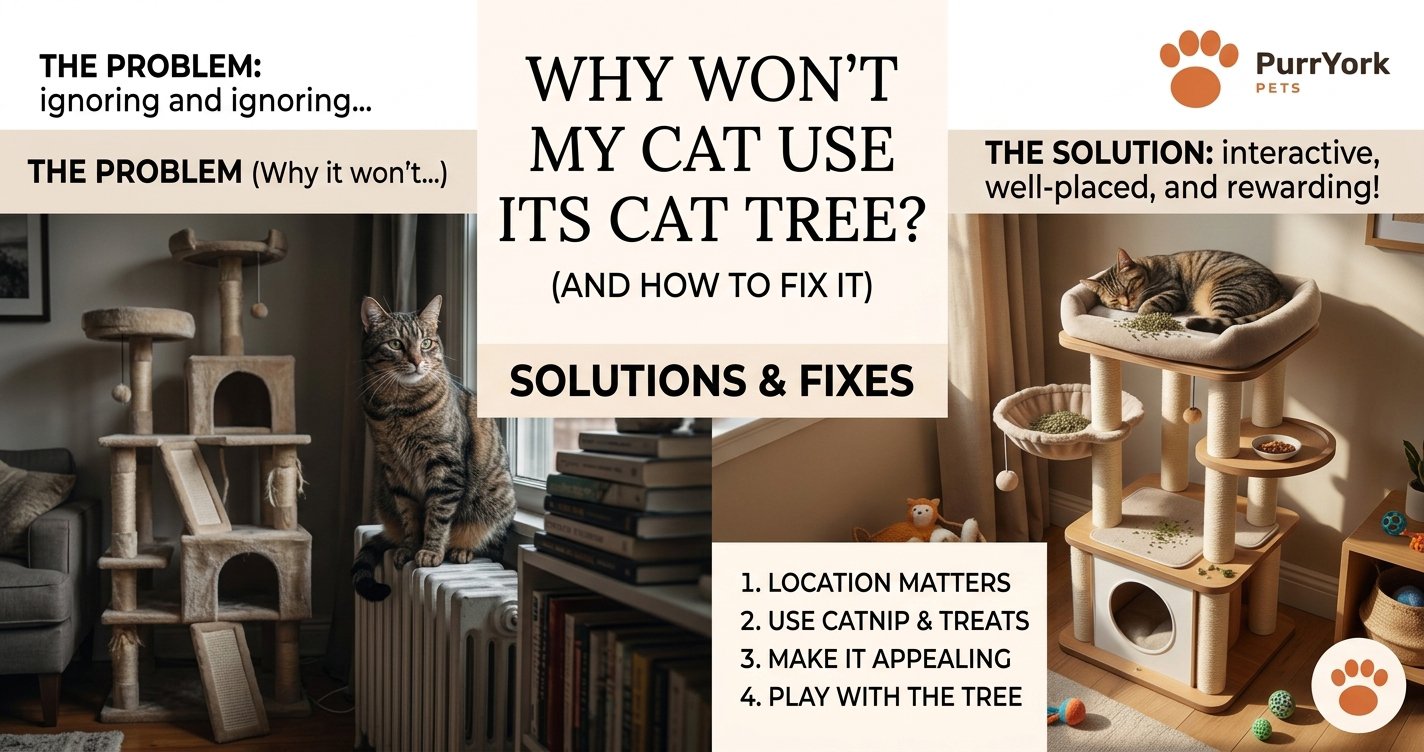
You picked out a cat tree, brought it home, and your cat gave it one sniff before going back to the couch. It happens. Cats can be particular about where they climb, rest, and scratch, and a new piece of furniture may take time to feel familiar.
Try not to place your cat on the tree or make them use it. Instead, look at what might be putting them off and let them explore at their own pace. Elevated resting spots can give cats a place to observe their surroundings, but a cat tree is only one way to offer vertical space. AAFP and ISFM feline environmental guidelines emphasize giving cats suitable resting, hiding, scratching, and elevated spaces.
Why Your Cat Might Be Ignoring the Tree
It’s in the Wrong Spot
A tree tucked away in a quiet corner may not be where your cat wants to spend time. Cats often like to rest near the people, windows, or rooms they already enjoy.
Try moving it near a favorite resting spot or a window your cat watches. If your cat scratches a particular piece of furniture, put an appropriate scratching surface nearby. The VCA Animal Hospitals guide to scratching behavior notes that placement matters and that cats may prefer scratching surfaces in prominent areas or near places they already scratch.
It Wobbles or Feels Unsteady
A tree that shifts when your cat steps onto it can be unsettling. Check that it is assembled correctly, all connections are tight, and the base sits flat. If the tree wobbles or tips, keep your cat off it until you’ve fixed the problem. See our guide on how to stop a cat tree from wobbling or tipping.
The Layout Is Hard to Climb
The top perch might look like a lovely destination to us, but a kitten, senior cat, or cat with mobility concerns may find the route too steep or awkward. Look for reachable steps or platforms, a comfortable place to pause, and an easy way back down.
If the tree doesn’t suit your cat, compare other designs in our guides to small cat trees for apartments, cat trees for large cats, and tall cat trees for climbing cats.
The Scratching Surface Isn’t Their Favorite
Cats can prefer different scratching materials and positions. One may love vertical sisal; another may choose horizontal cardboard or a carpet-like surface. If your cat uses a different scratcher, try adding that preferred type near the tree.
The ASPCA’s scratching guidance recommends offering appealing scratching surfaces rather than forcing a cat to use one particular post.
The Tree Smells New
A new cat tree may smell strongly of packaging, fabric, or materials your cat hasn’t encountered before. Give it time to air out. You can place a familiar blanket or toy on a perch to make the area feel more recognizable.
Something Spooked Them
If the tree shifted, made a noise, or another pet approached while your cat was investigating it, they may be cautious about trying again. Give them room and avoid crowding the tree. A low-pressure approach can help rebuild a positive association.
How to Make the Cat Tree More Inviting
1. Let Your Cat Explore It Freely
Leave the tree in a place your cat can reach, then let curiosity do the work. Don’t carry your cat to the top or hold their paws against the scratching post. If they sniff or sit near it, that’s a fine first step.
2. Add Something Familiar
Place a favorite blanket or toy on a low perch. If your cat likes treats, set one near the base and later on an easy-to-reach platform. Keep the tree’s route open so your cat can leave whenever they like.
3. Try a Little Play
Use a wand toy to invite your cat to play near the tree, then let the toy move onto a low platform if your cat is interested. Keep the play relaxed; don’t try to lure them somewhere they seem nervous to go.
4. Reward Voluntary Use
When your cat chooses to approach, climb, rest, or scratch on the tree, offer a small treat, praise, or another reward they enjoy. The American Association of Feline Practitioners recommends rewarding desired behavior rather than forcing it.
5. Give It Time
There’s no deadline for a cat to accept a new tree. Keep it stable and accessible, and let your cat investigate in their own time. You may find they start using it when you’re not watching.
When to Consider a Different Tree
Sometimes your cat isn’t being stubborn; the tree just doesn’t suit them. Consider another design if:
- The tree remains unstable after assembly checks.
- Your cat can’t comfortably reach the platforms.
- Your cat prefers a different scratching angle or material.
- The tree is in a spot your cat rarely visits.
- Your cat needs more than one route to climb or descend.
Our complete guide to the best cat trees compares different styles. If you’re looking for a furniture-style option, see our guide to wood cat trees for indoor cats.
Frequently Asked Questions
How long does it take a cat to use a new cat tree?
It varies. Some cats explore right away, while others take longer. Let your cat set the pace and keep the tree available without pressuring them.
Should I put my cat on the tree?
It’s better to let your cat climb on their own. Being placed on a high or unfamiliar surface may make them feel trapped or uneasy.
Should I put catnip on the tree?
You can try it if your cat enjoys catnip, but it won’t appeal to every cat. A familiar blanket, favorite toy, or treat may work better.
Where should I put a cat tree?
Try a room your cat already enjoys, near a favorite resting spot or window. Keep the base stable and make sure the tree doesn’t block a walkway.
What if my cat uses the tree but won’t scratch it?
Offer a separate scratcher in the material and orientation your cat prefers. Place it near the furniture or area your cat already scratches, and reward voluntary use.
What if my cat suddenly stops climbing?
A sudden change in movement or behavior may have a health cause. Contact your veterinarian if your cat seems uncomfortable, avoids jumping in other situations, or has other changes in their behavior.
Final Thoughts
If your cat is ignoring the tree, start with the basics: check that it’s steady, move it somewhere your cat likes to spend time, and make the first step easy. Add familiar items, use play or treats if your cat enjoys them, and let them explore without pressure.
The right setup is the one your cat feels comfortable using—even if they start with the bottom perch.
1 thought on “Why Won’t My Cat Use Its Cat Tree? (and How to Fix It)”