
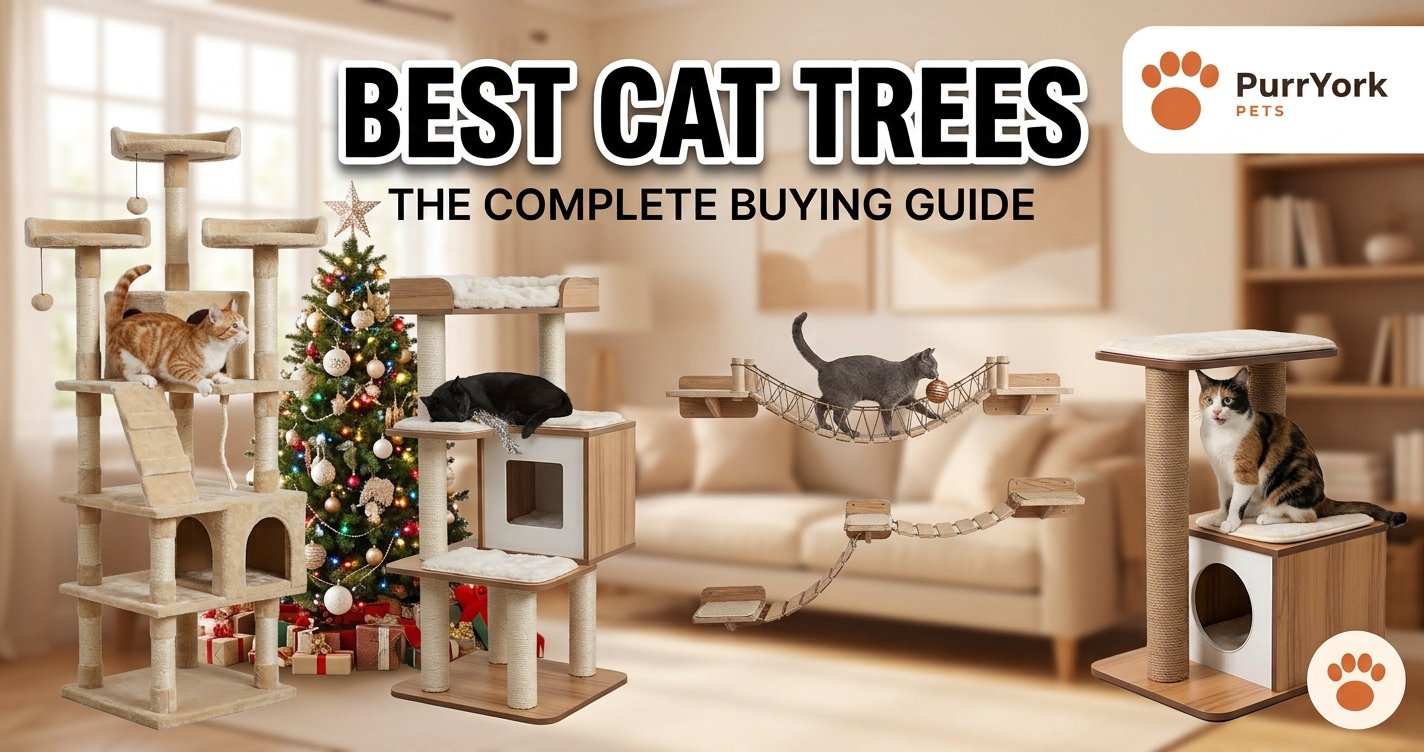
A good cat tree gives your cat room to climb, scratch, rest, and look around. The best fit depends on your cat’s size and habits, the space you have, and how stable the tree will be when your cat jumps onto it.
This guide walks you through the main things to consider, then points you to our focused guides for specific needs and styles. Cats benefit from having choices in their environment, including elevated resting spots, as described in the AAFP and ISFM feline environmental guidelines.
Quick Picks: Which Cat Tree Should You Look For?
| If you’re looking for… | Start with… |
|---|---|
| A place to compare styles and features | Best cat trees: the complete buying guide |
| Room for a larger cat | Cat trees for large cats |
| More vertical climbing space | Tall cat trees for climbing cats |
| A smaller footprint | Small cat trees for apartments |
| A furniture-style finish | Wood cat trees for indoor cats |
| A dark finish | Black cat trees |
| A festive design | Christmas cat trees |
How to Choose a Cat Tree
Start With Your Cat
Think about what your cat already likes to do. Do they climb to the top of bookcases, nap in a covered bed, scratch the sofa, or watch birds from a window? A tree is more likely to get used when it offers features your cat already enjoys.
Also consider your cat’s age, size, and mobility. A kitten may enjoy a tree with several levels to explore. A senior cat or one with mobility challenges may do better with lower platforms and an easier route up and down. Larger cats need perches and enclosed spaces they can comfortably fit into.
Choose a Height and Footprint That Fit Your Home
Measure the floor space where you plan to put the tree, along with the available ceiling height. Include room for your cat to jump on and off without hitting nearby furniture.
A tall tree offers more vertical space, but needs a stable base and careful placement. A shorter tree may be easier to fit in a small room and more accessible for cats that don’t enjoy big jumps.
For more targeted recommendations, see our guides to tall cat trees and small cat trees for apartments.
Look Closely at Stability
The tree should sit flat on the floor and feel sturdy when you press gently on its platforms. Check the base dimensions, post connections, and assembly instructions. If a tree includes a wall strap or anchor, follow the manufacturer’s directions and use hardware suited to your wall.
A mat may help keep a tree from sliding on a smooth floor, but it won’t fix loose joints or a damaged base. If your tree rocks or leans, stop your cat from using it until you’ve checked it. Our guide explains how to stop a cat tree from wobbling or tipping.
Check the Perches, Condos, and Routes Between Levels
A cat tree can have lots of levels and still be awkward to climb. Look at the spacing between platforms and whether there’s a route your cat can manage. If your cat likes enclosed naps, check the dimensions of the condo. If they like to stretch out, look for a broad, open perch.
For homes with more than one cat, consider whether there are enough resting spots and more than one easy route on and off the tree. That can help prevent one cat from blocking access to a favorite perch.
Compare Materials and Cleaning Needs
Cat trees may use carpet, plush fabric, sisal rope, wood, or a combination. No single material suits every cat. If your cat already scratches a particular surface, use that as a clue when choosing.
Check whether cushions or covers can be removed and washed, and whether worn scratching surfaces can be replaced. If you already have a tree that needs care, follow our steps to clean a cat tree and replace worn sisal.
For a more furniture-like finish, browse our picks for wood cat trees.
Consider Where the Tree Will Go
Place the tree somewhere your cat already spends time, such as near a window or in a shared room. A tree hidden away in a room your cat rarely visits may not be very appealing.
Keep it away from doors that open suddenly and make sure there’s enough space for your cat to move around it. If your cat doesn’t use it at first, try changing the location or making the first platform easier to reach. Our guide covers why a cat might not use its cat tree and what to try.
Find a Cat Tree for Your Needs
Best Cat Trees for Large Cats
Look for a strong, steady design with platforms and hideaways sized for your cat. Check the product listing for any stated weight limits rather than assuming that a tree labeled “large” will fit every cat.
Compare our recommendations for cat trees for large cats.
Best Tall Cat Trees for Climbers
Cats who love to climb may enjoy a taller tower with several levels and resting spots. Measure the ceiling before buying and consider how the tree will be secured. Our guide to tall cat trees for climbing cats compares options for reaching higher perches.
Best Small Cat Trees for Apartments
A compact tree can still provide climbing and scratching opportunities. Compare its full footprint, not just its height, and leave enough room for your cat to approach and jump down safely. See our picks for small cat trees for apartments.
Best Wood and Black Cat Trees
If the tree will be a visible part of your room, its finish may matter as much to you as its features. Listings use “wood” to describe different constructions, including veneer, plywood, and solid wood posts, so check the materials carefully. See our guides to wood cat trees and black cat trees.
Best Christmas Cat Trees
A holiday-themed cat tree can offer a seasonal look and a cat-friendly place to perch. Check that it remains stable and that any decorations are secure and safe for your cat. Explore our picks for Christmas cat trees.
Help Your Cat Get Comfortable With a New Tree
Give your cat time to investigate. You can put a familiar blanket or toy on a low platform, play near the tree, or offer a treat when your cat approaches or uses it. Let your cat climb on their own rather than placing them on a high perch.
If the tree wobbles, makes a startling noise, or is in a busy spot, your cat may avoid it. Check that it’s stable and move it to a place your cat already likes. If they still don’t use it, try a different scratcher or resting spot. The VCA Animal Hospitals guide to scratching behavior recommends matching the scratching surface and placement to what a cat already prefers.
Frequently Asked Questions
What makes a cat tree good?
A good cat tree suits your cat’s size, mobility, and habits. Look for a stable structure, comfortable resting spots, accessible platforms, and scratching materials your cat may enjoy.
How tall should a cat tree be?
There’s no ideal height for every cat. Choose based on your cat’s interest in climbing, your room dimensions, and how stable the tree is. Measure the ceiling before buying a tall model.
Do large cats need a special cat tree?
They need a tree with perches and enclosed spaces that fit them comfortably, plus a stable design. Check the listing for dimensions and weight guidance.
Where should I place a cat tree?
Try a spot where your cat already spends time, such as near a window or in a room shared with the family. Make sure the tree is on a stable surface and has space around it.
What if my cat won’t use the tree?
Check the location, stability, platform access, and scratching material. Give your cat time to explore, and don’t force them onto it. See our guide to getting a cat to use its cat tree.
Can I repair a wobbly cat tree?
Sometimes. Tighten connections and check that the base sits flat. Stop using it if parts are cracked or remain loose, and follow the manufacturer’s repair or replacement guidance. Read how to stop a cat tree from wobbling or tipping.
How do I keep a cat tree clean?
Vacuum fur and debris, spot-clean according to the material’s care instructions, and wash removable covers as directed. Replace worn scratching surfaces when needed. Our guide explains how to clean a cat tree and replace worn sisal.
Final Thoughts
The best cat tree is the one that fits your cat and your home. Start with your cat’s favorite activities, measure the space, check the tree’s stability and materials, and choose a layout they can comfortably use.
Use the guides above to compare options for large cats, climbers, apartments, and different home styles. If your cat is hesitant, give them time and make sure the tree feels steady, accessible, and inviting.
1 thought on “Best Cat Trees (2026): The Complete Buying Guide”