
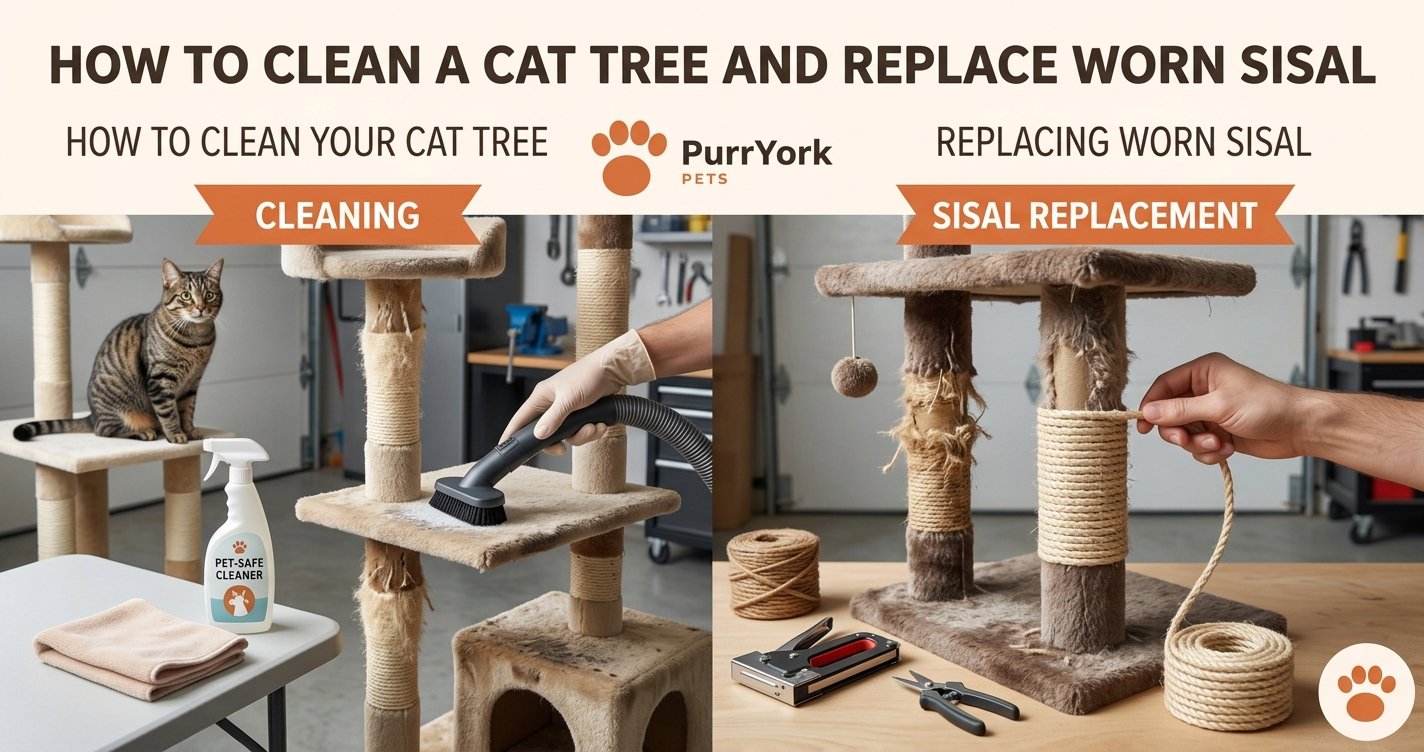
Cat trees collect fur, dust, and the occasional stain. Regular cleaning helps keep them comfortable, and worn sisal rope can often be replaced without replacing the whole tree.
Check the manufacturer’s care instructions first. Cat trees use different materials, and too much moisture can damage some wood products or particleboard. If you’re choosing a new tree, see our complete cat tree buying guide.
How to Clean a Cat Tree
1. Take Off Removable Parts
Remove washable cushions, covers, or mats according to the product instructions. If the tree has detachable posts or platforms, check the manual before taking them apart. Keep small hardware together so you can reassemble the tree safely.
2. Vacuum Fur and Loose Debris
Use an upholstery attachment or crevice tool to vacuum fabric, carpeted platforms, corners, and sisal. A lint roller or pet-hair brush can help pick up fur from surfaces the vacuum misses. Regular vacuuming is also a useful first step for dusty or slightly smelly sisal. BISSELL’s cat-tree cleaning guide recommends vacuuming carpeted areas and rope scratching posts.
3. Spot-Clean Stains Carefully
Follow the fabric or tree manufacturer’s cleaning directions. For washable covers, use the recommended wash cycle and let them dry completely before putting them back. For fixed fabric, use a small amount of an appropriate upholstery cleaner on a cloth, and test it on a hidden area first.
Avoid soaking fabric, rope, or wood surfaces. Excess moisture can take a long time to dry and may damage the tree. Keep your cat away from wet surfaces until they are completely dry.
4. Clean Hard Surfaces
Wipe exposed wood or plastic with a soft cloth and a cleaner suitable for that material. Apply the cleaner to the cloth rather than spraying it near your cat’s bedding or scratching areas. Follow the product label and allow the surface to dry before your cat uses the tree again.
The ASPCA advises following cleaning-product labels and keeping pets away from wet treated areas until they are dry. It also cautions against using essential oils in areas pets can access unless a veterinarian approves them. ASPCA cleaning-product guidance
5. Check the Tree Before Your Cat Returns
Once everything is dry, check that platforms and posts are firmly attached. Look for loose staples, exposed sharp edges, fraying fabric, or wobbling. If the tree shifts when your cat climbs, see our guide on how to stop a cat tree from wobbling or tipping.
How to Tell When Sisal Needs Replacing
Sisal is ready for repair when it is badly frayed, loose, broken, or coming off in long strands. Small signs of wear don’t always mean the whole post needs replacing. If the post underneath is cracked, unstable, or damaged, replace the part or tree instead of wrapping rope over a structural problem.
Some cat trees use replaceable scratching posts. Check the manufacturer’s parts list before starting a DIY repair; a replacement post may be simpler and fit more securely.
How to Replace Sisal Rope
What You’ll Need
- Sisal rope in a suitable diameter and length
- Scissors or a utility knife
- Pliers or a staple remover, if the old rope is stapled
- Adhesive suitable for the post material, if needed
- Work gloves and eye protection
Measure the post and check the rope diameter before buying. If possible, follow the tree manufacturer’s repair instructions and use the materials they recommend.
1. Remove the Post if Possible
If the scratching post unscrews from the tree, remove it and work on a stable surface. This makes it easier to wrap the rope tightly and reduces the chance of getting adhesive on nearby fabric.
2. Remove the Old Sisal
Cut through the worn rope and unwind it. Pull out any staples or fasteners carefully with pliers or a staple remover. Remove old adhesive or loose fibers so the new rope can sit flat.
Wear gloves and keep sharp tools and staples away from your cat. Don’t leave any exposed fastener where claws could catch.
3. Secure the Rope End
Follow the manufacturer’s directions for fastening the rope. If using adhesive, choose a product appropriate for the post material, apply it sparingly, and keep it away from the area your cat will scratch until fully cured. Avoid leaving exposed staples, sharp wire, or hard glue ridges where your cat’s claws or paws may contact them.
4. Wrap the Rope Tightly
Wind the sisal around the post in close, even coils. Push each turn firmly against the previous one so there are no large gaps or loose loops. Continue until the worn section is covered.
5. Secure the Final End and Let It Cure
Fasten the end as directed by the manufacturer or adhesive instructions. Check that the rope cannot unwind when pulled. Let all adhesive cure fully in a well-ventilated area before reattaching the post or letting your cat use it.
6. Reattach and Test the Tree
Reattach the post and make sure it is firmly secured. Check the whole tree for wobble before your cat climbs it. If the new sisal feels unfamiliar, let your cat explore it at their own pace.
Frequently Asked Questions
How often should I clean a cat tree?
Vacuum fur and loose debris as needed. Spot-clean stains when they happen, and wash removable covers according to their care labels.
Can I put a whole cat tree in the washing machine?
Usually, no. Most trees are too large and contain materials that aren’t machine washable. Wash only parts the manufacturer identifies as washable.
Can I use disinfectant on a cat tree?
Use a product only if its label says it is suitable for the surface and follow its directions. Keep your cat away while cleaning and until the surface is dry. For routine fur and dust, vacuuming and spot-cleaning are usually the first steps.
Can I replace only one section of sisal?
Often, yes. If the post is structurally sound, you can rewrap the worn area. Replace the full post if it is cracked, loose, or otherwise damaged.
What if my cat ignores the repaired post?
Give your cat time to investigate it. Make sure the post is stable and positioned where your cat already likes to scratch. If your cat avoids the whole tree, see our guide on why your cat might not use its cat tree.
Should I buy replacement parts or repair the sisal myself?
Check for manufacturer replacement parts first. They’re designed for the tree and may be easier to install. DIY rewrapping can work when the post is sound and you can secure the rope without leaving exposed fasteners.
Final Thoughts
Vacuum the tree regularly, spot-clean according to its material instructions, and let every cleaned surface dry fully before your cat returns. When sisal wears out, check whether the manufacturer sells a replacement post. If you rewrap it yourself, secure the rope tightly and make sure no sharp fasteners or uncured adhesive are accessible to your cat.
For a replacement tree, browse our guide to the best cat trees or our picks for wood cat trees.