
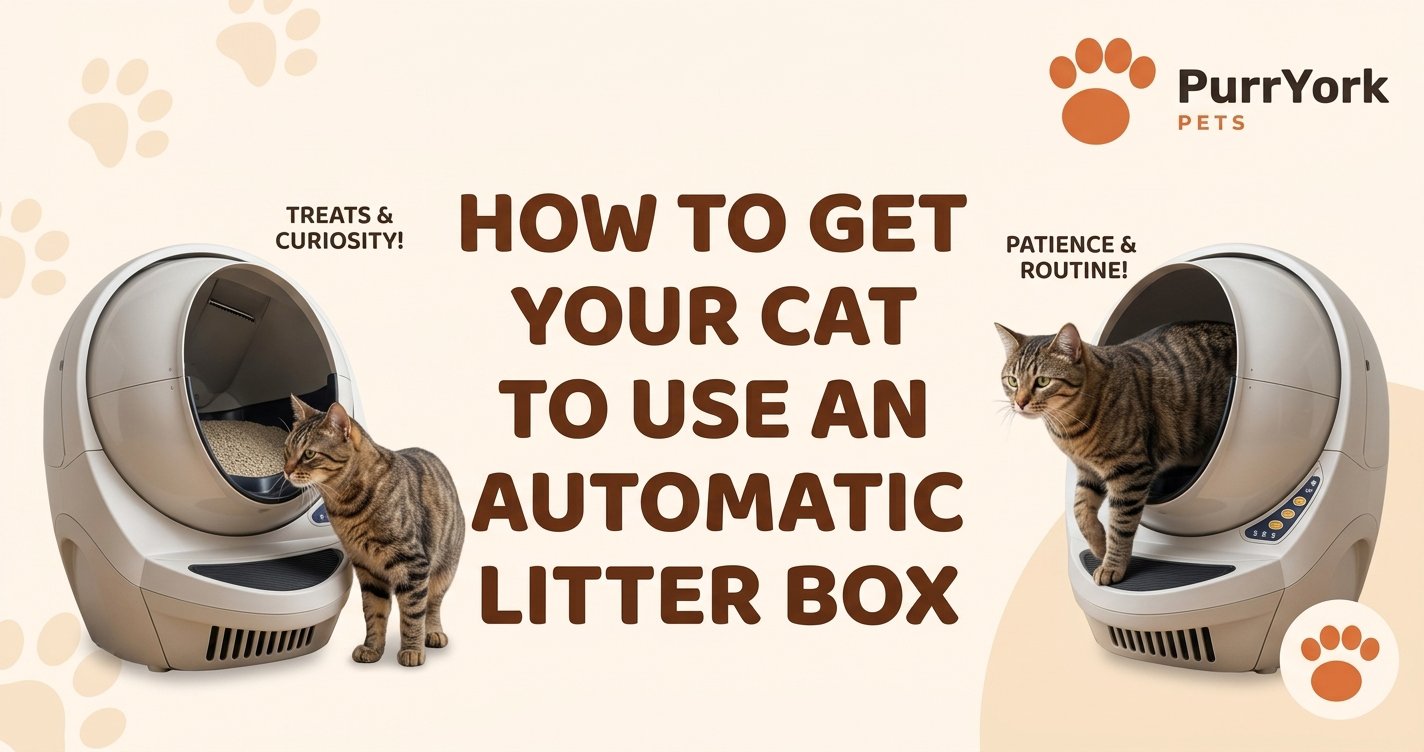
An automatic litter box can make cleanup easier, but its shape, sounds, and moving parts may be unfamiliar to your cat. A gradual introduction gives your cat a chance to investigate the new box while keeping a familiar option available.
There’s no set timeline. Some cats explore quickly; others need more time. If your cat avoids the new box, pause and make the next step easier rather than forcing them to use it.
If you’re still choosing a model, start with our complete guide to the best automatic litter boxes. It covers features to compare before you buy.
1. Set Up the New Box Beside the Old One
Put the automatic litter box near your cat’s current box, in a quiet, accessible spot. Keep the old box in its usual location so your cat can continue using a familiar option.
Follow the manufacturer’s setup and safety instructions. Check that the box is suitable for your cat’s size and mobility, and use only litter approved for that model.
2. Keep the Litter Familiar
If the automatic box supports the litter your cat already uses, start with that. Changing both the box and the litter at once may make it harder to tell what your cat dislikes. If you need to change litter, do so gradually and follow the machine’s instructions.
You can add a small scoop of used litter from the old box to the new one to give it a familiar scent. Cornell’s feline health guidance notes that a cat may develop an aversion to the box, litter, or location, and recommends gradual changes when adjusting litter habits. Cornell Feline Health Center
3. Let Your Cat Explore It While It’s Off
If the manufacturer allows it, leave the automatic cleaning function off at first. Let your cat approach, sniff, and enter the box on their own. Don’t pick them up and place them inside or block access to the old box.
Reward calm investigation with a treat or gentle praise if your cat enjoys that. Keep rewards outside the box so your cat doesn’t feel pressured while using it.
4. Wait for Voluntary Use
Give your cat time to use the new box while it is stationary. Continue scooping the old box as usual; don’t let it become dirty in an effort to push your cat toward the new one.
Once your cat is using the automatic box comfortably, move to the next step. PetMD’s veterinary guidance also recommends letting a hesitant cat get used to the box while it is powered off before introducing the cleaning cycle. PetMD
5. Introduce the Cleaning Cycle
Turn on the automatic function according to the manufacturer’s instructions. If the box has a delay setting, start with a longer delay so it won’t begin cleaning immediately after your cat exits. Watch from a distance to see how your cat responds.
If the sound or movement frightens your cat, switch the cycle off again if it is safe to do so. Give your cat more time to use the box while it is stationary before trying again. If your cat is especially sensitive to noise, see our guide to quiet automatic litter boxes for sensitive cats.
6. Keep the Old Box Until the New One Is Reliable
Don’t remove the old box just because your cat has tried the automatic one once. Keep both available until your cat is using the new box consistently. In a multi-cat home, make sure each cat can access a box without being cornered or blocked by another pet. Our guide to automatic litter boxes for multiple cats can help you compare options for a shared household.
If your cat stops using the new box, returns to the old one, or has an accident, step back. Check the location, cleanliness, entry height, litter type, and cleaning cycle.
Common Problems and What to Try
Your cat won’t go near the new box.
Turn off the automatic function, give your cat more time, and make sure the box is in a calm, accessible location. Avoid moving both boxes or changing the litter at the same time.
Your cat enters but leaves without using it.
Check whether the entry is difficult, the box is too small, or the litter feels different. Look at the machine’s instructions to confirm you’re using an appropriate litter type and fill level. For a larger cat, compare the box dimensions with our guide to automatic litter boxes for large cats.
Your cat is startled by the cleaning cycle.
Turn the cycle off and let your cat use the box while stationary again. Reintroduce the cycle later, when your cat is relaxed around it. A quieter model may also be worth considering.
Your cat starts going outside the box.
Pause the transition and make sure a familiar, clean box is available. A sudden change in litter-box habits can have medical as well as behavioral causes. Contact your veterinarian if the problem continues or your cat seems uncomfortable. Cornell Feline Health Center
Your cat strains to urinate or repeatedly tries without producing urine.
Contact a veterinarian urgently. Straining in the litter box can signal a serious urinary problem; the Merck Veterinary Manual notes that it can be life-threatening, especially in male cats.
Frequently Asked Questions
How long does it take a cat to get used to an automatic litter box?
There’s no fixed timeline. Let your cat’s comfort and consistent use guide the transition. If your cat is wary, stay at the current step longer.
Should I remove the old litter box?
Keep it available until your cat is reliably using the automatic box. Removing it too soon can leave a hesitant cat without a familiar option.
Should I put my cat inside the automatic litter box?
No. Let your cat explore and enter voluntarily. Forcing them into the box may make it more frightening.
Can I use any litter in an automatic box?
Use litter approved by the manufacturer. Some machines require a particular type or litter depth to operate correctly.
What if my cat never accepts it?
Some cats may not become comfortable with an automatic box. If you’ve tried a gradual introduction and your cat still avoids it, keep a regular box available and ask your veterinarian for guidance if litter habits have changed.
Are automatic litter boxes expensive?
Prices vary by features and design. If cost is a key factor, compare options in our guide to budget automatic litter boxes.
Can an automatic litter box help with odor?
Some models include features intended to manage odor, but routine maintenance still matters. Compare options in our guide to automatic litter boxes for odor control.
Final Thoughts
Introduce an automatic litter box one change at a time: place it beside the familiar box, keep the litter consistent, let your cat explore it while it’s off, and turn on the cleaning cycle only after your cat is comfortable using it. Keep the old box available until the new one is a reliable choice.
If your cat avoids all boxes or has a sudden change in bathroom habits, pause the transition and contact your veterinarian. To compare more models, browse our complete automatic litter box guide.