
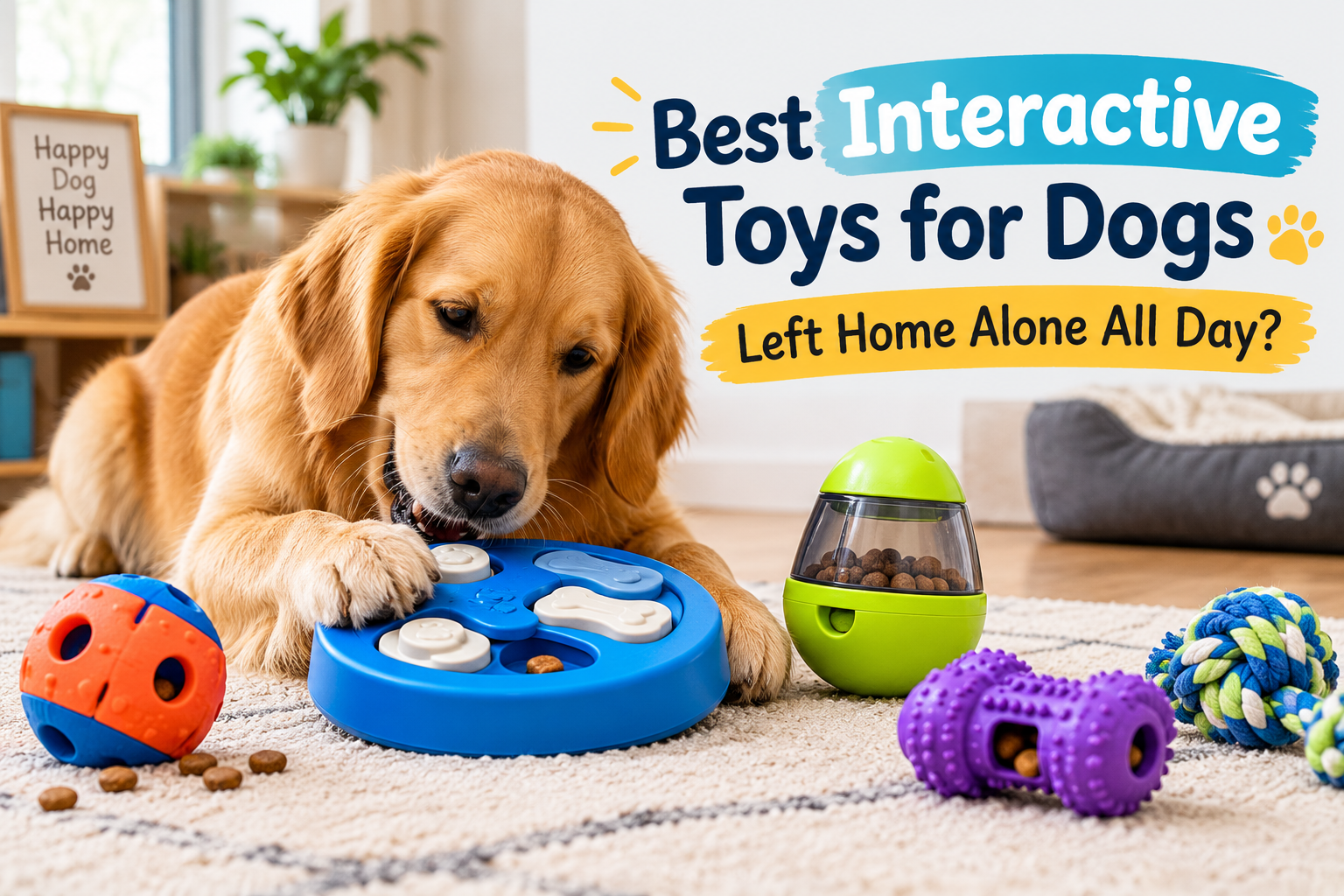
A dog left alone for a full workday needs more than a toy lying on the floor — it needs something that keeps rewarding engagement over hours, not minutes. The toys that actually hold up to a long day fall into a few different categories: slow-release treat toys that take real effort to empty, puzzle toys that require problem-solving rather than just chewing, and self-serve activity toys that give a high-energy dog an outlet without you there to throw a ball. The best setup for most dogs alone all day is actually a mix of these, rotated so the same toy doesn’t get boring by week two.
This post contains affiliate links. As an Amazon Associate, PurrYork Pets earns from qualifying purchases at no extra cost to you. See our Affiliate Disclosure for details.
1. KONG Classic — Best Overall
Best for: Nearly any dog, as a reliable daily-use toy that holds up to hours of chewing.
Price: Roughly $7–$10, depending on size
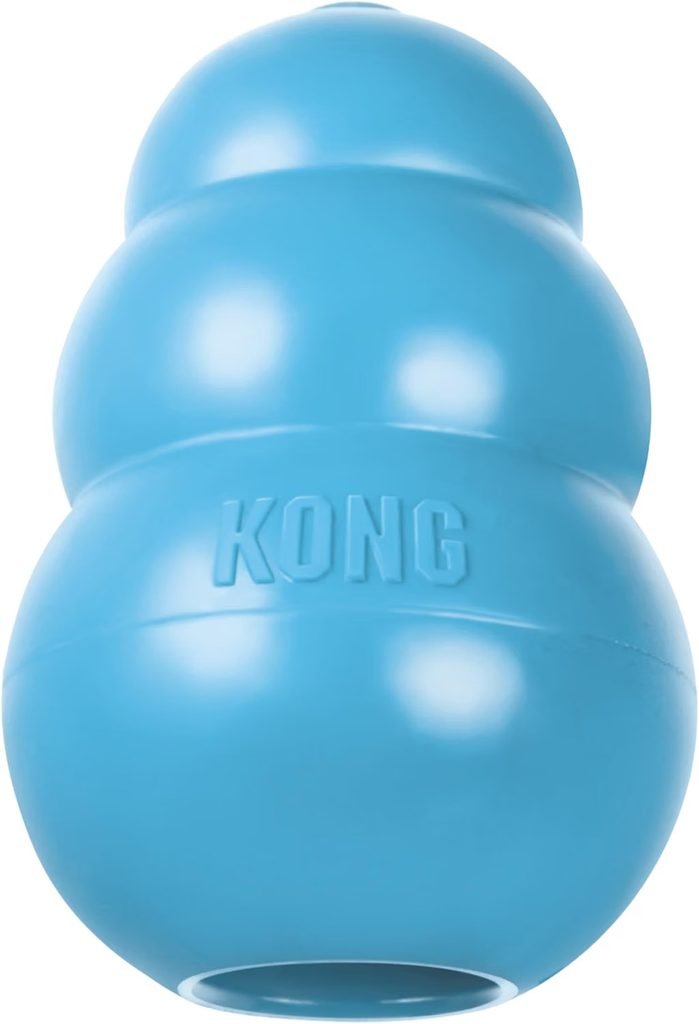
Why it stands out: The hollow rubber design rewards a dog for sustained chewing rather than a quick bite, and it’s durable enough to survive a full day of solo attention without falling apart. Stuffing it with kibble, a bit of peanut butter, or a frozen mix of both slows a dog down and stretches the engagement out far longer than the treat alone would last on its own. It comes in sizes and rubber densities for puppies, seniors, and average chewers, so you’re not stuck sizing up or down from one universal design.
Key specs:
- Sizes: Small through XL, plus Puppy and Senior rubber densities
- Natural rubber, hollow center for stuffing
- Dishwasher-safe
- Freezes well for slower-release treats
Consider instead if: your dog empties a stuffed KONG in minutes and needs more of a challenge — the Nina Ottosson puzzle below takes real problem-solving rather than just chewing.
2. KONG Wobbler — Best for Meal-Time Engagement
Best for: Dogs who eat too fast, or owners who want to turn a meal into 20–30 minutes of activity instead of 20 seconds.
Price: Roughly $15–$25
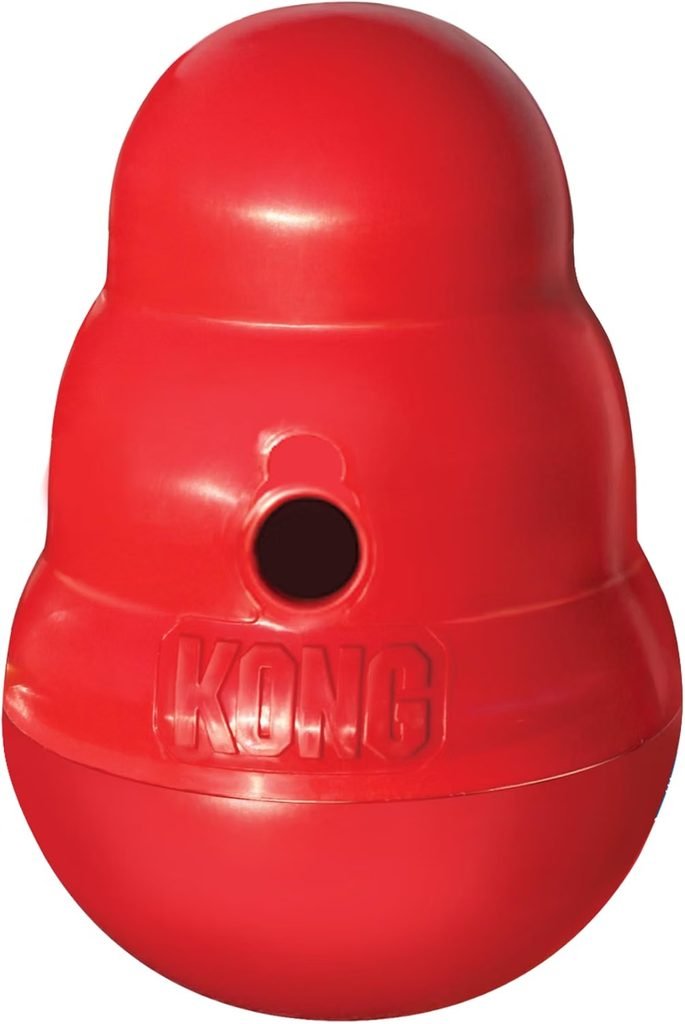
Why it stands out: The weighted, curved base makes the toy wobble unpredictably rather than rolling in a straight line, so a dog has to keep nudging and adjusting to release kibble. That unpredictability is what keeps it interesting well past the first few minutes, unlike toys with a fixed, learnable pattern. Feeding a full meal through the Wobbler instead of a bowl is an easy way to add real activity time to an otherwise idle morning before you leave.
Key specs:
- Two sizes, holds up to 2.5 cups of kibble
- Durable, BPA-free plastic
- Adjustable opening to control difficulty
- Dishwasher-safe (top rack)
Consider instead if: your dog is a heavy chewer who might crack hard plastic — the KONG Classic’s rubber build tolerates aggressive chewing better.
3. Outward Hound Nina Ottosson — Best Treat Puzzle Toy
Best for: Dogs that get bored quickly with simple chew-and-release toys and need an actual problem to solve.
Price: Roughly $14–$20
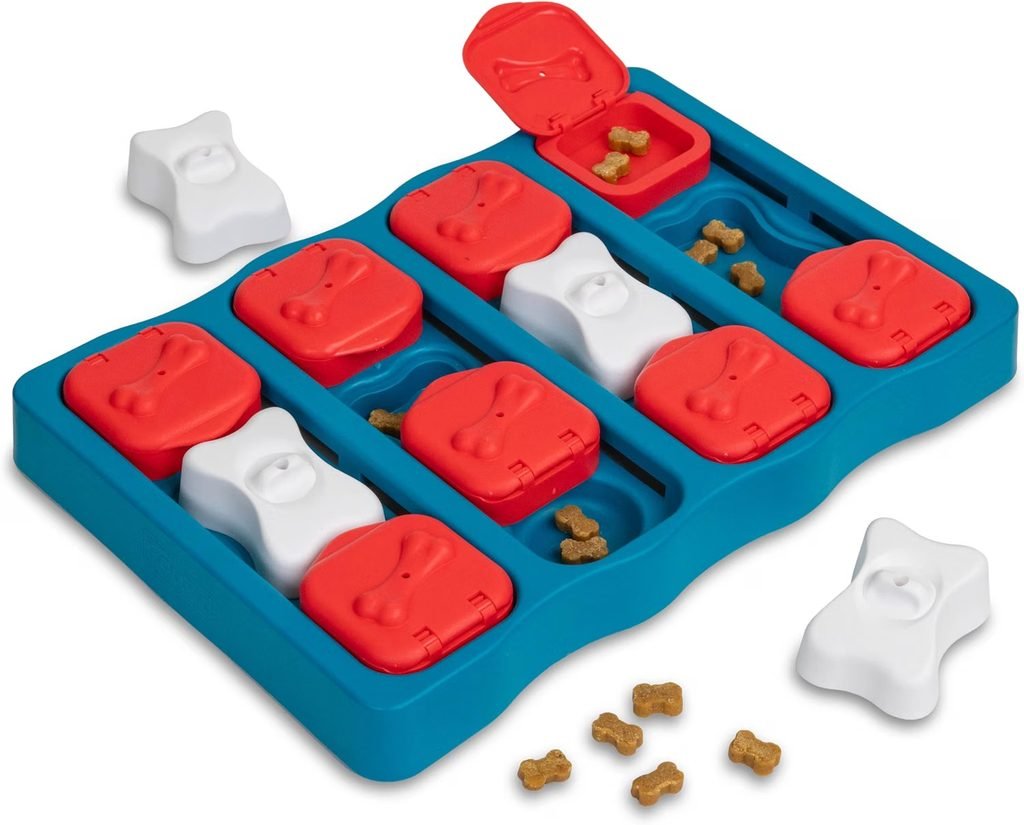
Why it stands out: This is a genuine puzzle rather than a treat dispenser — your dog has to slide covers and manipulate compartments in sequence to reach the food underneath, which demands sustained mental focus rather than repetitive chewing. With 24 treat compartments and roughly a cup of total capacity, it’s built to occupy a smart, food-motivated dog for a meaningfully longer stretch than a single-mechanism toy. It’s rated for advanced dogs, so it’s a good next step after your dog has mastered simpler puzzles.
Key specs:
- 20 treat compartments, holds up to 1 cup of food
- BPA-, PVC-, and phthalate-free plastic
- Difficulty Level 3 (advanced)
- Dishwasher safe
Consider instead if: your dog is new to puzzle toys — starting at this difficulty can be frustrating; Outward Hound’s own Level 1–2 puzzles are a gentler entry point before stepping up to this one.
4. Automatic Dog Ball Launcher — Best for High-Energy Dogs
Best for: Active, fetch-obsessed dogs who need physical activity, not just mental stimulation, during the day.
Price: Roughly $70–$130 depending on size
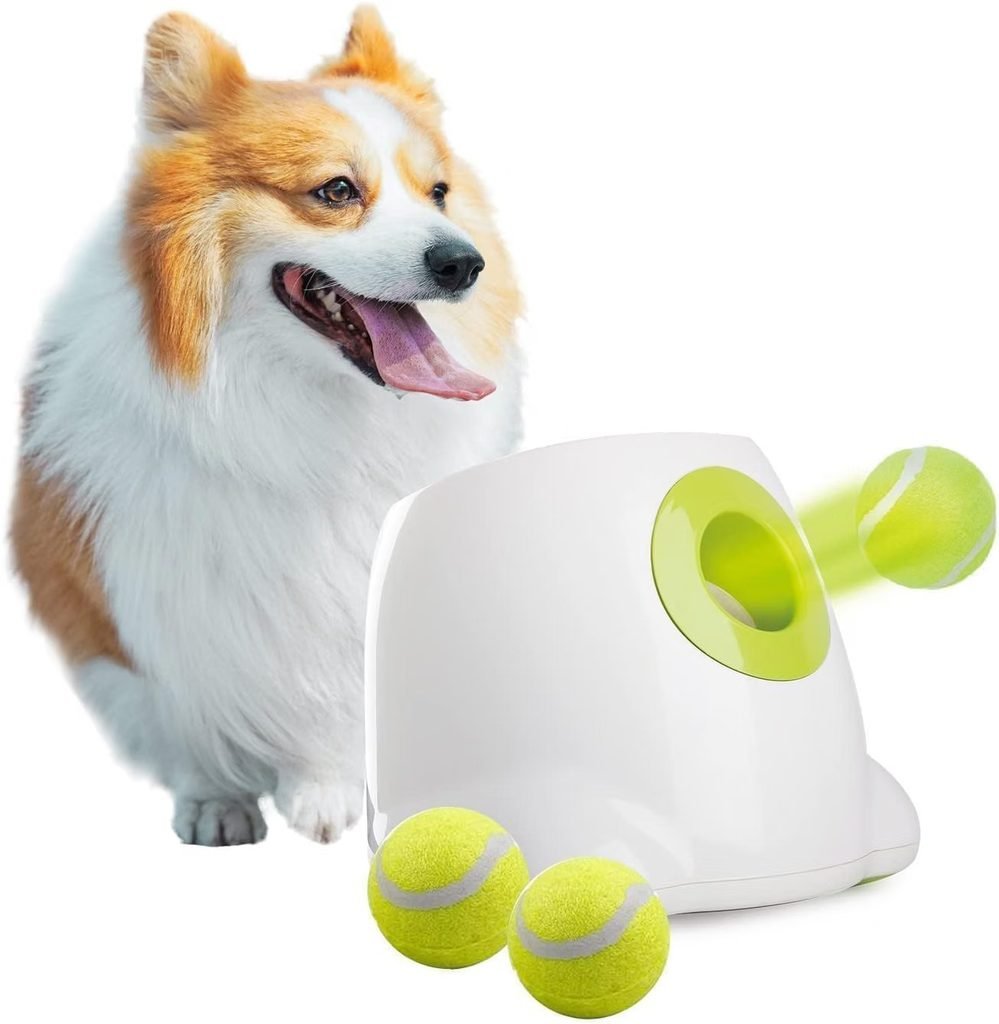
Why it stands out: Most toys on this list address boredom through mental effort; this one addresses the physical energy that a high-drive dog still has left even after a morning walk. Your dog drops the ball in, the launcher fires it out at a distance you set (10, 20, or 30 feet), and the dog fetches it back — creating a genuinely self-serve fetch session with no owner involved. It’s a different category of solution than a treat toy and works best for dogs already trained to understand the retrieve-and-drop mechanic.
Key specs:
- Adjustable launch distance: 10, 20, or 30 feet
- Wall-plug or battery powered (6 C batteries)
- Simple single-button operation
- Compatible with mini tennis balls (included)
Consider instead if: your dog hasn’t been taught to fetch and drop reliably — this only works well once that behavior is established, and it’s a bigger investment than the other picks here.
5. Wooly Snuffle Mat — Best for Slow, Calming Engagement
Best for: Dogs who benefit from a slower, sniffing-based activity rather than fast chewing or high-energy play.
Price: Roughly $25–$50, depending on size
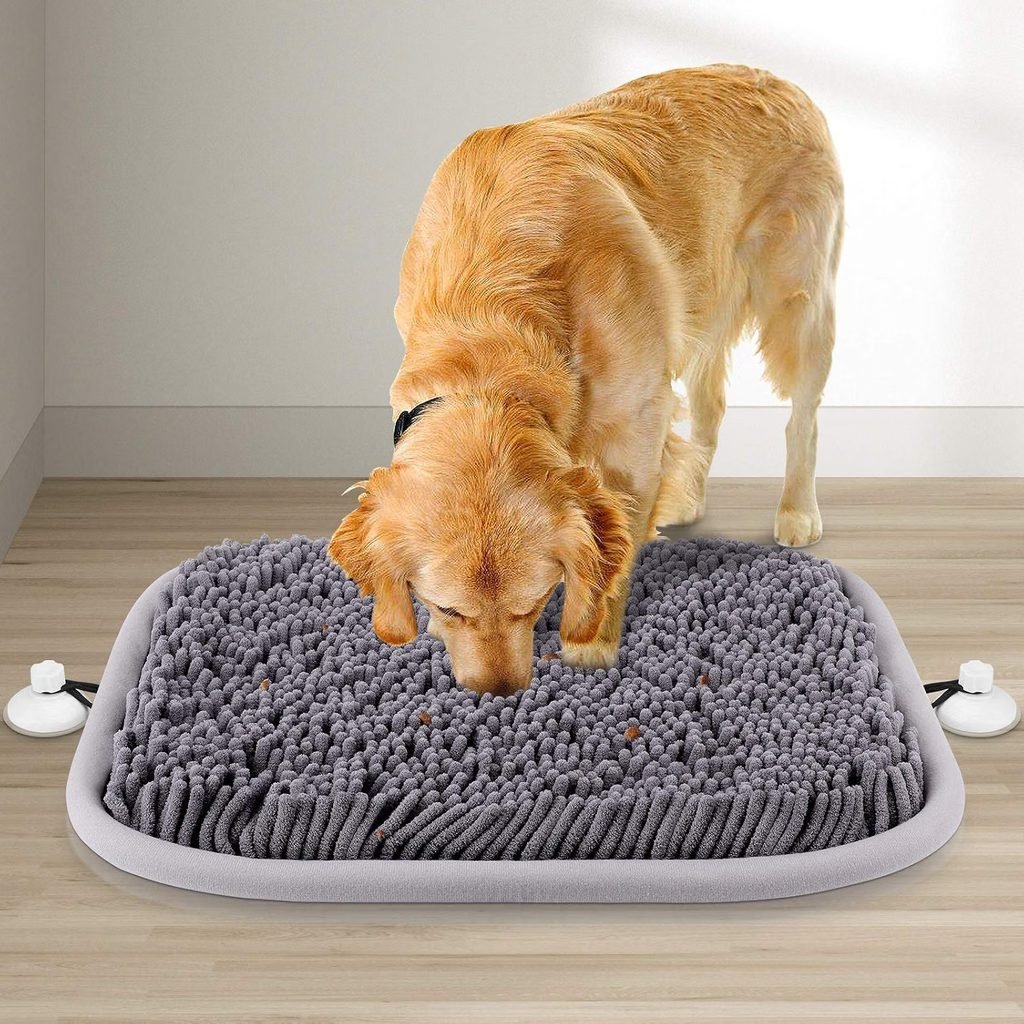
Why it stands out: Scattering kibble or small treats through the mat’s fleece strands turns eating into a foraging activity, which taps into a dog’s natural scent-driven behavior in a way that’s mentally tiring rather than physically exciting — useful for a dog that needs to wind down during the day rather than get more amped up. It’s a good complement to a more active toy like the iFetch above, giving a dog a calmer activity for part of the day rather than nonstop stimulation.
Key specs:
- Machine washable
- Non-slip backing
- Works with kibble, treats, or scattered wet food
- No batteries or moving parts
Consider instead if: your dog tends to shred fabric rather than sniff through it — this isn’t built to survive aggressive chewing the way the KONG options are.
What to Look for in Toys for Dogs Home Alone
- Match the toy to the actual number of hours your dog is alone. A toy that takes 5 minutes to empty doesn’t help much across an 8-hour workday — look for genuinely slow-release or puzzle-based designs for longer stretches.
- Rotate two or three toys rather than relying on one. Dogs habituate to a single toy’s difficulty; swapping between a chew toy, a puzzle, and a physical-activity toy keeps engagement higher over weeks, not just the first few days.
- Always test a new toy while you’re home first. Even toys marketed as safe for unsupervised use should be checked for how your specific dog interacts with them before leaving them alone with it all day.
- Match difficulty to your dog’s experience level. An advanced puzzle can frustrate a dog that’s never used one — start simpler and work up rather than starting at the hardest option.
If your dog’s issue is more about distress than boredom, see our Best Calming Toys for Dogs with Separation Anxiety (2026) guide instead, or check out the full Best Dog Toys (2026): The Complete Buying Guide for every situation.
Note on pricing: Prices reflect approximate ranges at time of writing and may vary. Check the current listing for exact pricing.