
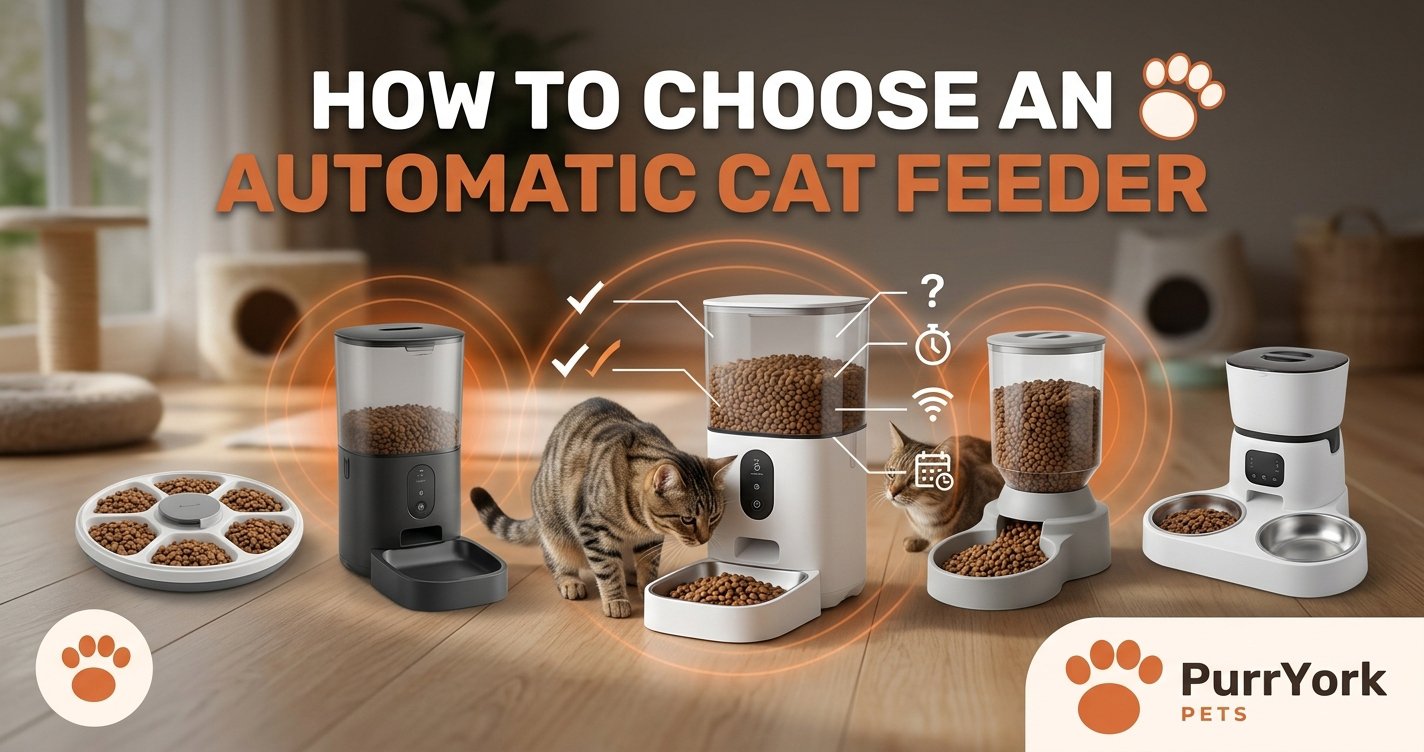
An automatic cat feeder can help keep meals on schedule when your routine gets busy. Some models dispense dry kibble from a hopper; others open covered compartments for wet food. The right choice depends on what your cat eats, how many cats you feed, and which features you’ll actually use.
A feeder handles timing, but you’ll still need to choose suitable meals and portions. Cats’ feeding needs vary with age, health, and other individual factors, so ask your veterinarian for guidance if you’re unsure how much or how often to feed your cat. Cornell Feline Health Center
1. Start With Your Cat’s Food
Many automatic feeders are designed for dry kibble. Check the manufacturer’s guidance for kibble size and shape; some pieces may not flow smoothly through every dispensing mechanism.
Wet food needs a feeder designed for it, often with covered compartments that open at scheduled times. Check how the model keeps food fresh, how long food can remain in it, and how the parts are cleaned. Follow the food’s storage instructions.
If your cat eats a prescription or therapeutic diet, confirm that the feeder works with that food and ask your veterinarian whether the schedule is appropriate.
2. Check Portion Control
A feeder’s “portion” may be measured by volume rather than weight, and the amount dispensed can vary depending on the kibble. Before relying on its settings, dispense a few test portions into a measuring cup or onto a kitchen scale. That gives you a better idea of what each setting means for your cat’s food.
Then compare the result with your cat’s daily feeding plan. If your cat needs to lose weight, ask your veterinarian to set an appropriate plan; weight loss should be tailored to the individual cat. VCA Animal Hospitals
3. Choose a Capacity That Fits Your Routine
A larger hopper can mean fewer refills, which may be convenient if you’re away during the day. Consider how quickly your household uses food and how often you’ll check the feeder. A smaller model may be easier to clean and refill more often.
For wet food, check the number of compartments and how many meals the feeder can hold. These models usually need more frequent cleaning than dry-food hoppers. For cleaning tips after you choose a model, see How to Clean an Automatic Cat Feeder.
4. Decide Whether You Need Wi-Fi
A basic feeder can follow a preset schedule without an app. A Wi-Fi model may let you change meal times remotely, view feeding logs, or get alerts when food is running low.
Consider which features you’ll use, and check whether the feeder works with your home network. Find out what happens if the internet goes down: ideally, the feeding schedule continues even when the app is unavailable.
For a closer look at app-connected options, see our guide to the best Wi-Fi automatic cat feeders. A camera or two-way audio can be useful for some households, but reliable dispensing and easy cleaning are usually more practical priorities.
5. Consider Backup Power and Reliability
Check whether the feeder has a battery backup and whether its schedule continues during a power outage. Also find out which functions depend on Wi-Fi and which run directly on the device.
Look for clear instructions for handling jams, low food, and power loss. If the feeder sends alerts, check what it monitors. You’ll still want to check the feeder regularly, especially during the first few weeks.
6. Think About Other Cats in Your Home
A standard feeder may work if your cats eat the same food and don’t take food from one another. Two bowls attached to one feeder won’t prevent cats from swapping meals.
If one cat needs a separate diet, consider a feeder that uses a microchip or another form of pet identification to control access. Check how it identifies your cat and whether it works with your pet’s existing microchip or collar tag. Your veterinarian can help you plan separate feeding arrangements when cats have different dietary needs.
7. Look for Easy Cleaning and Secure Construction
Food dust and crumbs can collect around the bowl and dispensing area. A feeder with removable parts is easier to clean, but check the manual to see which parts can be washed and which must stay dry.
Other useful details include:
- A lid your cat can’t easily pry open
- A stable base that won’t slide or tip
- A bowl that removes easily for washing
- An accessible food path in case kibble gets stuck
- Clear instructions for cleaning food-contact parts
Review the care instructions before buying so you know what regular maintenance involves.
8. Introduce the Feeder Gradually
Some cats are wary of a new object or the sound of a motor. Put the feeder in its intended spot and let your cat investigate it while it’s turned off. You can place a few treats nearby or serve a meal from its bowl before starting the schedule.
When your cat seems comfortable, run the feeder while you’re home and watch a few meals. Check that it dispenses correctly and that your cat eats comfortably. Keep a familiar feeding option available while your cat adjusts.
Questions to Ask Before You Buy
- Does it dispense my cat’s food reliably?
- Can I set portions that match my cat’s feeding plan?
- Is it designed for dry food, wet food, or both?
- Does its capacity fit my refill routine?
- Does the schedule continue during Wi-Fi or power interruptions?
- Can each cat access only their own food if needed?
- Are the bowl and food-contact parts easy to clean?
- Will my cat tolerate the feeder’s size and sound?
Frequently Asked Questions
Are automatic cat feeders a good idea?
They can help keep meals on a consistent schedule and make measured feeding easier. They still need regular cleaning, refilling, and checks to make sure food is dispensing properly.
Can I use an automatic feeder for wet food?
Some feeders are made for wet food. Choose one designed for that purpose, follow its instructions for keeping food fresh, and clean it as directed.
Do automatic feeders stop cats from overeating?
Not by themselves. You’ll need to set suitable portions and check how much food your cat actually receives. Ask your veterinarian for help if your cat needs to lose weight or has a health condition that affects its diet.
Will a Wi-Fi feeder work if the internet goes out?
It depends on the model. Check whether its schedule runs locally on the feeder or depends on an internet connection. Some models continue scheduled meals offline, while app controls may become unavailable.
What if my cat is afraid of the feeder?
Let your cat get used to it while it’s turned off, then introduce it gradually. Start with familiar food and stay nearby during the first scheduled meals. If your cat continues refusing food, contact your veterinarian.
Final Thoughts
Choose an automatic cat feeder that works reliably with your cat’s food, lets you verify portions, and fits your daily routine. Compare capacity, cleaning, and backup features before buying. Once it’s set up, monitor a few meals and keep checking that your cat is eating well and the feeder is working as expected.