
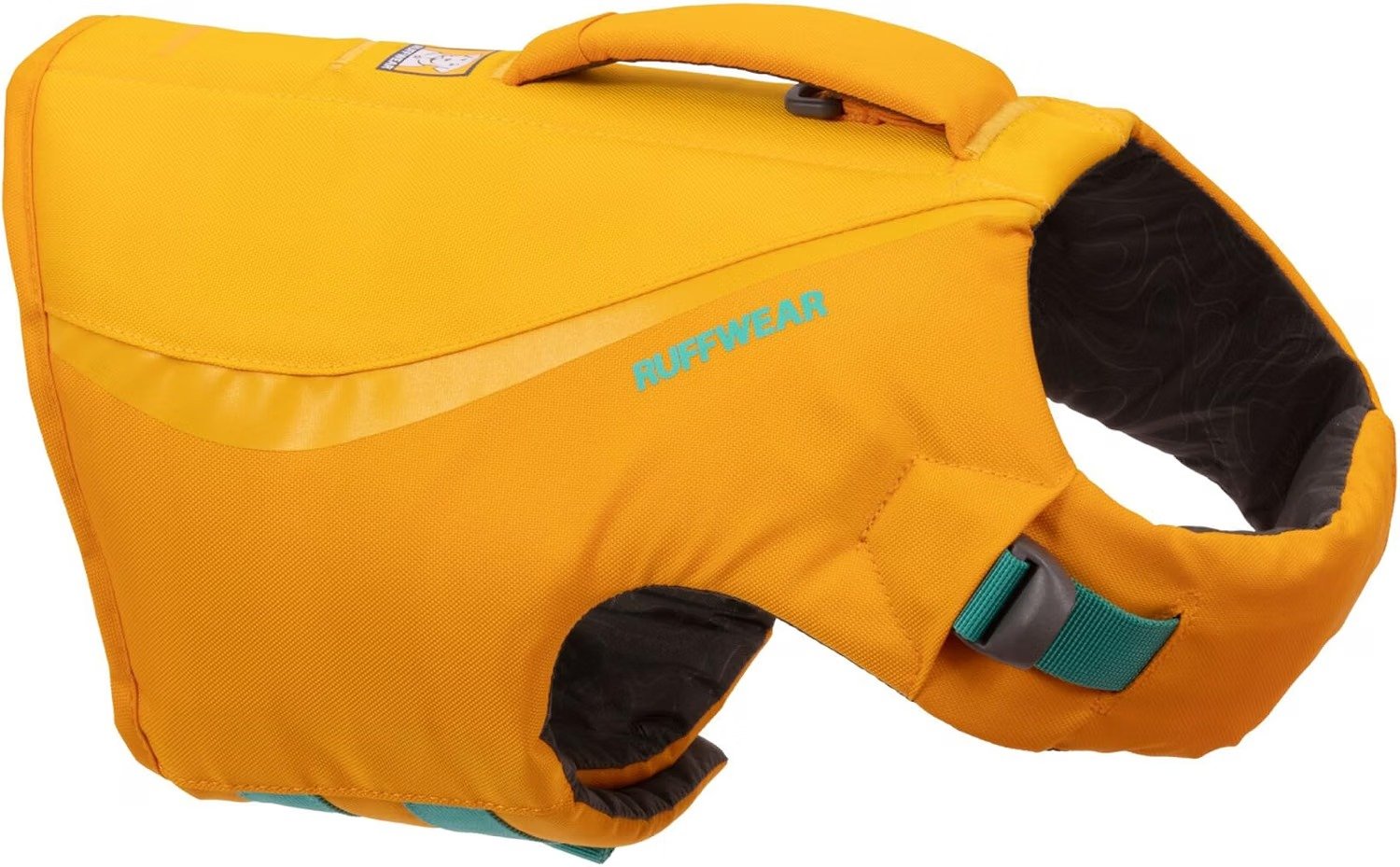
A handicapped dog — whether from arthritis, degenerative myelopathy, an amputation, or a hind-leg injury — often can’t do the one thing that keeps most dogs safe in water: kick evenly and correct their own position. Buoyancy alone doesn’t solve that. What actually helps is a jacket built more like a support harness than a swim vest — a handle strong enough to genuinely lift and hold a dog’s weight (not just nudge a tired swimmer), foam placed where the weak side or hind end needs it most, and more than one place to attach a leash so you can guide a dog that can’t steer itself. Here are five jackets built around that kind of real support.
This post contains affiliate links. As an Amazon Associate, PurrYork Pets earns from qualifying purchases at no extra cost to you. See our Affiliate Disclosure for details.
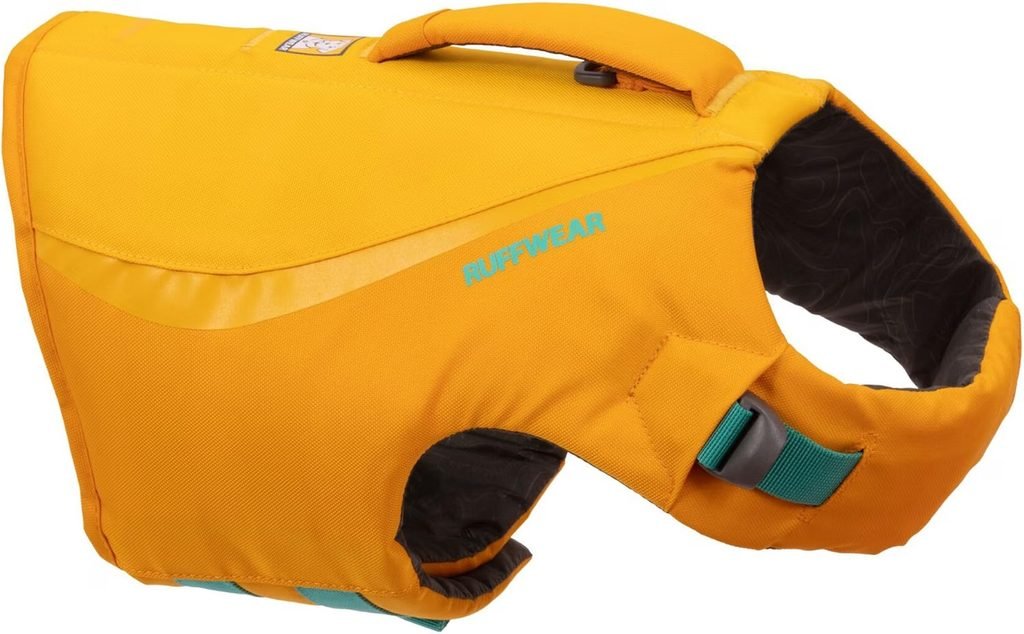
1. Ruffwear Float Coat — Best Overall for Lift-Assisted Swimming
Best for: Dogs who need real, ongoing assistance staying upright in water, not just supervision.
Price: Under $100
Why it stands out: The Float Coat’s top handle is reinforced to actually lift and hold a dog’s weight, not just steady a tired swimmer for a second — an important distinction if your dog can’t consistently support themselves. Foam panels run along the torso to keep flotation even on both sides, which matters for a dog who can’t paddle symmetrically. The leash clip-in point built into the handle means you can hold and guide at the same time, useful for a dog that can’t correct its own position or direction.
- Sizes: XS through XL (chest 13–42 in)
- Handle reinforced for lifting and holding, not just steadying
- Foam panels along the torso for even flotation on both sides
- Leash clip-in point built into the handle
Consider instead if: your dog’s main issue is hind-leg weakness specifically — the NRS pick below concentrates buoyancy there.
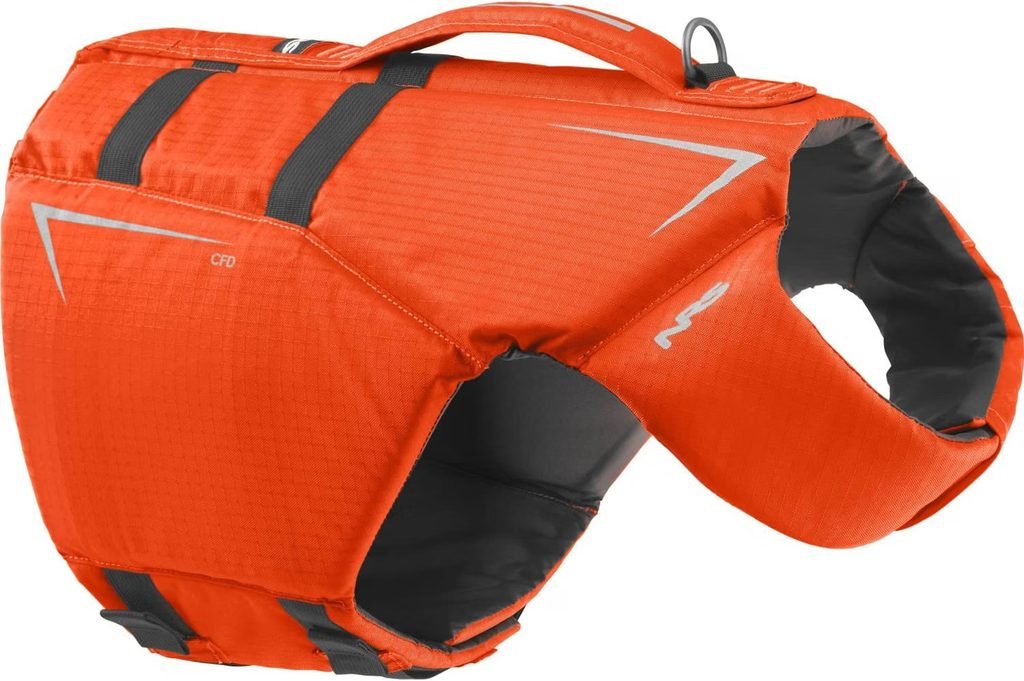
2. NRS Canine Flotation Device (CFD) — Best for Hind-End & Rear-Leg Support
Best for: Dogs with weak or non-functional hind legs — degenerative myelopathy, arthritis, or post-surgery recovery.
Price: Roughly $45–$75, depending on size
Why it stands out: The CFD places extra foam under both the neck and the belly, not just around the chest — that belly foam is what compensates for a dog whose back half isn’t paddling. It also doubles as a walking harness on land through its metal D-ring, so if your dog needs help standing or getting up a ramp after a swim, the same piece of gear covers both jobs instead of you needing separate water and land equipment.
- Sizes: XS through XL, by chest size and weight (12 lbs to 80+ lbs)
- Extra foam positioned under the neck and belly specifically
- Doubles as a walking harness via a metal D-ring
- Zippered pocket, reflective tape
Consider instead if: you’re managing a formal rehab or hydrotherapy routine — the Non-stop Dogwear pick below is purpose-built for that.
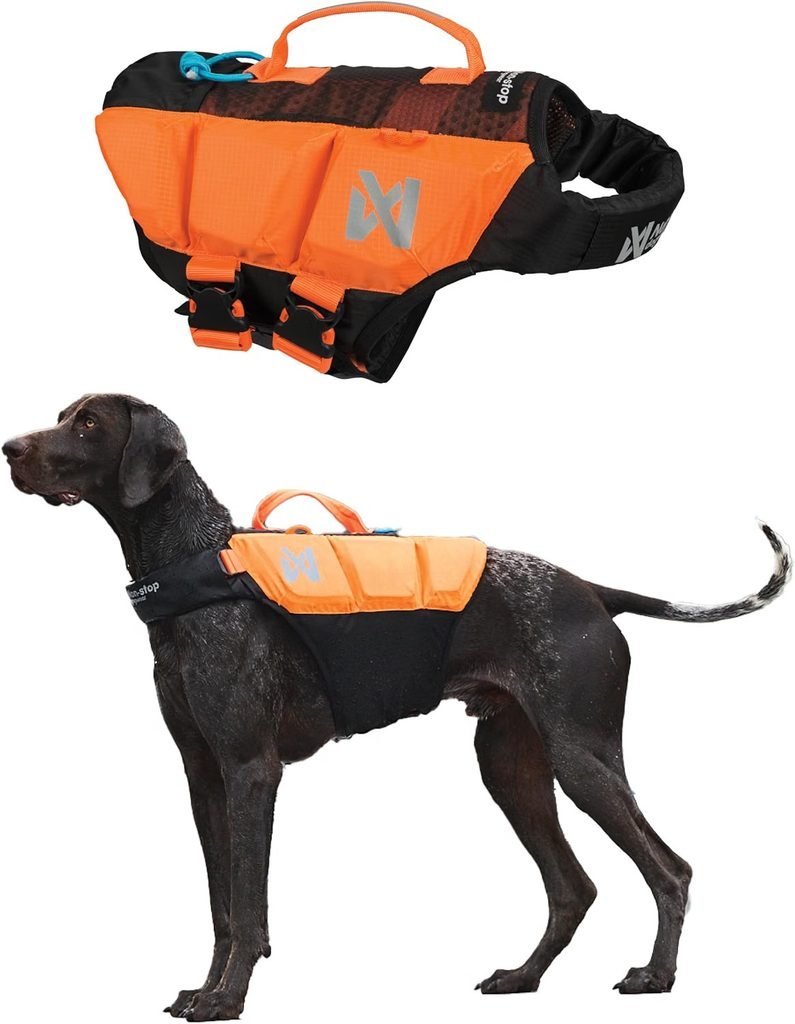
3. Non-stop Dogwear Protector — Best for Rehab & Hydrotherapy
Best for: Dogs in physical therapy, water treadmill sessions, or recovering from surgery who need directed support rather than free swimming.
Price: Roughly $100–$150, depending on size
Why it stands out: The Protector has leash attachment points on both the back and the side, so you or a rehab therapist can control resistance and direction the way you would while spotting a dog on a water treadmill, rather than just letting them float. Its side panels are segmented instead of one stiff wrap, which flexes with a dog that doesn’t yet move symmetrically. The breathable HexiVent back panel also matters for longer, lower-intensity sessions where a dog is in the vest for a while, not just a quick swim.
- Sizes: multiple sizes — check the brand’s chest-girth size chart
- Back and side leash attachment points for directional control
- Segmented, side-mounted flotation panels
- Sturdy top handle, breathable HexiVent back material
Consider instead if: you just need something simple for occasional recreational swims — the Outward Hound below covers that at a fraction of the price.
4. Outward Hound Granby Splash — Best Budget Pick
Best for: Occasional swims and light mobility support without paying for rehab-specific features.
Price: Under $30
Why it stands out: Sizes Medium and up come with dual rescue handles, and the extra fabric and padding around the belly gives a mobility-limited dog a bit of underside support and an easy lift point, without the cost of purpose-built rehab gear. It’s a reasonable choice if your dog’s limitations are mild and swims are occasional rather than a regular part of a treatment plan.
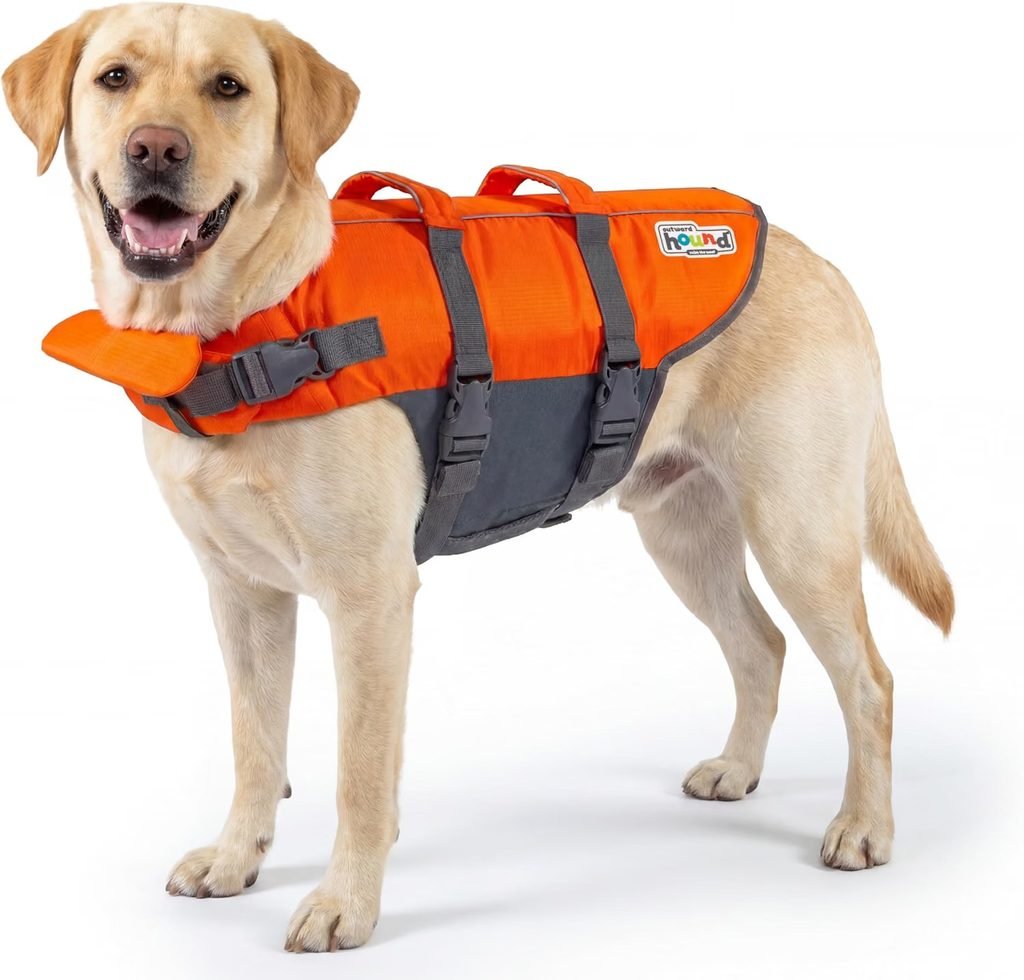
- Sizes: XS through XL, by girth (11–44 in)
- Dual handles on Medium–XL, single handle on XS/S
- Front neck float, extra belly padding
- Adjustable straps, side-release buckles
Consider instead if: your dog needs real weight-bearing lift capacity, not just an occasional grab — the Ruffwear or NRS picks above are built for that.
5. Hurtta Life Savior ECO — Best for Even Weight Distribution
Best for: Dogs whose weight shifts unevenly in the water because they only paddle well on one side or with the front legs.
Price: Under $95
Why it stands out: Its belly-strap construction is specifically built to distribute a dog’s weight evenly and keep the vest from riding up or twisting — a common problem for dogs who float lopsided because they can only paddle with their front legs. The soft, flexible EVA foam floats won’t dig in during longer wear, and the sturdy handle with an integrated leash loop covers lifting and directional control from a single grab point.
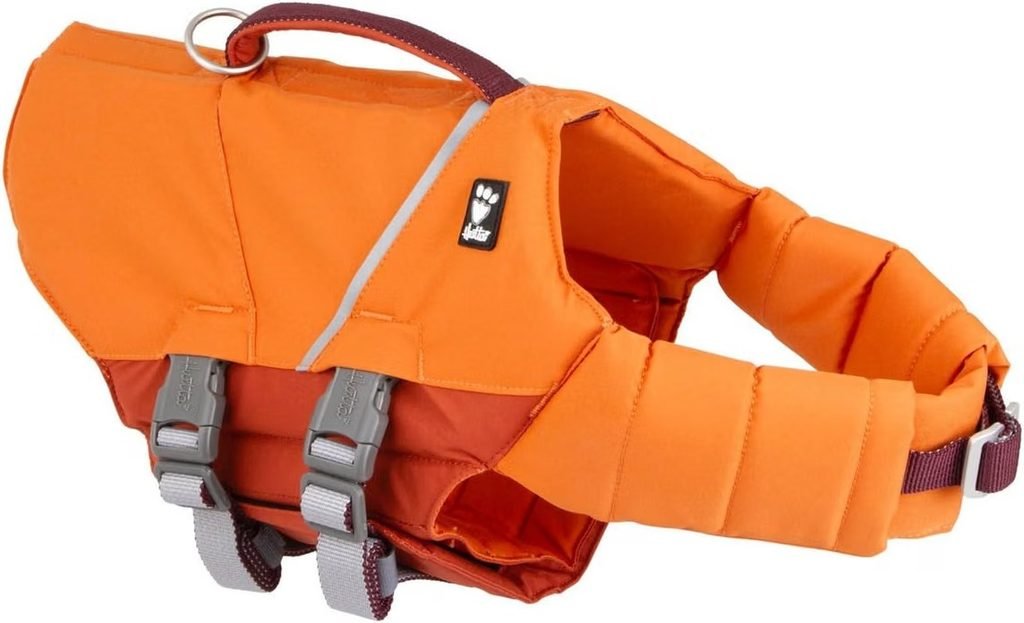
- Sizes: roughly 0–5 kg up through 30–40 kg (multiple size bands)
- Belly-strap construction for even weight distribution
- Lightweight EVA foam floats, doesn’t restrict remaining mobility
- Sturdy handle with integrated leash loop
Consider instead if: budget is the priority — the Outward Hound Granby above covers the basics for less.
What to Look for in a Life Jacket for a Handicapped Dog
- A handle rated for real lifting, not just steadying. Many jackets’ “grab handles” are meant to nudge a tired swimmer back on course, not bear a dog’s full weight — check that the handle and stitching are built for lift-and-hold if your dog can’t support themselves.
- Buoyancy placed where your dog actually needs it. A dog with hind-leg weakness needs extra float under the belly and rear, not a uniform wrap that assumes both ends paddle equally.
- More than one control point. A second D-ring or leash attachment on the side or back lets you correct direction without pulling your dog off balance the way a single front point can.
- Room for asymmetry. If your dog favors one side or moves unevenly, a segmented or side-mounted float design works with their natural (if lopsided) position instead of fighting it.
- Check with your vet or rehab specialist first. What’s right for a dog with arthritis may be the wrong fit for one with paralysis — get a recommendation specific to your dog’s condition before buying.
- Check the return policy. Fit matters even more here than usual, since a poorly positioned float can do more harm than good for a dog that can’t reposition themselves.
If you’re weighing options beyond this specific need — by size, age, or activity instead — check out our Best Dog Life Jackets (2026): The Complete Buying Guide for the full breakdown.
Note on pricing: Prices reflect approximate ranges at time of writing and may vary. Check the current listing for exact pricing.