
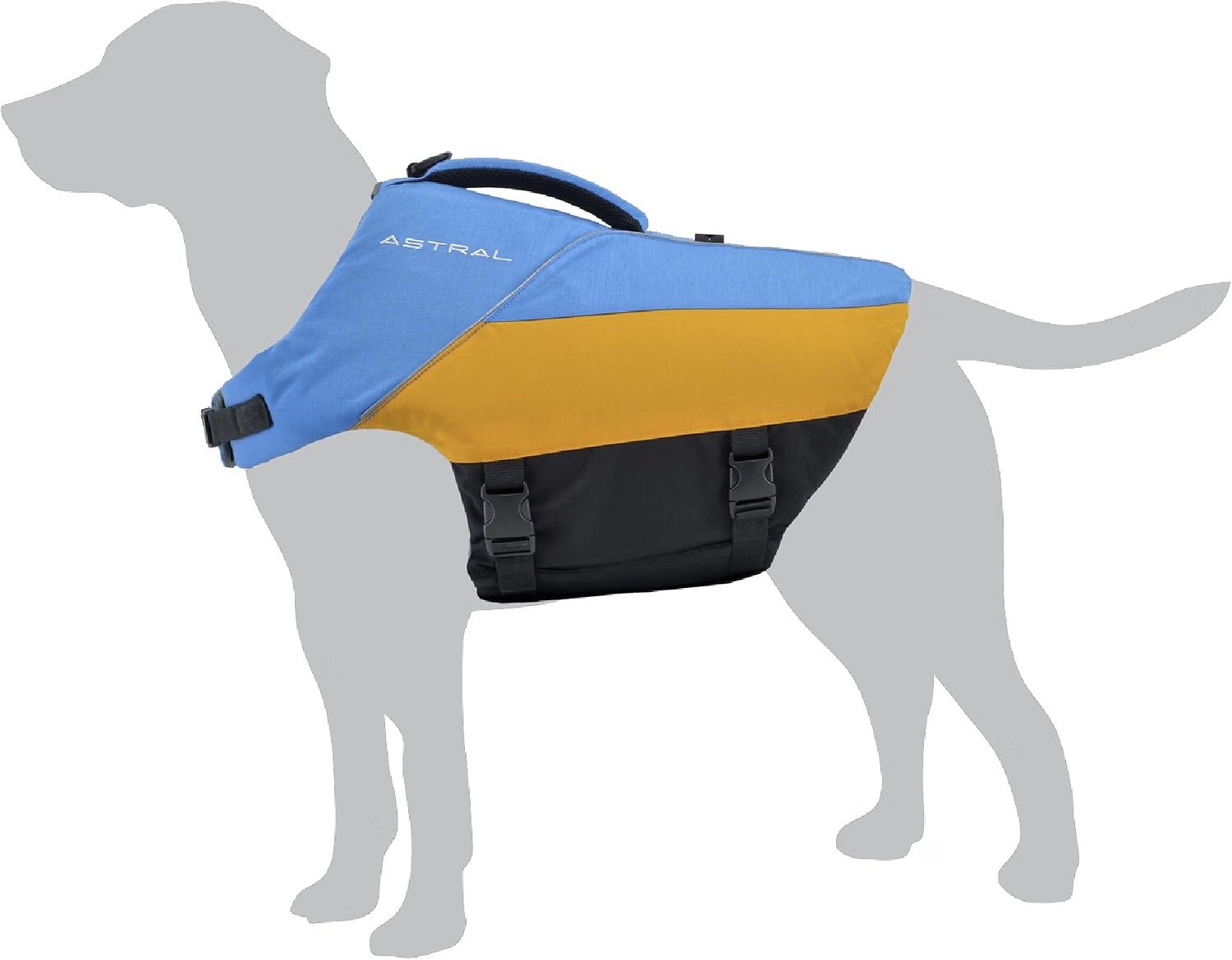
Every dog life jacket claims to keep your dog “safe in the water,” but the right one depends entirely on the dog wearing it — a confident Labrador on a lake, a flat-faced bulldog who sinks nose-first, a senior dog with weak hind legs, or a puppy who’s never seen a pool all need genuinely different gear. This guide covers the fundamentals — sizing, fit, and the features actually worth paying for — and then points you to a dedicated, in-depth guide for your dog’s specific situation.
This post contains affiliate links. As an Amazon Associate, PurrYork Pets earns from qualifying purchases at no extra cost to you. See our Affiliate Disclosure for details.
Does My Dog Actually Need a Life Jacket?
Most dogs can swim to some degree, but “can swim” and “is safe in the water” aren’t the same thing. A life jacket is worth having if any of the following apply:
- Your dog is a novice, weak, or inexperienced swimmer
- Your dog is a flat-faced (brachycephalic) breed — Bulldogs, Pugs, Boston Terriers, French Bulldogs
- Your dog is a puppy, a senior, or recovering from an injury or surgery
- Your dog has a mobility issue, paralysis, or reduced use of one or more legs
- Your dog is blind or has significantly reduced vision
- You spend time boating, kayaking, or paddleboarding with your dog, where a sudden fall in matters more than a casual swim
- Your dog is very large, very small, heavily muscled, or has a body type (short legs, deep chest) that makes natural floating difficult
If none of these apply and your dog is a strong, experienced swimmer only ever in calm, supervised water, a life jacket is still a good idea — just less urgent.
How to Size a Dog Life Jacket Correctly
More life jackets fail because of poor fit than poor design. Get these right and almost any well-made jacket will work; get them wrong and even a premium jacket won’t.
- Measure girth, not weight alone. Wrap a soft tape around the widest part of your dog’s rib cage, just behind the front legs. This number, not your dog’s weight, is what most size charts are actually built around.
- Size down for a life jacket, size up for a coat. This trips people up constantly. A loose winter coat is fine, even preferred — a loose life jacket is not. A jacket with room to spare rides up in the water, and your dog slides around inside it until the flotation ends up in the wrong place, usually under the ribs instead of under the chest.
- Check the fit on land first. You should be able to fit two fingers, flat, between the jacket and your dog’s body at the chest and belly straps — snug, not tight, and not loose enough to twist around.
- Watch the first few minutes in water. A correctly sized jacket keeps your dog’s back roughly level with the water’s surface. If the front end or back end sinks noticeably lower than the other, the fit or the flotation placement is wrong for your dog’s body, not just a quirk to ignore.
- Recheck sizing as your dog changes. Weight loss, weight gain, and growing puppies all mean a jacket that fit last season may not fit now.
Key Features Worth Paying For
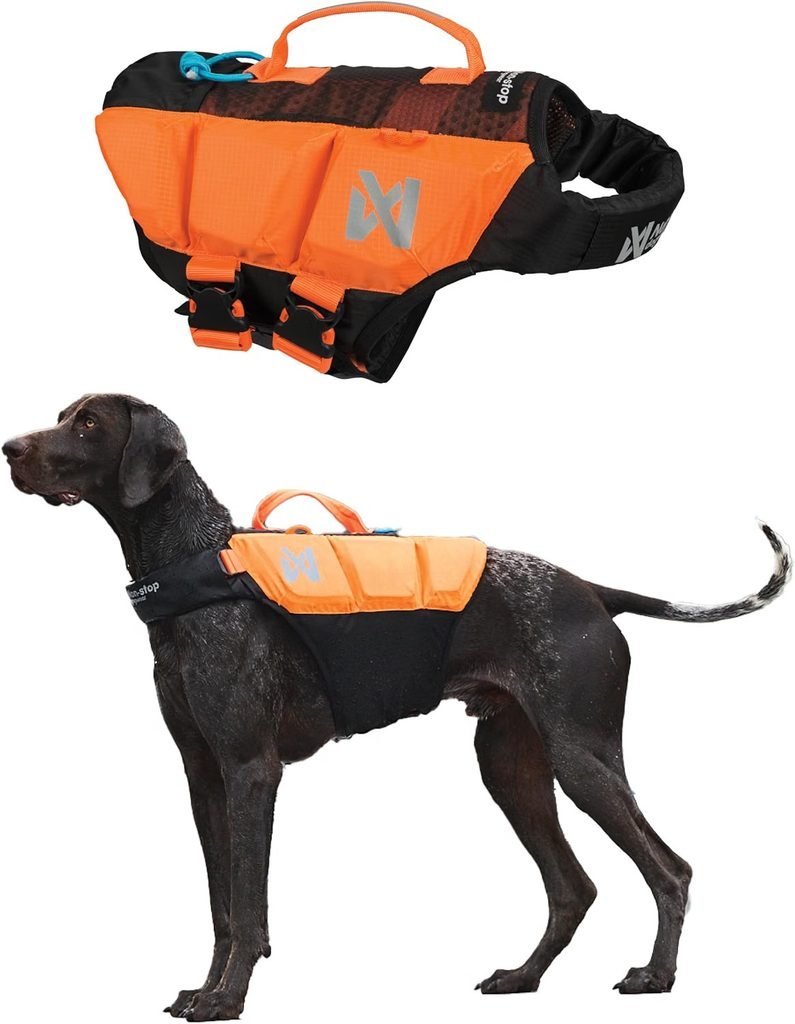
- A handle you can actually use. A rescue handle should be sized and stitched for real lifting, not decorative. If your dog might ever need to be lifted out of water or held upright, check that the handle is reinforced for that, not just for a light grab.
- A leash D-ring in a sensible spot. Useful for boating, for guiding a dog that can’t self-correct, or simply for keeping control near docks and busy shorelines.
- Buoyancy placed where your dog needs it. Foam evenly distributed around the body works for most dogs. But a flat-faced breed needs support under the chin and neck specifically, and a dog with hind-leg weakness needs extra float under the belly and rear — not just an even wrap that assumes both ends paddle the same.
- Freedom of movement at the shoulders. A jacket that restricts the front legs will tire a dog out faster and can actually make swimming harder, not easier.
- Bright color and reflective trim. These help you spot your dog in open water or low light — they don’t do anything for the dog’s own safety, so don’t let them substitute for fit or buoyancy in your decision.
- Durable, quick-drying material. Ripstop nylon and closed-cell foam hold up far better than cheaper vinyl or open-cell foam, which can absorb water and get heavier, not more buoyant, over time.
- Adjustability at multiple points. Neck, chest, and belly straps that adjust independently accommodate more body shapes than a one- or two-strap design.
“Life Jacket” vs. “Flotation Aid”
Most dog life jackets sold today, including nearly everything recommended in this guide series, are flotation aids rather than Coast Guard–approved personal flotation devices in the strict sense used for human PFDs — there’s no equivalent formal certification body for dogs. That doesn’t make them ineffective; it just means the marketing term “life jacket” is used loosely across the industry. What matters in practice is buoyancy rating relative to your dog’s weight, fit, and handle strength — the factors covered above — rather than a certification label.
Find the Guide Built for Your Dog
General buying advice only goes so far. For a specific situation, one of these in-depth guides will get you a more precise recommendation:
- Best Dog Life Jackets With Chin Float — for novice swimmers, senior dogs, puppies, and any dog that tends to tire and let its head drop.
- Best Dog Life Jackets For Blind Dogs — for dogs that navigate water by feel, sound, and contact with you rather than sight.
- Best Dog Life Jackets For Handicapped Dogs — for dogs with paralysis, arthritis, amputation, or other mobility limitations that need real lift support, not just buoyancy.
- Best Dog Life Jackets For Boating — for dogs that spend time on boats, docks, and near open water, where a sudden fall matters more than a casual swim.
- Best Dog Life Jackets For Large Dogs — for bigger breeds that need higher buoyancy ratings and handles rated for more weight.
- Best Life Jackets For English Bulldog — for flat-faced breeds whose short muzzle and heavy chest make natural floating especially difficult.
- Best Dog Life Jackets for Swimming — for general-purpose recreational swimming, pool days, and lake trips.
- Best Dog Life Jackets For Small Dogs — for toy and small breeds, where even brief fatigue affects head position quickly.
Caring for a Dog Life Jacket
- Rinse with fresh water after every use in salt water, chlorinated pools, or lakes with heavy algae.
- Air dry fully before storage — packing away a damp jacket invites mildew and breaks down foam faster.
- Check buckles, stitching, and D-rings each season for cracking, rust, or fraying before the first swim of the year.
- Replace the jacket if the foam feels compressed or noticeably less buoyant than when new — foam does degrade with age and sun exposure.
Frequently Asked Questions
Can my dog wear a life jacket all day? Most are fine for several hours of active use but aren’t designed for all-day wear. Take it off during extended breaks on land to avoid chafing and overheating.
Do strong swimmers still need one? It’s optional for confident, experienced swimmers in calm water, but strongly recommended for boating, open water, or any situation with currents, waves, or a real chance of an unexpected fall.
Is a harness the same thing as a life jacket? No. A harness controls a dog on land and isn’t built for buoyancy. Some life jackets double as a walking harness on land, but a plain harness alone won’t keep a dog afloat.
How do I know if the buoyancy rating is enough? Check that the manufacturer’s weight range covers your dog’s actual weight, and lean toward the higher end of a size range for weaker swimmers or dogs carrying extra weight.
Note on pricing: Prices referenced across our dog life jacket guides reflect approximate ranges at time of writing and may vary. Check the current listing for exact pricing.