
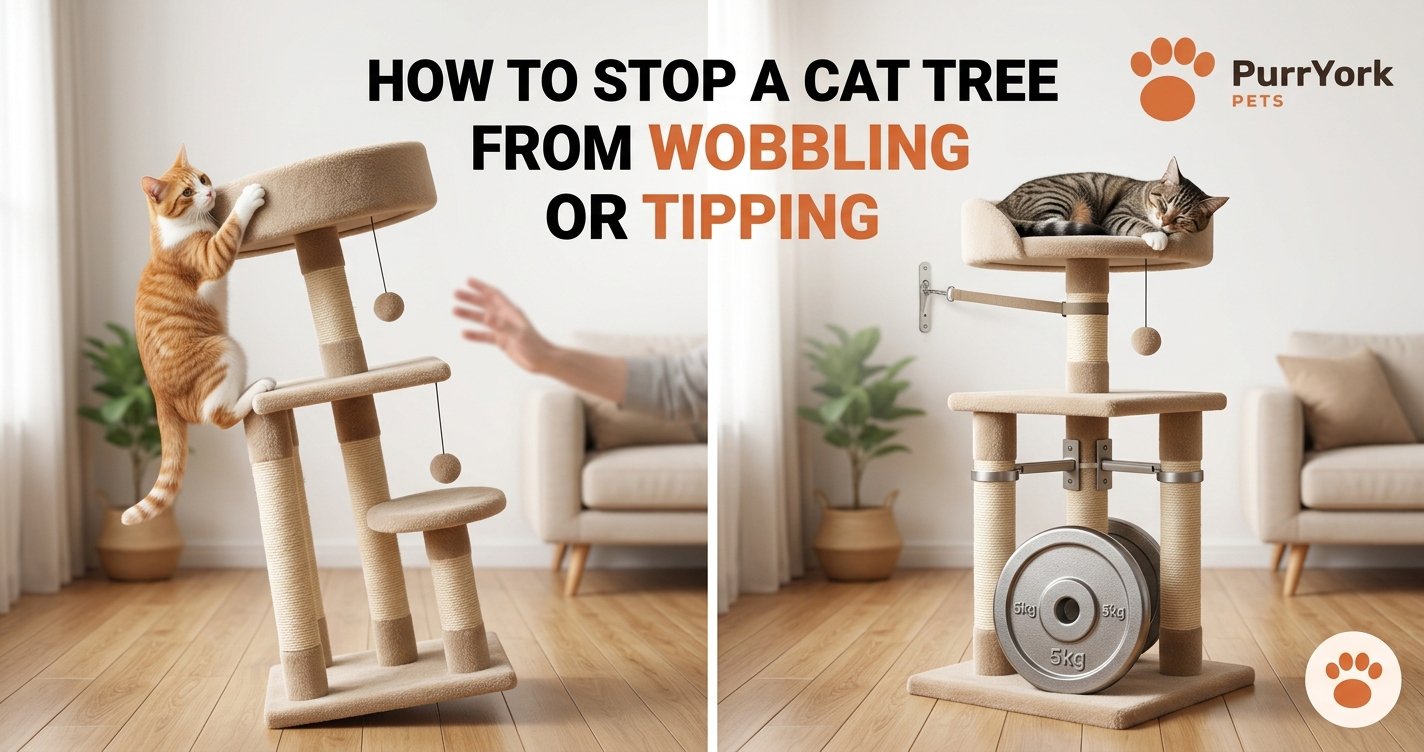
A cat tree may wobble because the base is uneven, hardware has loosened, or a post or platform is damaged. Find where the movement starts before trying a fix. A non-slip mat may help a tree slide less, but it won’t repair a loose joint or a cracked base.
Keep your cat off the tree while you inspect it. For advice on choosing a stable replacement, see our complete guide to the best cat trees.
1. Check Where the Movement Starts
With the tree empty, gently check the base, posts, and platforms. Notice whether:
- The whole tree slides across the floor.
- The base rocks or one corner lifts.
- A post turns or shifts where it joins another part.
- The base stays put, but the upper levels sway.
These clues point to different problems. A sliding base may need a better grip on the floor. A loose post or rocking base needs attention to the assembly or structure first.
2. Check the Floor and Base
Make sure the tree is on a level surface and that no rug edge, debris, or object is trapped under the base. If the tree rocks on a thick carpet, try placing it temporarily on a level hard floor to see whether the floor covering is contributing to the movement.
A thin, floor-compatible non-slip mat may reduce sliding on a smooth surface. It won’t fix a warped base, damaged board, or loose post. Don’t wedge unstable objects under the base to level it.
3. Retighten the Connections
Use the tools and instructions supplied with the tree. Check the connections from the base upward, including threaded posts, platform bolts, and brackets. Tighten each fastener firmly, but don’t overtighten: that can damage the board or threaded insert.
If a screw spins without tightening, a post remains loose, or the surrounding material is cracked, stop using that section until you can replace or repair the damaged part. The manufacturer’s instructions should take priority for any specific model.
4. Reassemble If a Joint Is Still Loose
If tightening doesn’t solve the problem, disassemble only as much as needed to check the loose joint. Look for missing hardware, a post that isn’t seated straight, damaged threads, or a platform installed in the wrong position. Reassemble it using the original hardware and instructions.
Don’t rely on extra glue, improvised brackets, or larger screws unless the manufacturer approves that repair. A change that seems secure at first can damage the structure or leave a weak connection hidden inside.
5. Anchor a Tall Tree When the Manufacturer Recommends It
Tall or narrow trees can be more prone to tipping, especially when a cat jumps onto a high platform. If the tree includes an anti-tip strap or wall bracket, install it according to the manufacturer’s directions and use hardware suited to your wall.
A wall strap must attach to a secure point. Don’t assume a screw in drywall alone will hold; use the correct fixing for the wall type, and consult a qualified installer if you’re unsure. Product guidance from Mau, for example, recommends securing its cat furniture taller than 20 inches with a suitable anti-tip device. Requirements vary by product, so follow your own tree’s manual.
For especially tall climbing towers, compare your setup with our guide to tall cat trees for climbing cats.
6. Replace Damaged Parts or Retire the Tree
Stop using the tree if the base is cracked or warped, a post is split, a platform is loose despite correct assembly, or an anchor point is damaged. Contact the manufacturer about replacement parts. If the structure can’t be made secure, replace it.
A bigger cat or a busy multi-cat household may need a sturdier design with a broad base and suitable weight guidance. See our picks for cat trees for large cats and small cat trees for apartments.
Common Causes and Fixes
The whole tree slides.
Check whether the floor is smooth and the base has grip. A suitable non-slip mat may help with sliding, provided the base itself is sound.
The base rocks.
Check for debris, rug edges, uneven flooring, or a warped base. Don’t hide the rocking by wedging objects underneath.
One post moves at the joint.
Retighten it using the original hardware and instructions. If the threads or attachment point are damaged, stop using that section and seek a replacement part.
The top sways but the base stays planted.
Check all connections from the bottom upward. If the tree is tall and has an included wall anchor, install it as directed.
The tree still wobbles after tightening.
Look for damage or an assembly issue. If the cause isn’t clear, contact the manufacturer rather than improvising a structural repair.
Frequently Asked Questions
Is a little movement normal?
Some movement may happen when a cat jumps or scratches, but the tree should not rock at the base, have loose joints, lean, or feel at risk of tipping. If you’re unsure, keep your cat off it while you inspect it.
Will a non-slip mat stop my cat tree from tipping?
A mat may reduce sliding on a smooth floor. It won’t correct loose hardware, a narrow or damaged base, or a swaying upper structure.
Should I put a heavy object on the base?
Don’t add loose weights or objects that could slide or fall. They may not fix the actual problem. Follow the tree maker’s stability instructions and use only approved parts or anchoring methods.
Should I anchor every cat tree to a wall?
Follow the manufacturer’s directions. Anchoring may be especially important for tall or narrow trees, but the right hardware depends on the tree and wall.
What if my cat stops using the tree after it wobbles?
First make the tree stable. Then let your cat approach it at their own pace and reward voluntary exploration. If your cat still avoids it, see our guide on why your cat might not use its cat tree.
Final Thoughts
Start by checking the floor and base, then inspect and tighten connections from the bottom upward. Use a non-slip mat only for sliding, and install any included wall anchor according to the manufacturer’s instructions. Replace damaged parts or retire a tree that remains unstable.
For more advice, read our guides to cat trees for large cats and why cats may avoid their cat tree.