
Car travel gets harder on dogs as they age. Stiff hips and shoulders make it painful to be pulled or lifted into a harness, thinning skin chafes under narrow straps, and reduced core strength means an older dog can’t brace itself the way a younger dog can during a hard stop. The right seat belt setup addresses this directly — padded, wide-contact harnesses reduce pressure on sore joints, easy-clip buckles cut down on handling time, and a short, controlled tether keeps a less stable dog from sliding or being thrown forward. Here are five picks built around comfort and ease of use for older dogs, without cutting corners on crash protection.
This post contains affiliate links. As an Amazon Associate, PurrYork Pets earns from qualifying purchases at no extra cost to you. See our Affiliate Disclosure for details.
1. Kurgo Tru-Fit Enhanced Strength Harness — Best Overall for Senior Dogs
Best for: Owners who want one crash-tested harness that handles daily in-and-out without a fight.
Price: Roughly $30–$45, depending on size
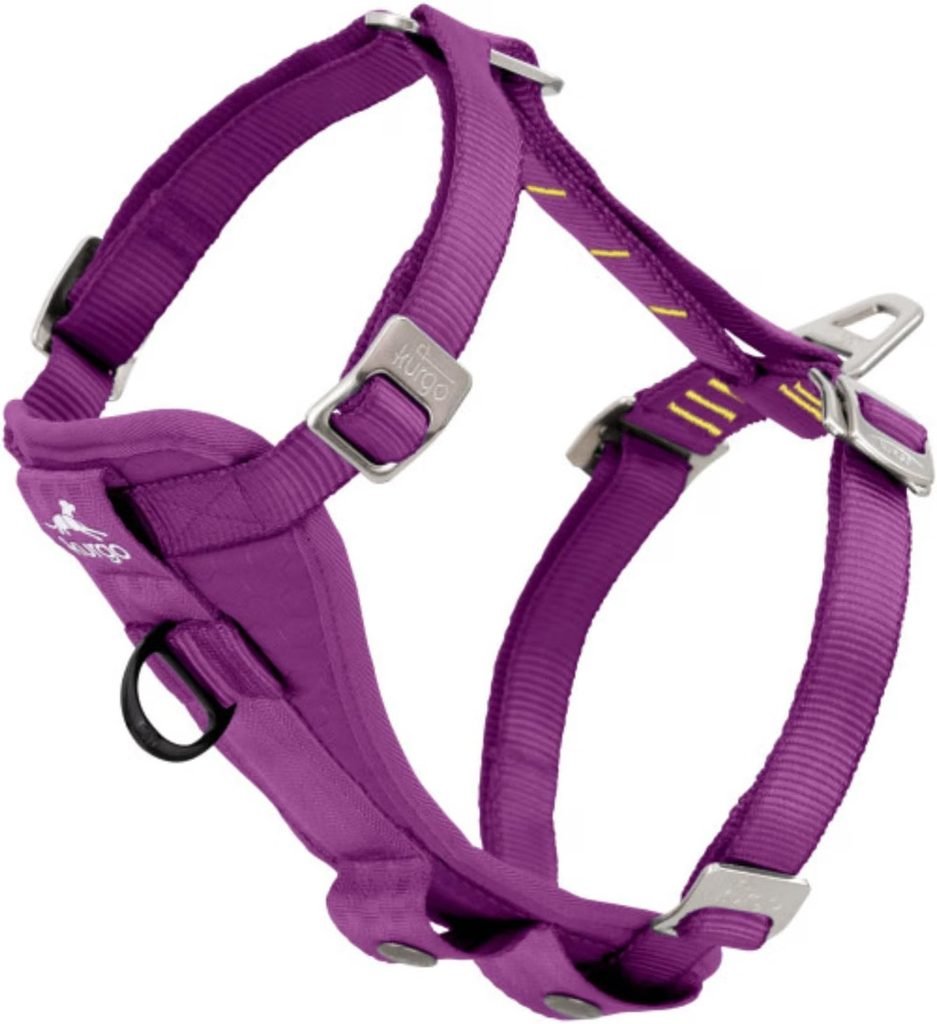
Why it stands out: All-steel buckles hold up better than plastic clips when a dog leans on the harness getting in and out of the car — a real issue with less agile seniors who use the door frame or seat edge for support. The five-point adjustment lets you loosen the fit around the neck while keeping it snug across the chest, which matters for a dog with a sensitive throat or early tracheal issues. It’s independently crash-tested across a 5–75 lb range, so smaller and larger seniors are both covered.
Key specs:
- Sizes: X-Small through X-Large
- Five-point adjustment for a customizable, joint-friendly fit
- Crash-tested (5–75 lb range)
- All-steel buckle hardware
- Includes seat belt attachment
Consider instead if: your dog can no longer jump or climb into the car at all — see the PetSafe Happy Ride booster below, which removes that step entirely.
2. PetSafe Happy Ride Quilted Booster Seat — Best for Dogs Who Struggle to Jump or Climb
Best for: Small senior dogs with mobility loss who can no longer safely jump into the back seat.
Price: Roughly $35–$50, depending on size
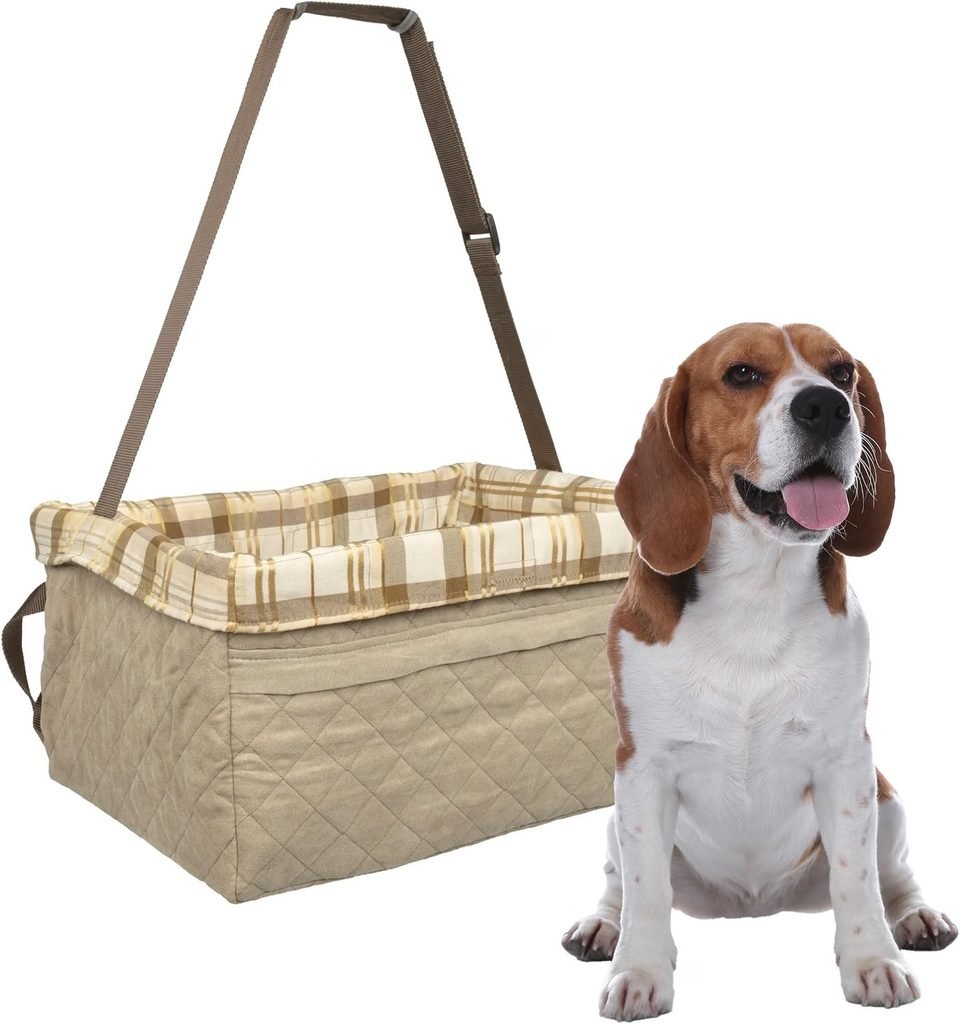
Why it stands out: An elevated booster removes the need for a dog to jump or be lifted at an awkward angle — you set the dog in rather than clipping a harness over a standing, shifting animal, which is easier on arthritic hips and shoulders. The three-point stability system (headrest strap, lower seat strap, seat belt loops) limits swaying, and the raised position lets an older dog see out the window rather than only the seat back, which can also ease travel anxiety that tends to increase with age.
Key specs:
- Adjustable for most front or back seats with headrests
- Three-point stability system
- Quilted microsuede with removable, machine-washable liner
- Includes safety tether that attaches to your dog’s harness
Consider instead if: your dog is too large for a booster — the Kurgo or EzyDog harnesses below work at floor/seat level instead.
3. SlowTon 2-in-1 Seat Belt & Harness — Best Budget Pick for Sensitive Skin
Best for: Owners on a budget whose senior dog has thinning fur or skin sensitivity.
Price: Roughly $20–$25, depending on size
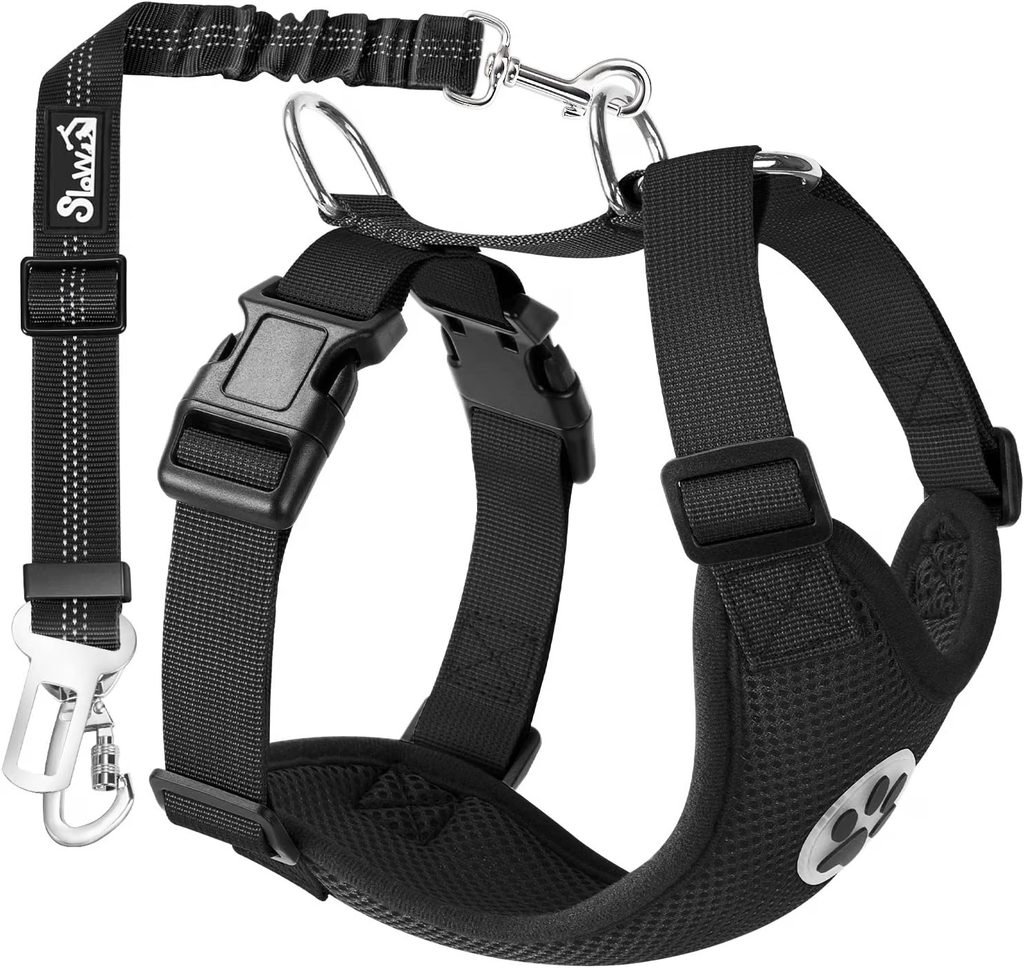
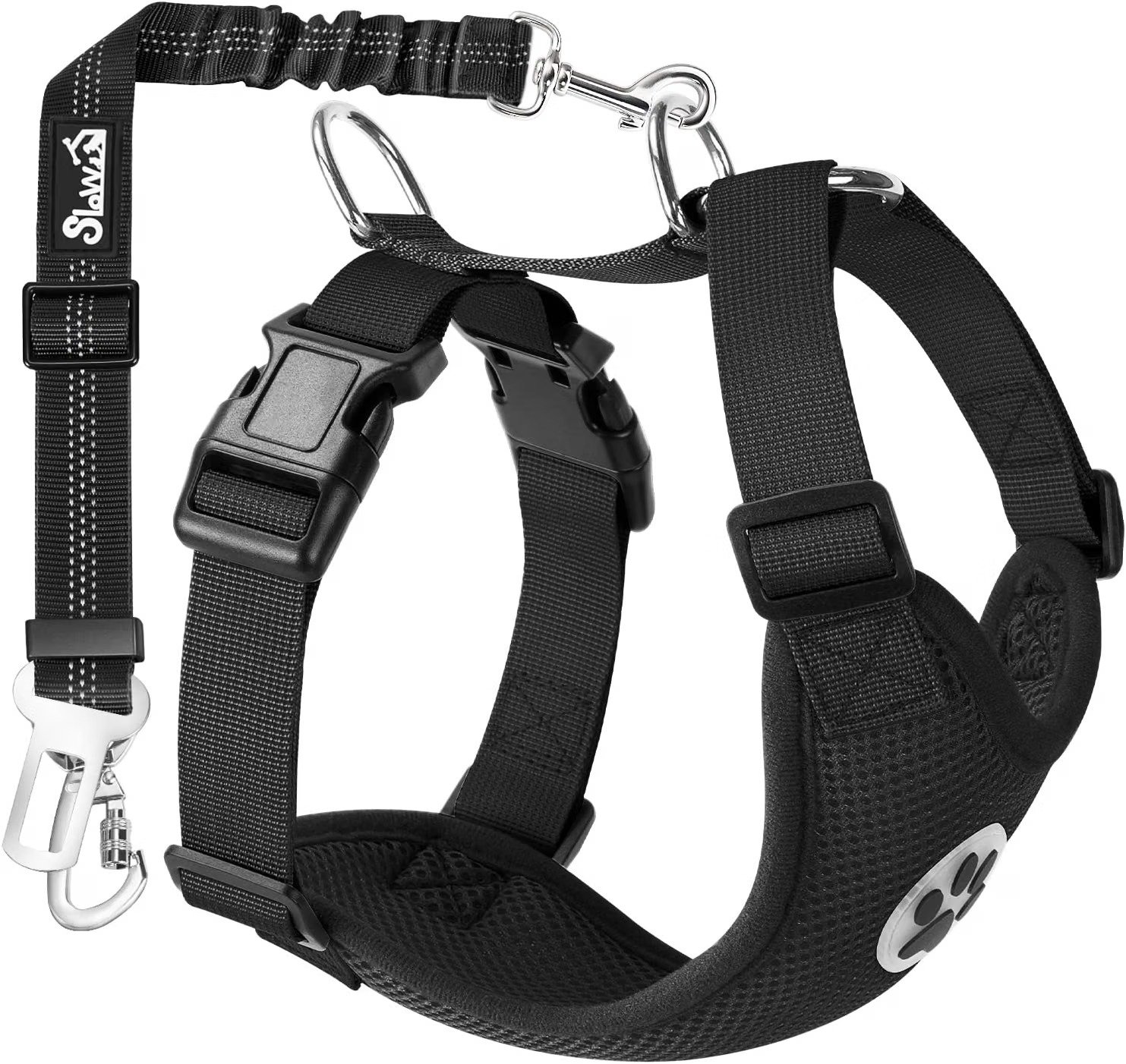
Why it stands out: Double-layer breathable mesh is gentler on aging, thinner skin than solid nylon, and the elastic bungee tether absorbs some jolt from sudden stops instead of transferring it straight to the chest — a small difference that matters more for a dog with arthritis. It clips to a seat belt latch, headrest, or LATCH anchor, so it works across most vehicles without extra hardware.
Key specs:
- Sizes: Small through Large (by chest measurement)
- Breathable double-layer mesh
- 2-in-1 seat belt and harness set
- Elastic bungee shock absorption
Consider instead if: your dog takes long highway drives regularly — this tether-style system suits shorter, moderate trips better than the more structured harnesses above.
4. EzyDog Drive Harness — Best for Larger Senior Dogs
Best for: Bigger senior breeds (Labs, Shepherds, large mixes) that put more force on a harness during a stop.
Price: Roughly $120–$130, depending on size.
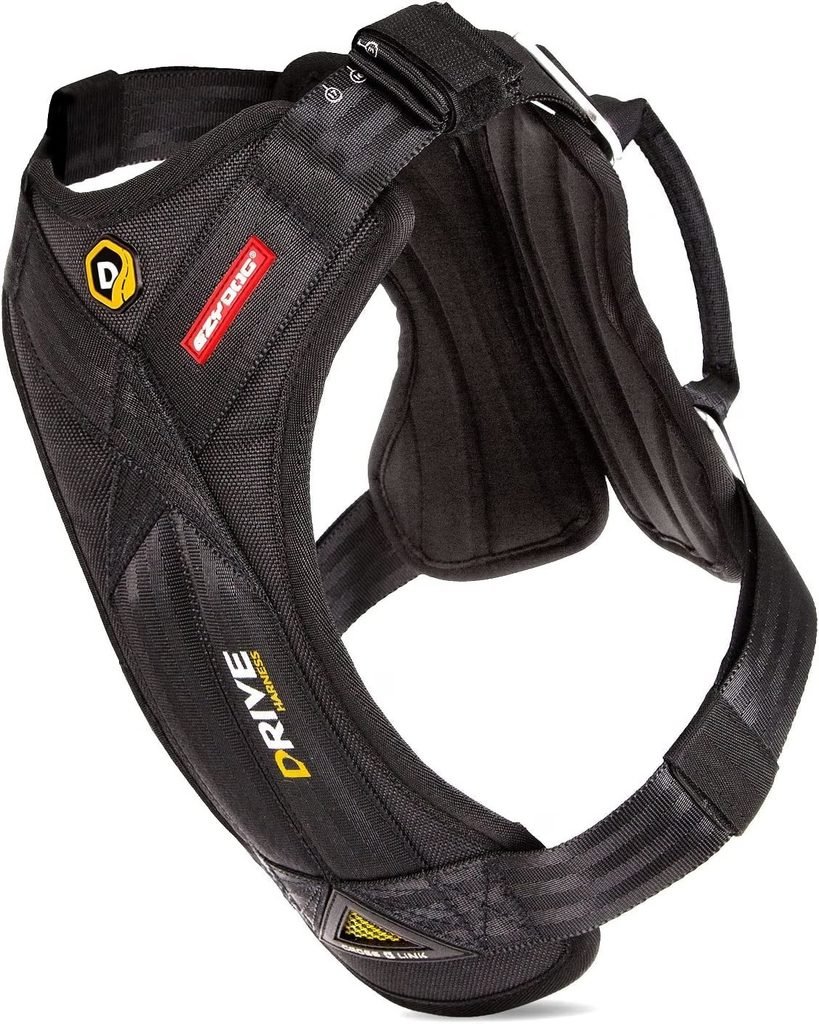
Why it stands out: The reinforced back panel holds up under the added force a larger dog generates, and the closure only needs to be set once for your dog’s size — useful when you want to minimize handling time getting a stiff, heavier dog settled before a drive. It’s crash tested and built firmer than the mesh options above, which gives more structure to a large-breed senior with less muscle tone to hold themselves in place.
Key specs:
- Sizes: Small, Medium, Large
- Reinforced, structured back panel
- Crash-tested
- “Set once” buckle closure system
Consider instead if: your dog is very frail or has limited tolerance for a firmer harness — the SlowTon mesh option above is more forgiving.
5. Sleepypod Clickit Sport Plus — Best Crash-Test Rating
Best for: Owners who want the most rigorously tested crash protection available, regardless of cost.
Price: Roughly $90–$120, depending on size.
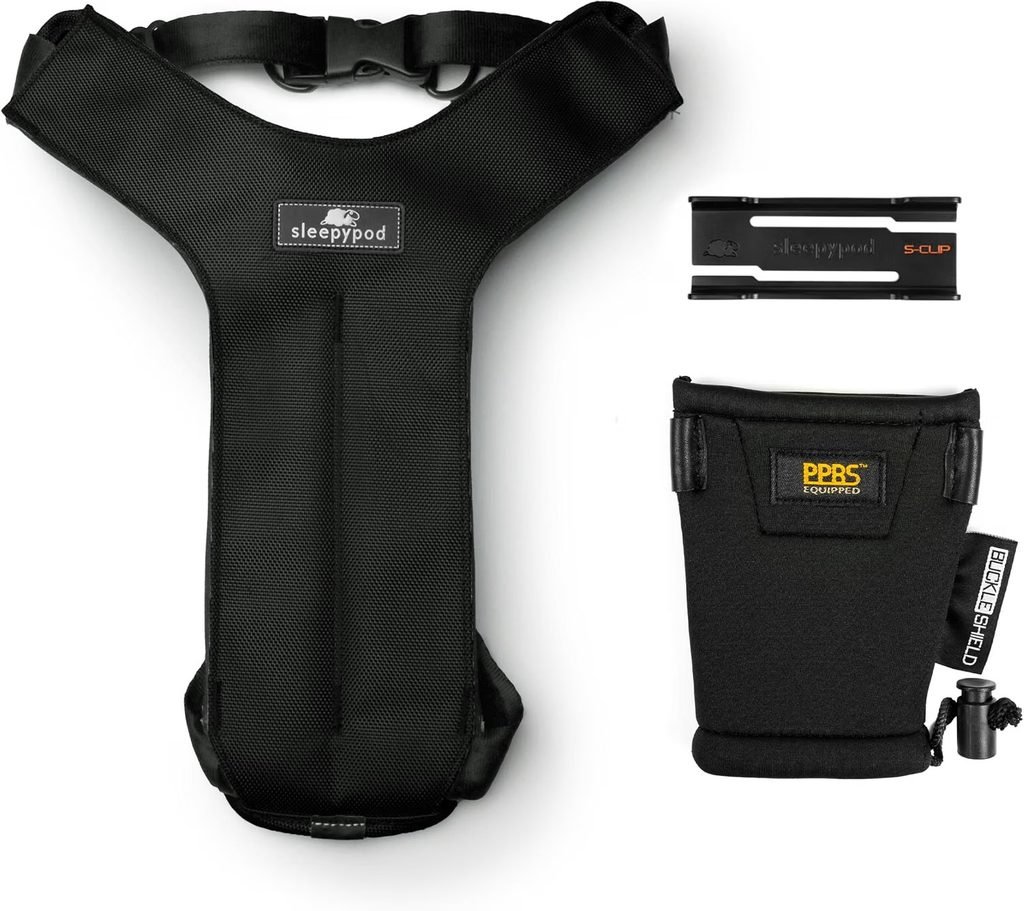
Why it stands out: Independent testing from the Center for Pet Safety has found that many harnesses marketed as “crash-tested” don’t actually hold up under real collision forces — the Clickit line is among the few that consistently performs well in that testing. The wide chest plate distributes impact force rather than concentrating it, which is the outcome you want if your priority is worst-case protection for a dog that can no longer easily brace or reposition itself.
Key specs:
- CPS-tested crash protection
- Wide, padded chest plate
- Reinforced stitching at load-bearing seams
- Adjustable chest and neck straps
Consider instead if: budget or a precise, fussy fitting process is a dealbreaker — this is the most expensive option here, and sizing runs tight enough that exchanges are common.
What to Look for in a Harness for Senior Dogs
- Padding matters more than it used to. A wide, padded chest panel distributes force away from joints and thinning skin — prioritize this over sleeker, thinner designs built for younger dogs.
- Easy-clip buckles reduce handling time. A dog with arthritis doesn’t want to be wrestled into a harness; steel or one-click buckles get the job done faster and with less discomfort.
- Consider whether your dog can still jump into the car at all. If not, a booster seat or ramp solves a problem a harness alone can’t.
- Keep the tether short. Less slack means less force on a dog that can’t brace itself the way it once could during a hard stop or sharp turn.
If your dog’s main issue is motion sickness rather than mobility, check out our Best Dog Car Harnesses for Car Sickness (2026) guide instead, or see the full Best Dog Car Seat Belts & Harnesses (2026): The Complete Buying Guide for every use case.
Note on pricing: Prices reflect approximate ranges at time of writing and may vary. Check the current listing for exact pricing.