
Canine cognitive dysfunction — often called doggy dementia — shows up as disorientation, changes in sleep-wake cycles, less interest in family members, and reduced interest in play, and it affects a meaningful share of senior dogs: research suggests roughly a third of dogs over 8 show at least one sign, rising further with age. Mental stimulation doesn’t reverse cognitive decline, but there’s real evidence that ongoing enrichment can help slow its progression and improve quality of life in dogs already showing symptoms. The toys that help most for this specific situation look a little different from standard puzzle toys: simpler mechanics that reward effort without causing frustration, scent-based activities a dog can do from a lying-down position if mobility is also declining, and comfort objects that ease restlessness rather than demand focus. A quick note before the picks: if you’re noticing new disorientation, sleep changes, or behavioral shifts in your senior dog, that’s worth a vet visit to rule out other causes and discuss options — toys support enrichment, they aren’t a treatment on their own.
This post contains affiliate links. As an Amazon Associate, PurrYork Pets earns from qualifying purchases at no extra cost to you. See our Affiliate Disclosure for details.
1. Outward Hound Nina Ottosson Dog Brick Puzzle — Best Overall
Best for: Senior dogs who still enjoy a moderate mental challenge and have some puzzle-toy experience.
Price: Roughly $15–$20
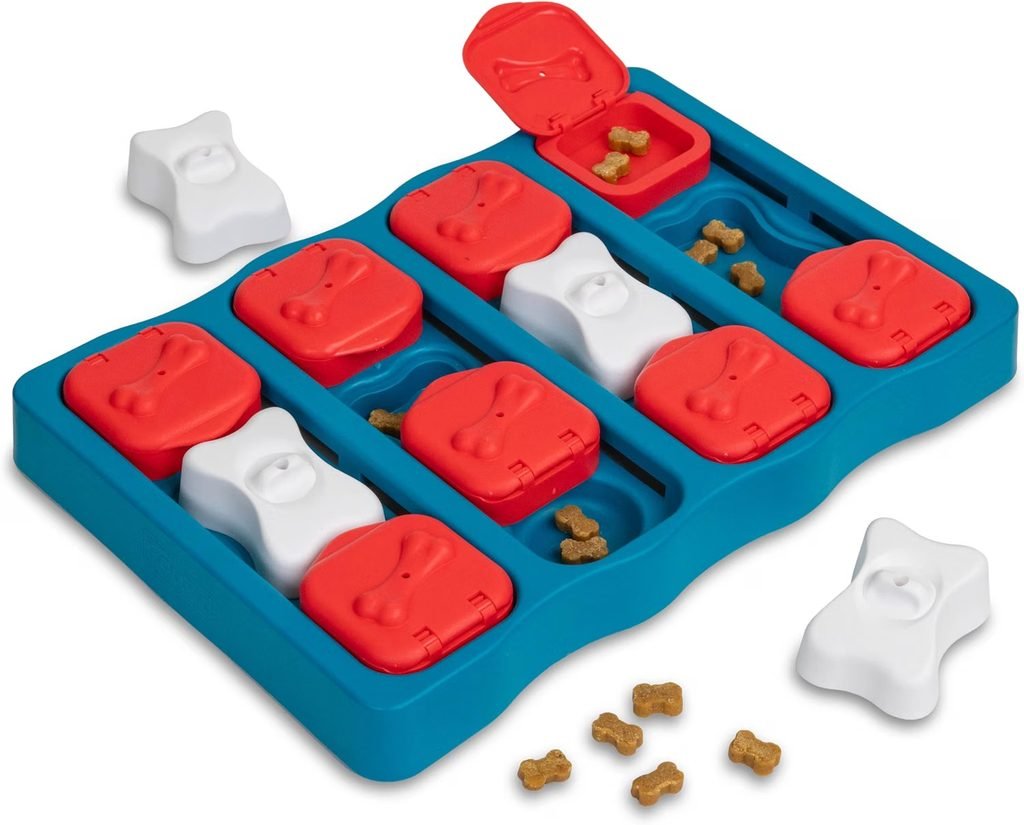
Why it stands out: The Brick offers three ways to interact — flipping, sliding, and pulling bricks apart to reveal treats underneath — which gives a dog several distinct problem-solving tasks in one toy rather than a single repetitive motion. Twenty treat compartments mean a longer session before the reward runs out, and because it’s flat and low to the ground, a dog with reduced mobility can work through it without needing to stand or reach. It’s an easier puzzle than more advanced Nina Ottosson designs, which matters for a dog whose problem-solving ability may be gradually declining.
Key specs:
- 20 treat compartments across three interaction types (flip, slide, pull)
- Low-profile design, workable from a lying-down position
- Removable bone pieces, works with wet or dry food
- Easy to clean, dishwasher safe
Consider instead if: your dog is newer to puzzle toys or gets frustrated easily — start with the simpler SPOT Shuffle Bone below before stepping up to this one.
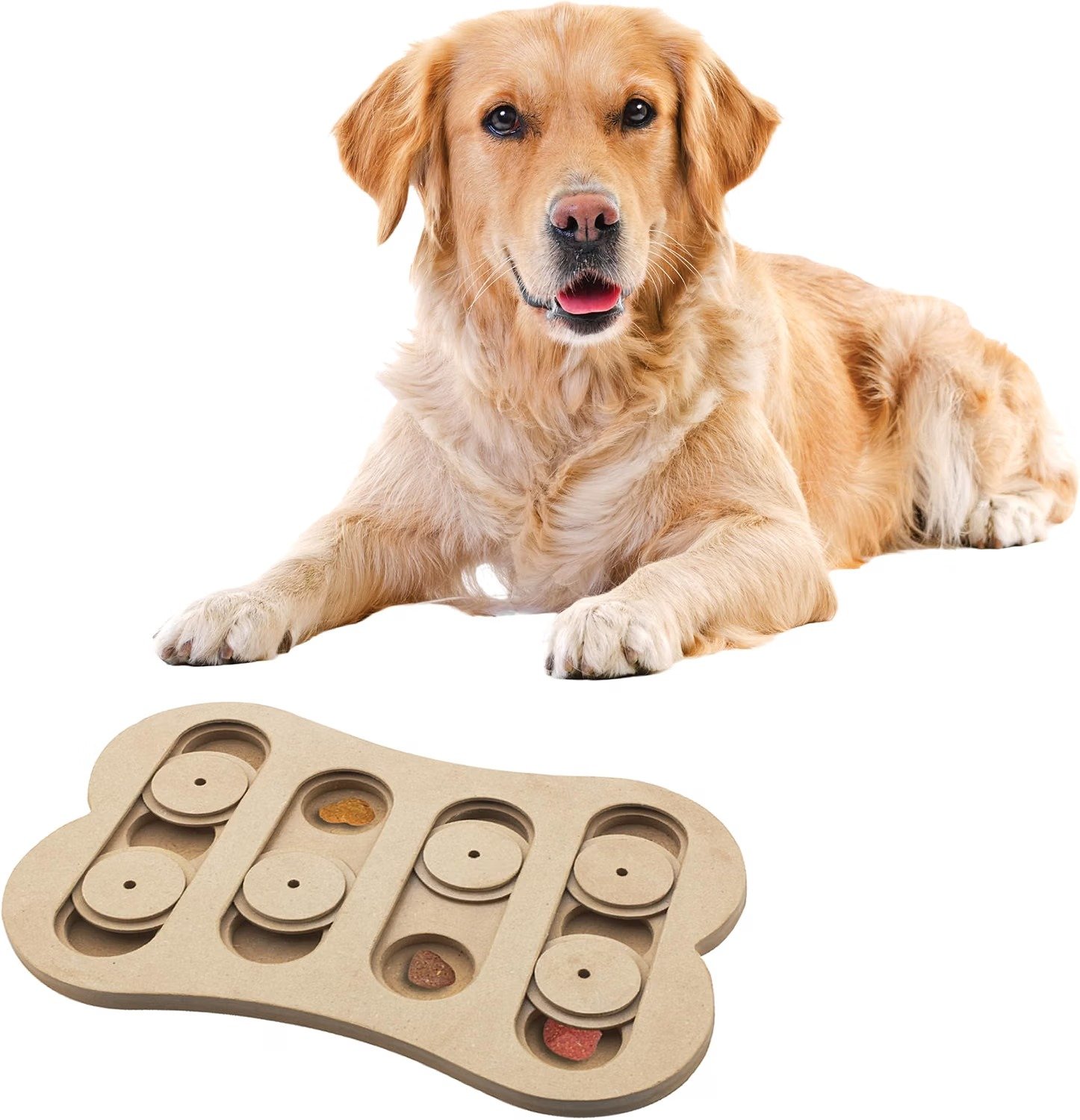
2. SPOT Seek-A-Treat Shuffle Bone Dog IQ Puzzle — Best for Beginners
Best for: Dogs in earlier-stage cognitive decline, or any senior dog who hasn’t used puzzle toys before.
Price: Roughly $12–$18
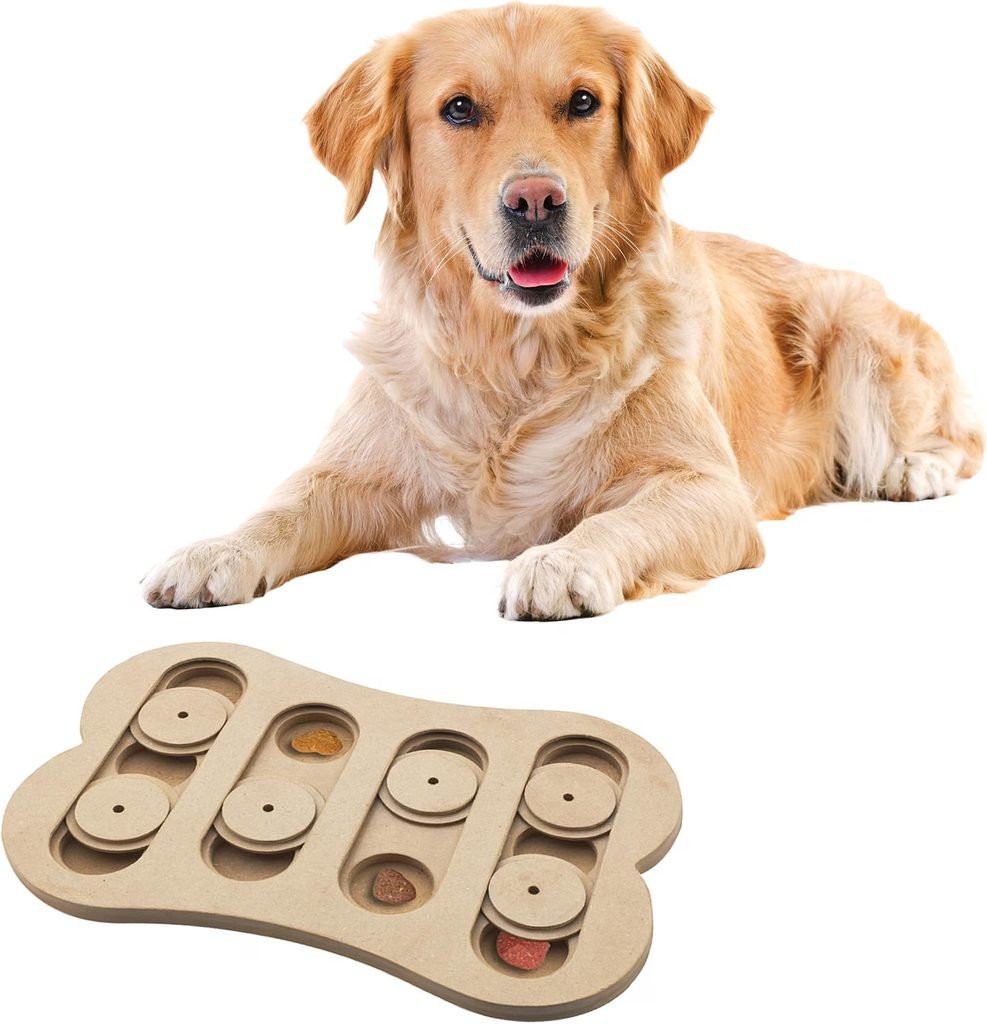
Why it stands out: This is a genuinely simple mechanic — sliding wooden covers back to reveal treat holes underneath — with far less to figure out than a multi-step puzzle. That simplicity matters for cognitive support: the goal is engagement and a successful outcome, not a frustrating challenge that leaves a confused dog giving up. The wood construction also gives it a different scent and texture than the plastic puzzles most dogs are used to, which adds a small amount of sensory variety on its own.
Key specs:
- Simple slide-to-reveal mechanic
- Press-board wood construction
- Treat holes sized for kibble or small treats
- Compact, easy to store and bring out on a routine schedule
Consider instead if: your dog masters this quickly and needs more of a challenge — the Nina Ottosson Brick above adds two additional interaction types once your dog is ready.
3. Hyper Pet IQ Treat Mat — Best for Low-Mobility, Lying-Down Enrichment
Best for: Senior dogs whose physical mobility has declined alongside cognitive changes.
Price: Roughly $5–$10
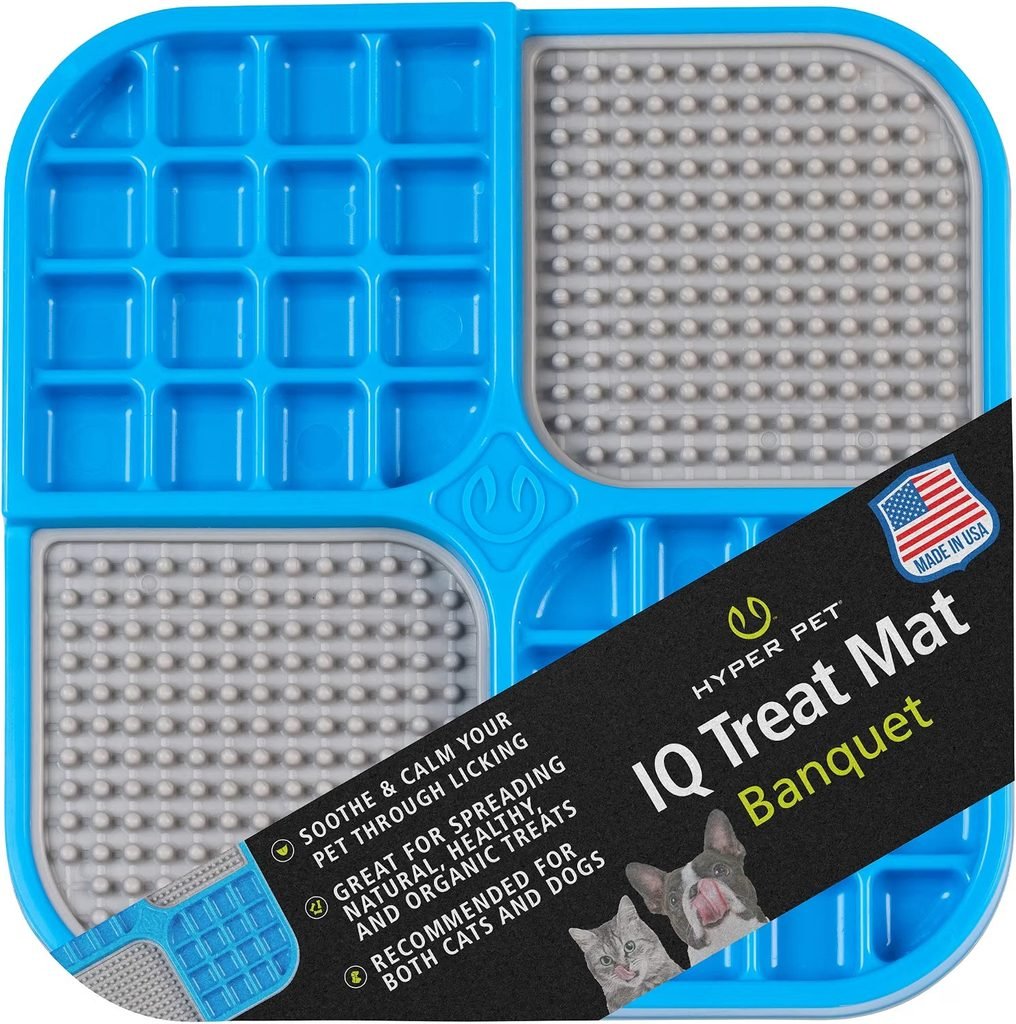
Why it stands out: Scent is one of the last senses to decline in aging dogs, which makes a snuffle-style mat a genuinely effective form of enrichment even for dogs who’ve lost interest in more physically active play. The textured surface holds scattered kibble or treats for a dog to sniff out, and because it lies flat on the floor, a dog can work through it while lying down rather than needing to stand, paw, or manipulate moving parts. That combination — real mental engagement with minimal physical demand — is specifically useful as mobility and stamina decline alongside cognition.
Key specs:
- Textured fabric surface holds scattered treats or kibble
- Usable from a lying-down position
- Machine washable
- No batteries or moving parts to figure out
Consider instead if: your dog is a fabric-shredder rather than a sniffer — this isn’t built to survive aggressive chewing.
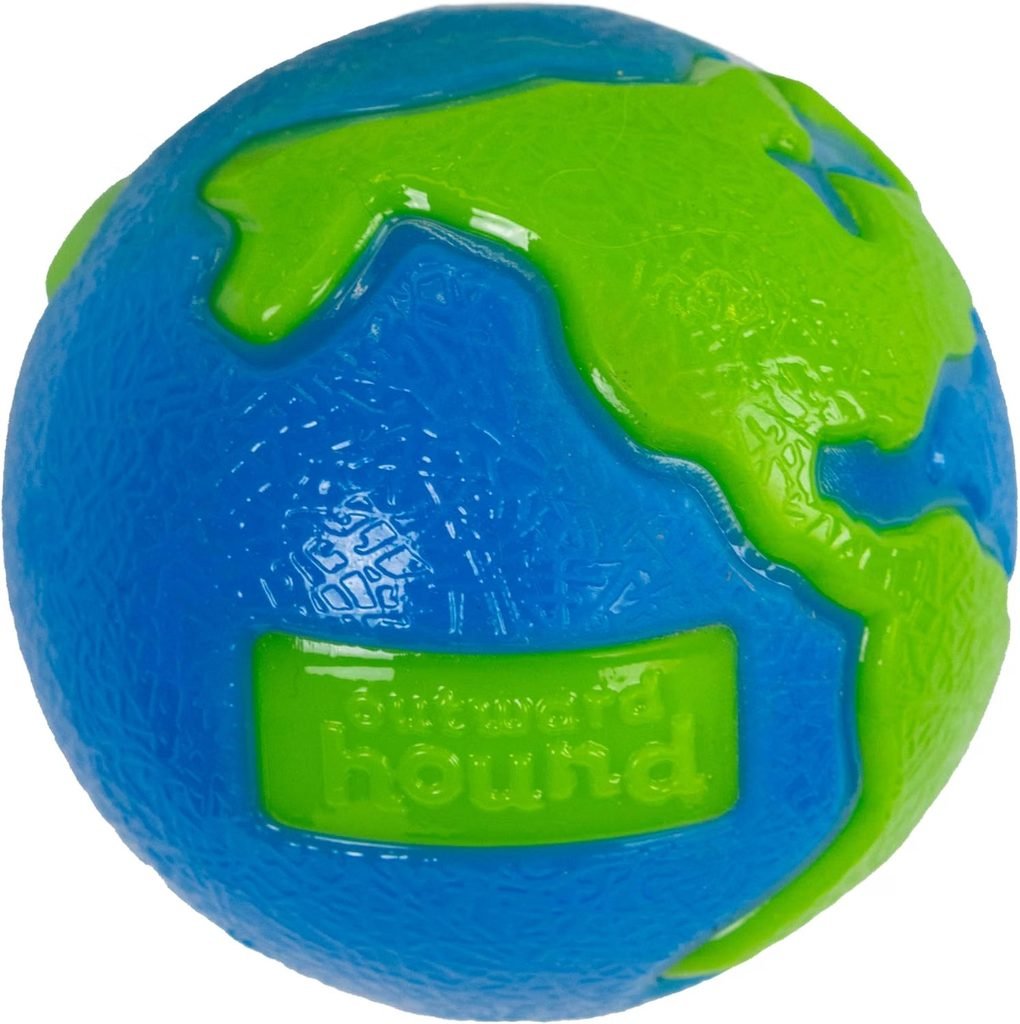
4. Planet Dog Orbee-Tuff Planet Ball — Best Gentle Sensory Chew
Best for: Dogs with weaker bite strength or dental issues common in senior years who still enjoy chewing and fetch-style play.
Price: Roughly $10–$15
Why it stands out: The soft, bouncy TPE material is gentle enough for a senior dog’s aging teeth and jaw compared to harder rubber or nylon chews, while still holding up to regular use. It can be stuffed with treats through a hole, turning simple chewing into a small problem-solving task, and the natural mint infusion offers a mild dental benefit during chewing. Its unpredictable bounce also provides light sensory stimulation and gentle physical activity that doesn’t require the sustained stamina a fetch session with a tennis ball would.
Key specs:
- Soft, bouncy TPE rubber (BPA, lead, and phthalate-free)
- Treat-stuffable through a single opening
- Natural mint oil infusion for breath freshening
- Multiple sizes; floats in water
Consider instead if: your dog has lost most interest in ball-style toys — the puzzles or snuffle mat above may hold attention better for a dog no longer motivated by fetch-style play.
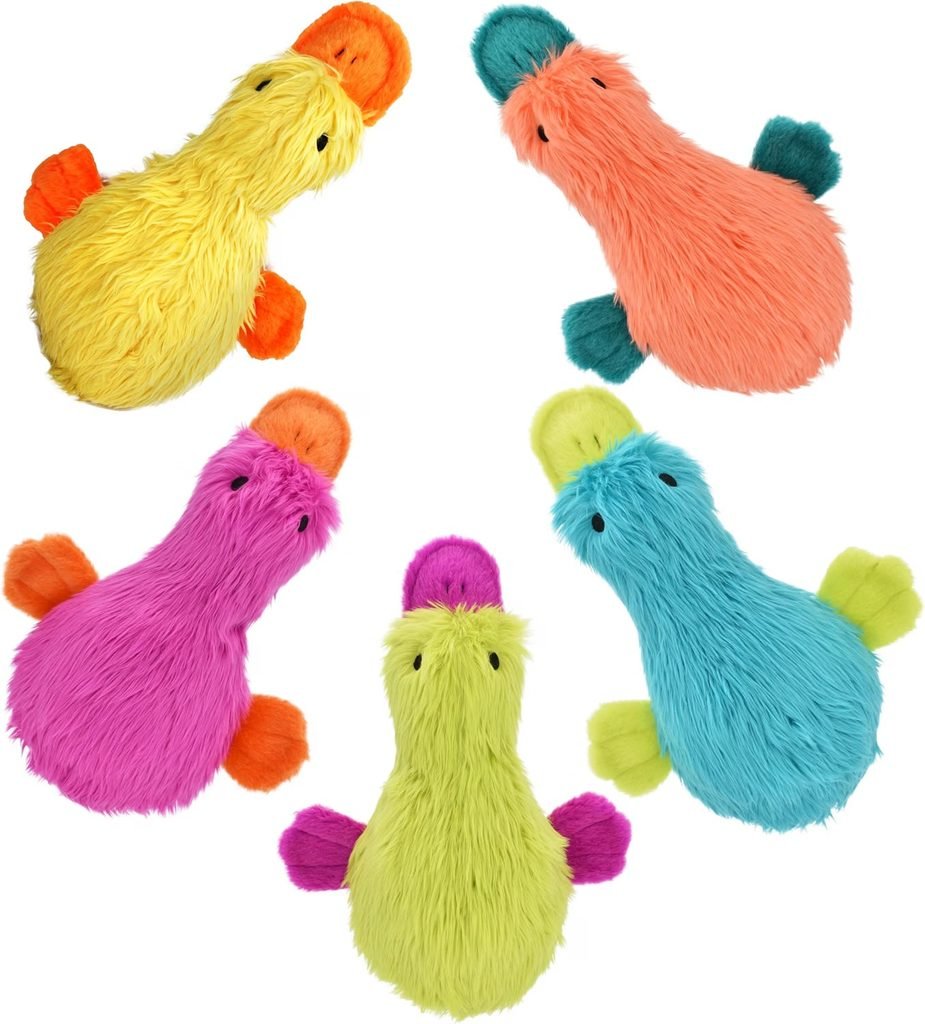
5. Multipet Duckworth Duck — Best Comfort Plush for Restlessness
Best for: Senior dogs showing nighttime restlessness or general anxiety alongside cognitive changes.
Price: Roughly $5–$15, depending on pack size
Why it stands out: Not every symptom of cognitive decline calls for a puzzle — restlessness and disorientation, especially at night, often respond better to a soft, familiar comfort object than to a mental challenge. The plush, squeaky duck gives a dog something gentle and low-effort to hold, carry, or settle with, which can help ease agitation without demanding the focus a puzzle requires. Its soft body is also easy on aging teeth and gums compared to firmer chew toys.
Key specs:
- Soft plush with internal squeaker
- 13-inch length, suited to most dog sizes
- Machine washable
- Available as a set of two
Consider instead if: your dog isn’t a plush-toy dog and prefers task-based engagement — the puzzles above will likely be more effective.
What to Look for in Toys for Senior Dogs with Cognitive Decline
- Prioritize easy wins over difficulty. The goal is confidence and engagement, not a hard challenge — a frustrated, confused dog will disengage rather than benefit.
- Favor toys that work from a lying-down position. Cognitive decline and reduced mobility often overlap in senior dogs; a toy that requires standing or fine motor control may go unused.
- Lean on scent. Smell tends to hold up better than other senses as dogs age, so scent-based enrichment (snuffle mats, hidden treats) often outperforms toys relying on vision or complex mechanics.
- Keep a consistent routine. Bringing out the same toy at the same time each day can provide helpful structure for a dog experiencing disorientation, beyond the toy’s direct mental benefit.
If your senior dog’s main challenge is joint pain and mobility rather than cognitive changes, see our Best Dog Car Seat Belts for Senior Dogs (2026) guide, or check out the full Best Dog Toys (2026): The Complete Buying Guide for every life stage and situation.
Note on pricing: Prices reflect approximate ranges at time of writing and may vary. Check the current listing for exact pricing.