
Most dog toys are designed around visual tracking — a bright color, a ball you can see arc through the air — which leaves a blind or visually impaired dog with far fewer toys that actually work for them. When a dog loses vision, whether from age, injury, or a condition present from birth, their other senses take on more of the load, and the toys that genuinely engage a blind dog lean into that: sound that helps them locate the toy, scent that gives them something to track and follow, and varied texture that keeps their mouth and paws interested even without sight guiding the play. One thing worth knowing before you start: some blind dogs are noise-sensitive and can find loud, sudden sounds startling rather than fun, so it’s worth introducing a new sound-based toy gently the first time rather than assuming louder is always better.
This post contains affiliate links. As an Amazon Associate, PurrYork Pets earns from qualifying purchases at no extra cost to you. See our Affiliate Disclosure for details.
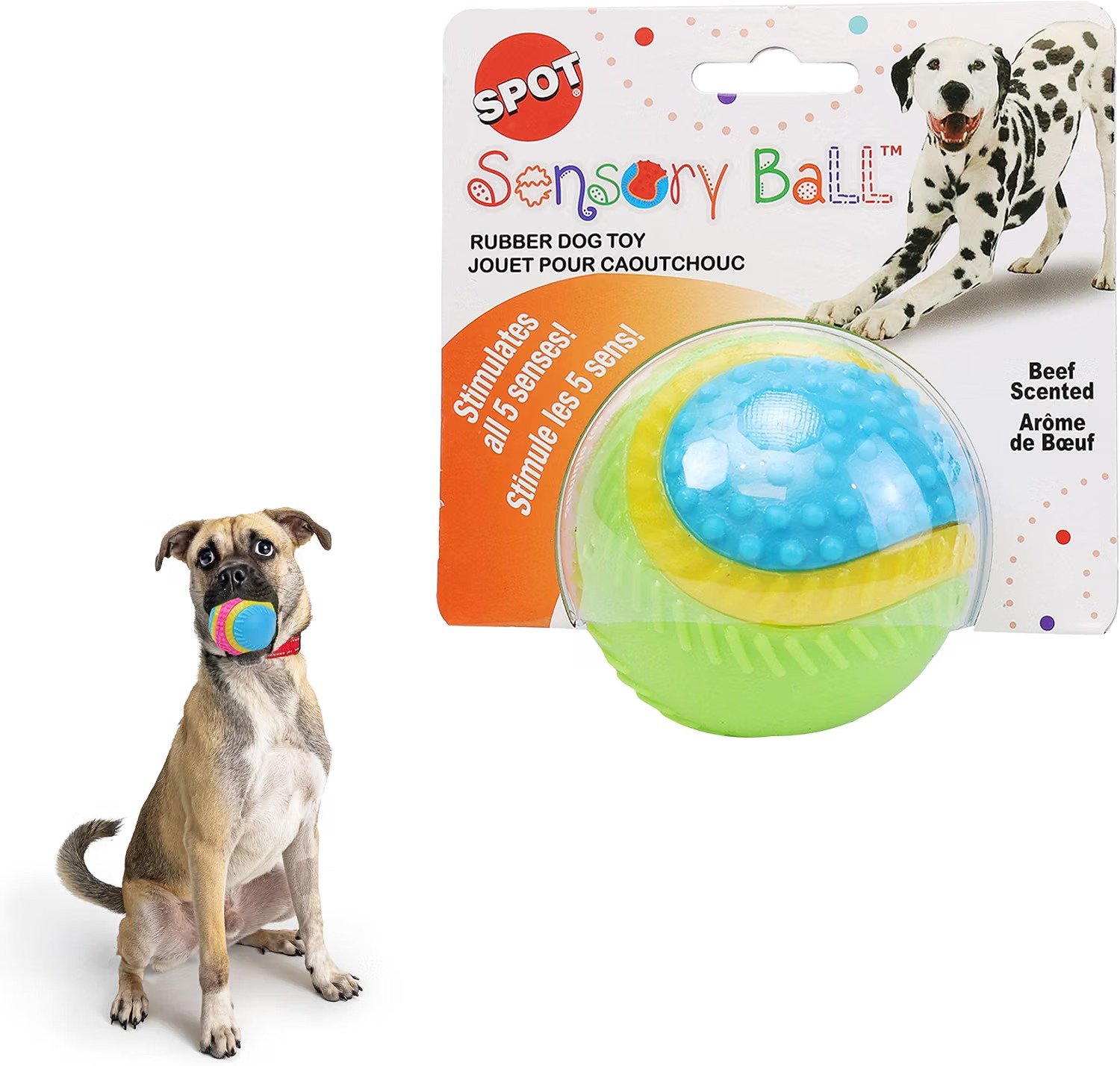
1. SPOT Sensory Ball Dog Toy — Best Overall
Best for: Most blind or visually impaired dogs, as a single toy that engages several senses at once.
Price: Roughly $8–$12
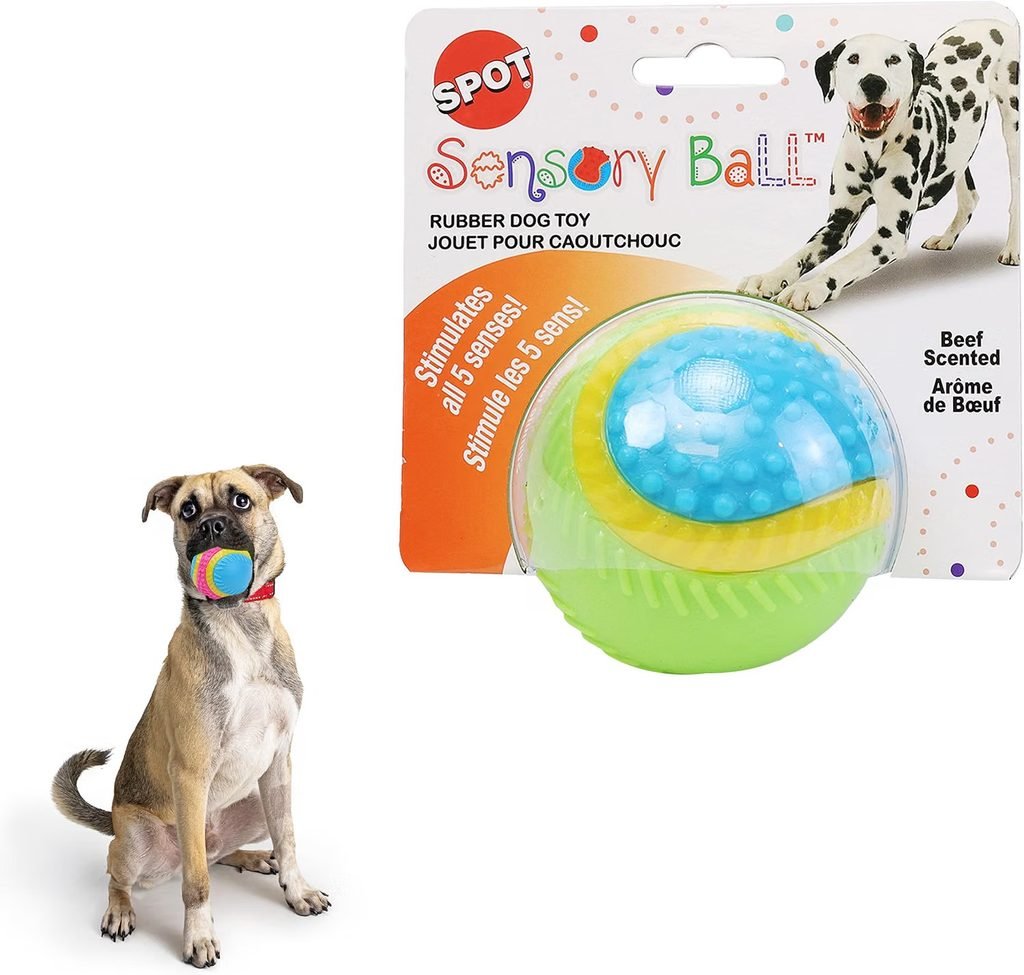
Why it stands out: This ball combines five separate sensory cues in one toy — a beef scent for nose work, multiple textured panels for interesting mouthfeel, an internal squeaker, and a jingle bell that sounds as it rolls — which means a dog has several different ways to locate and stay interested in it rather than relying on just one. That layered design matters specifically for blind dogs, since you don’t know in advance which sense your individual dog will respond to most strongly. It’s also durable enough for regular chewing, not just a novelty toy.
Key specs:
- Beef scent, multi-texture surface, internal squeaker, and jingle bell in one toy
- Durable rubber-based construction
- Sized for small to medium dogs
- No batteries required
Consider instead if: your dog is noise-sensitive — the combination of squeaker and bell may be more stimulation than a sound-averse dog wants; the Awoof Snuffle Mat below leans on scent alone instead.
2. Wobble Wag Giggle Ball — Best Sound-Based Fetch Toy
Best for: Blind dogs who enjoy chasing and batting a toy around by sound alone.
Price: Roughly $14–$20, depending on type
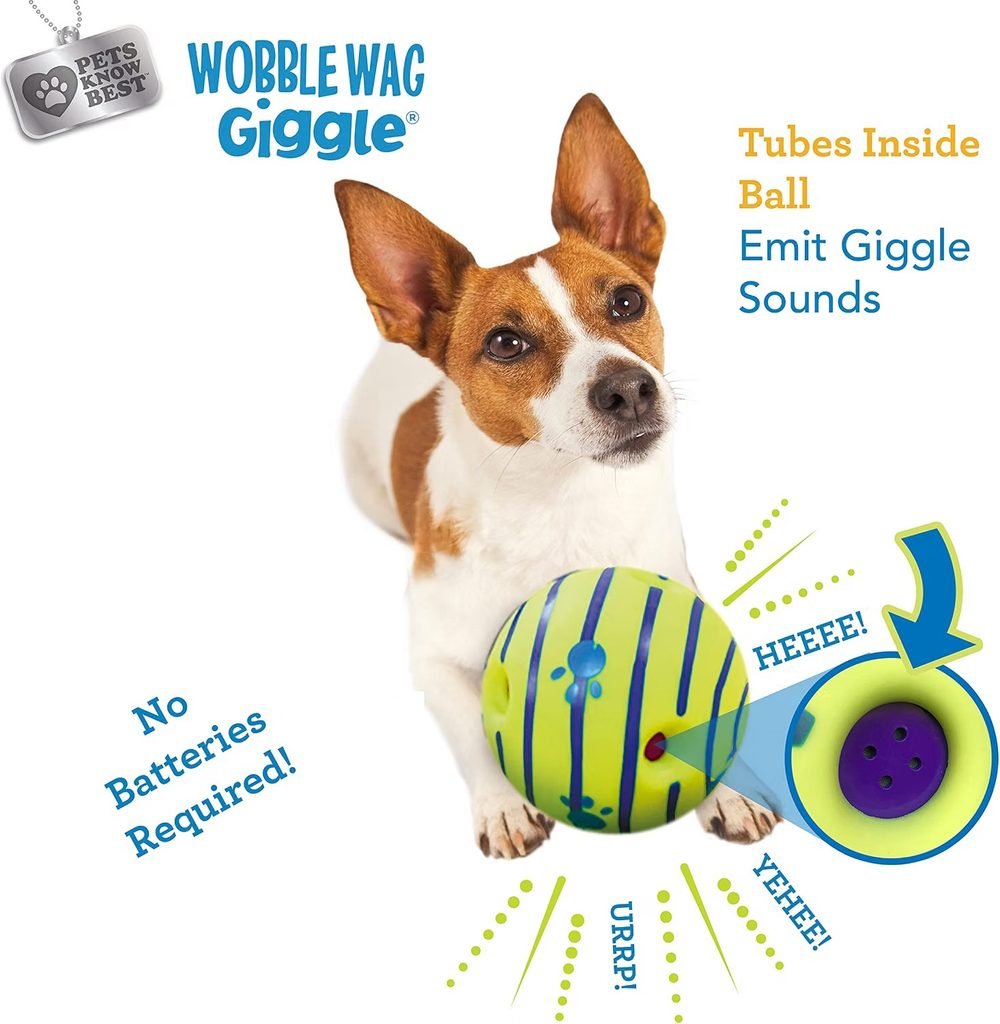
Why it stands out: An internal tube noisemaker produces a genuine giggling sound every time the ball moves, which gives a blind dog a continuous audio trail to follow as it rolls — unlike a toy that only makes noise when squeezed. Dogs typically nudge or paw at it to keep the sound going, turning solo play into an activity driven entirely by hearing rather than sight. It requires no batteries, so there’s nothing to replace or wear out beyond the ball itself.
Key specs:
- Internal tube noisemaker, sounds continuously while rolling
- No batteries required
- Suitable for small to large dogs
- Simple, durable construction
Consider instead if: your dog responds better to scent than sound — the Ethical Pets Sensory Ball above or the Awoof Snuffle Mat below lean more heavily on smell.
3. Pet Qwerks Animal Sounds Babble Ball — Best for Sound-Motivated Play
Best for: Blind dogs with a strong prey drive who respond well to unpredictable, varied sounds.
Price: Roughly $10–$15
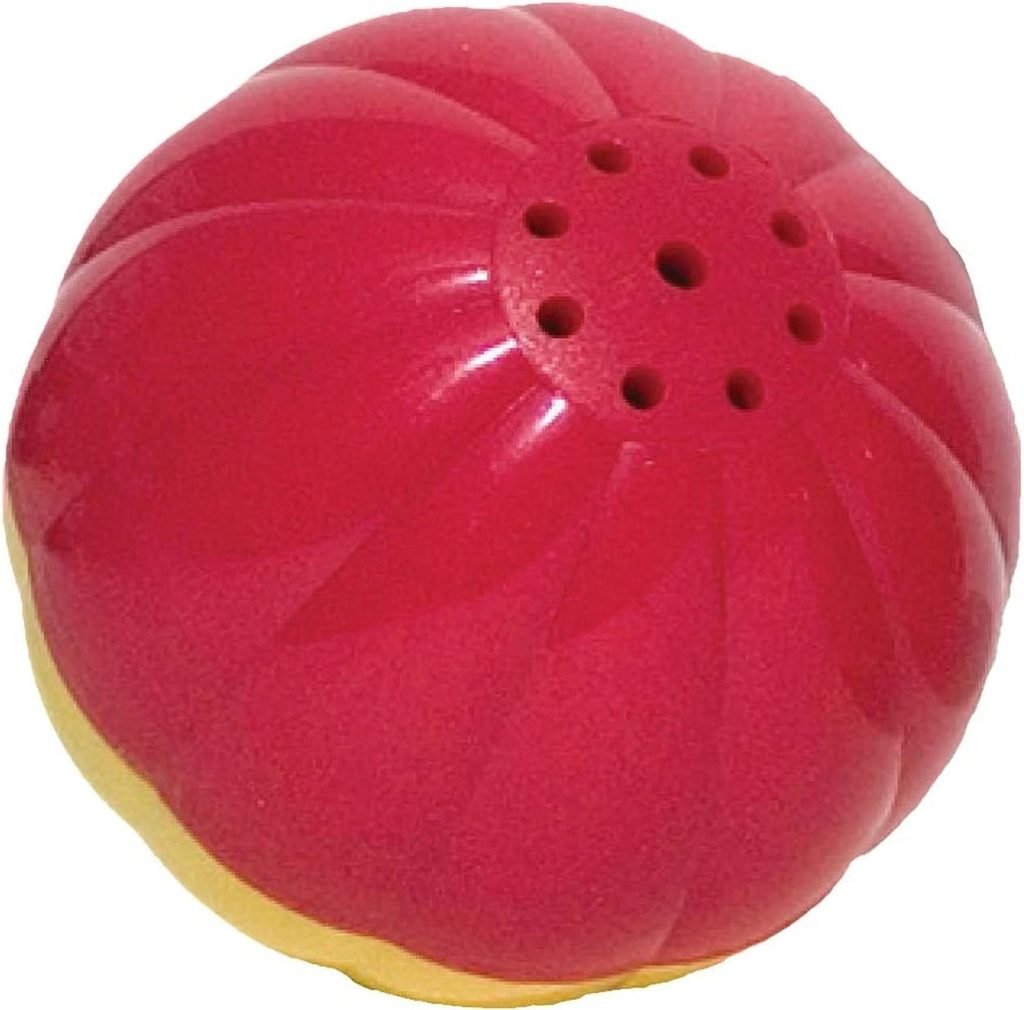
Why it stands out: Rather than one repetitive noise, this ball plays a rotating set of different animal sounds triggered by motion or pressure, which keeps a sound-driven dog curious in a way a single-tone squeaker can’t sustain over time. The unpredictability mimics some of the engagement a sighted dog gets from visually tracking a toy’s movement — your dog doesn’t know exactly what sound comes next, which helps hold attention during solo play.
Key specs:
- Multiple rotating animal sounds triggered by motion/pressure
- Battery-powered sound module
- Durable outer shell designed for chewing
- Available in multiple sizes
Consider instead if: your dog is easily startled by sudden or varied noise — the more predictable, gentler sound of the Wobble Wag Giggle Ball above may be a better starting point.
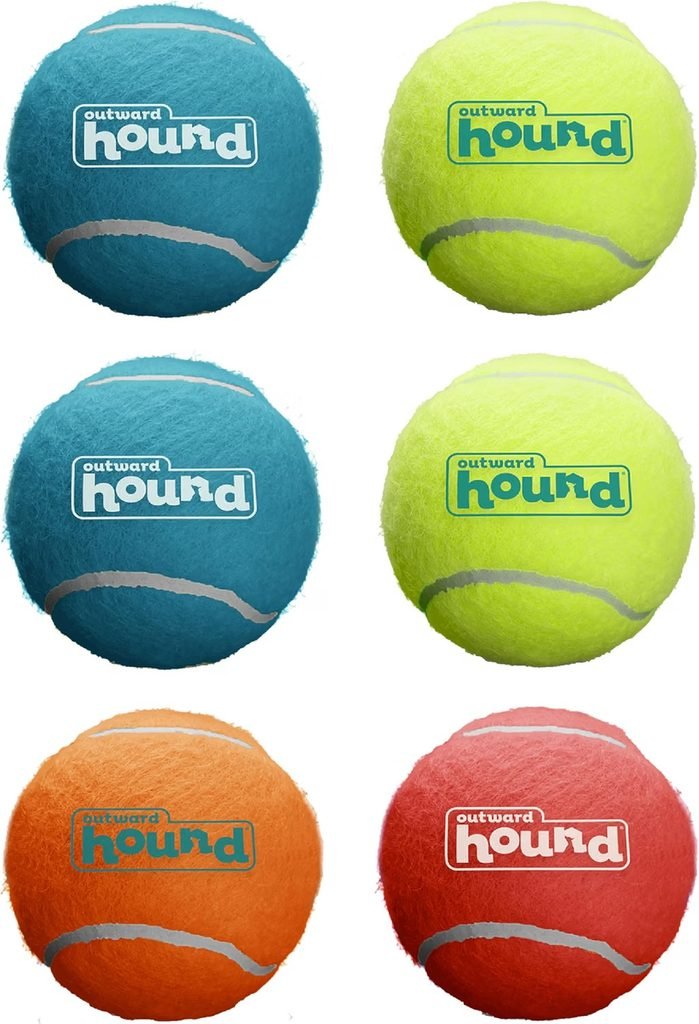
4. Outward Hound Squeaker Ballz — Best Durable Squeaky Fetch Ball
Best for: Blind dogs who still enjoy an active fetch-style game, guided entirely by sound.
Price: Roughly $8–$12 for a multi-pack
Why it stands out: Unlike a standard tennis ball, this rubber ball squeaks consistently and holds up to repeated chewing and retrieving, so a blind dog can keep locating it by sound over many play sessions rather than the squeaker failing early. It comes in a multi-pack and multiple sizes, which is useful both for replacing a lost or worn ball and for matching the size to your dog’s mouth. The rubber material also bounces less unpredictably than a tennis ball, which can make it easier for a blind dog to track by sound as it rolls to a stop.
Key specs:
- Durable rubber construction with a consistent squeak
- Sold in multi-packs, multiple sizes available
- Suitable for both indoor and outdoor play
- Holds up to regular chewing
Consider instead if: your dog prefers less active, closer-range play — the Ethical Pets Sensory Ball above is better suited to sniffing and mouthing in place rather than chasing.
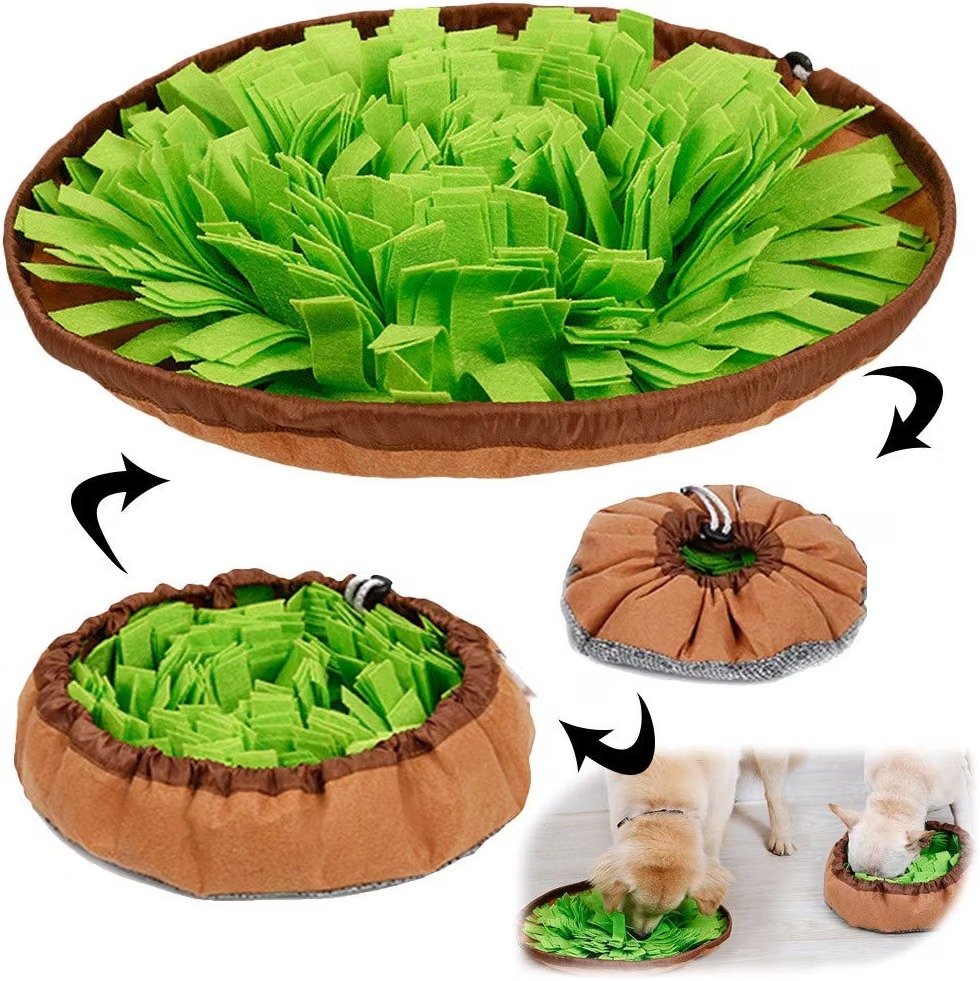
5. Awoof Dog Snuffle Mat — Best Scent-Based Enrichment
Best for: Blind dogs whose sense of smell is their strongest remaining tool for engaging with toys.
Price: Roughly $12–$18
Why it stands out: Scattering kibble or treats through the mat’s fabric strands turns a simple feeding routine into a genuine nose-work activity, which plays to what’s often a blind dog’s most reliable sense. Unlike sound-based toys, this doesn’t risk startling a noise-sensitive dog, and it can be laid out flat or shaped into more of a bowl for deeper digging and searching. It’s also a calmer, lower-energy activity than the fetch-style toys above, which suits a dog that prefers to work a puzzle in place rather than chase something around a room.
Key specs:
- Textured fabric strands hold scattered treats or kibble
- Can be used flat or shaped for deeper digging
- Machine washable
- No batteries, sound, or moving parts
Consider instead if: your dog needs more active engagement than a stationary mat provides — the fetch-style balls above give a blind dog a more physical activity to work with.
What to Look for in Toys for Blind or Visually Impaired Dogs
- Lean into sound and scent over color or visual design. A bright, eye-catching toy offers nothing extra to a dog who can’t see it — sound, smell, and texture are what actually matter.
- Introduce new sounds gently at first. Some blind dogs startle more easily than sighted dogs since they can’t visually anticipate what’s happening — test a new noisy toy at a lower intensity before assuming your dog will enjoy it.
- Keep toy locations consistent during play. Blind dogs build a mental map of familiar spaces, so introducing a new toy in a predictable spot (rather than an unfamiliar area) tends to build confidence faster.
- Combine senses when you can. A toy that offers scent, sound, and texture together — rather than just one — gives your dog more than one way to stay engaged if their preference isn’t obvious yet.
If your dog’s main challenge is cognitive rather than visual, see our Best Mentally Stimulating Toys for Senior Dogs with Cognitive Decline (2026) guide, or check out the full Best Dog Toys (2026): The Complete Buying Guide for every situation.
Note on pricing: Prices reflect approximate ranges at time of writing and may vary. Check the current listing for exact pricing.