
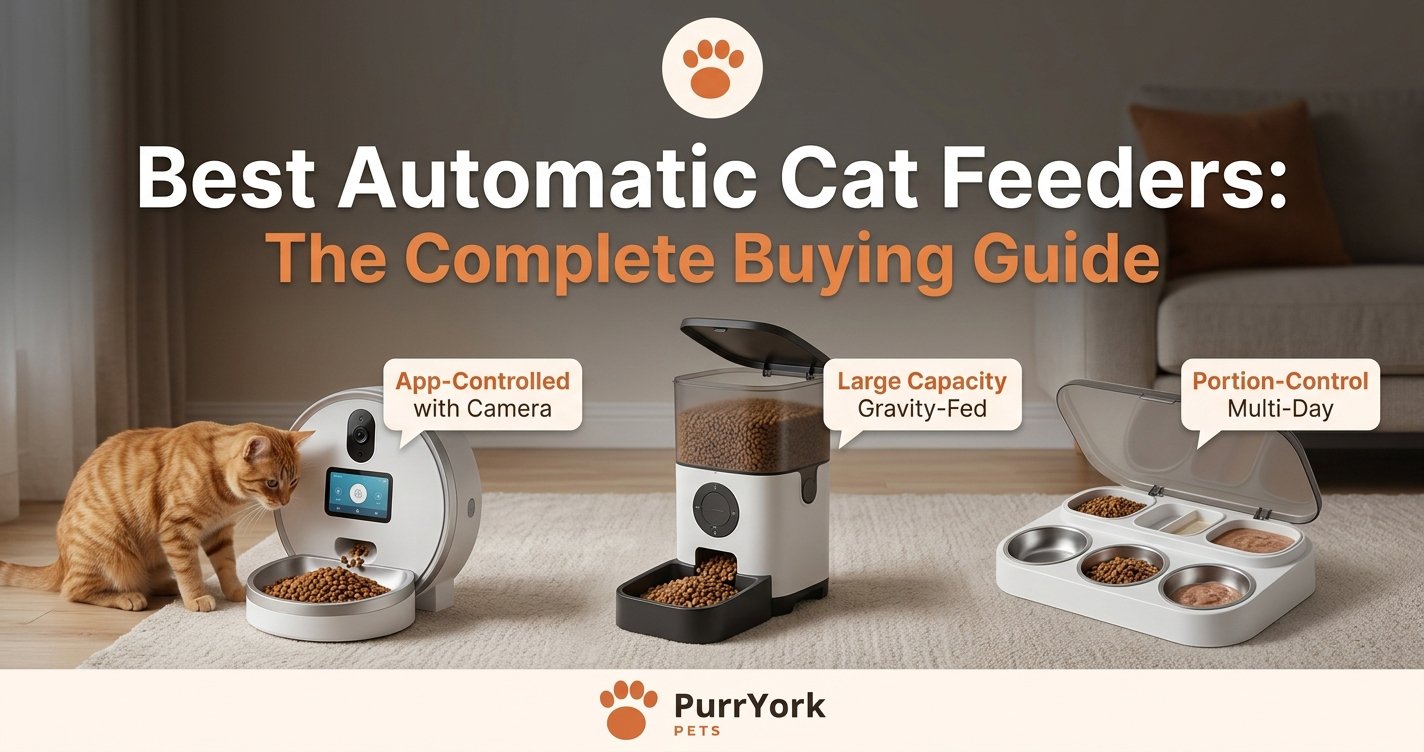
Cats like routine, and an automatic feeder can keep meals on time when you are at work, asleep, or away for the weekend. Some feeders also split the day into smaller meals, keep food away from another pet, or let you check in from your phone.
Automatic feeders are not magic, though. They can jam, lose power, or fail to connect, and they do not replace a person who checks on your cat. This guide explains how they work, who each type suits, what to check before you buy, and how to get your cat used to one. Each section links to a full review of the best options for that need.
Affiliate Disclosure: This post contains affiliate links. As an Amazon Associate, PurrYork Pets earns from qualifying purchases at no extra cost to you.
Quick Guide: Match Your Home to a Feeder
- You have more than one cat: try an automatic feeder for multiple cats.
- Your cat eats wet food: try an automatic wet food feeder.
- You want to control meals from your phone: try a WiFi automatic cat feeder.
- You want to see your cat eat: try an automatic cat feeder with a camera.
- Your cats are on different diets: try a microchip cat feeder.
- You want to spend less: try a budget automatic cat feeder.
How Automatic Cat Feeders Work
Most feeders fall into a few designs.
Dispenser feeders hold kibble in a tank and release a set portion into a bowl at the times you choose. They suit dry food and can hold several days of meals.
Tray or compartment feeders have separate compartments that open one at a time, so you load each meal in advance. They can handle wet food when they have ice packs or cooling.
Refrigerated feeders use built-in cooling to keep wet food cold until it is served.
Selective feeders open only for a particular cat, using a microchip or a collar tag.
Many also connect to an app that lets you change the schedule, record a voice message, and get alerts for low food or a jam.
Are Automatic Feeders Worth It?
They can be, if you want a reliable routine and you accept the limits.
What you gain: on-time meals, smaller portions through the day, fewer early wake-up calls, and in many models, alerts and tracking.
What you give up: a higher price than a bowl, more parts to clean, and a device that can fail. Prices run from under $50 for a basic timer to more than $250 for refrigerated and camera models.
What does not change: you still need to refill, clean, and check that it works. For trips, ask someone to check on your cat, because no feeder can notice a sick or injured cat.
Feeders for Multiple Cats
With several cats, one cat can eat another’s share, and cats on different diets can swap food. Look for separate bowls, equal portions, a large tank, and ideally a way to tell your cats apart. Most feeders dispense the same food to whichever cat arrives first, so cats on different diets need either separate feeders or a selective feeder.
See our full guide to the best automatic cat feeders for multiple cats.
Wet Food Feeders
Wet food spoils quickly at room temperature, so a feeder needs real cooling, either refrigeration or ice packs, and cooling only protects the meals you have not served. Once a lid opens, the food is at room temperature, so serve portions your cat finishes quickly and follow the food maker’s guidance on how long wet food can sit out. If your cat eats a raw diet or has a health condition, ask your vet first.
See our full guide to the best automatic wet food feeders for cats.
WiFi Feeders
A WiFi feeder lets you change the schedule, feed on demand, and see feeding history from your phone. Check which WiFi bands it supports, how it behaves if the internet or power goes out, and whether the app features need a subscription. A feeder that keeps its schedule offline is safer than one that depends on the connection.
See our full guide to the best WiFi automatic cat feeders.
Feeders With Cameras
A camera lets you see your cat eat, talk to them, and check that food came out. It also records inside your home, so check what is recorded, where video is stored, whether there is a cloud fee, and what privacy controls the app offers. Some cameras also recognize which cat is eating.
See our full guide to the best automatic cat feeders with cameras.
Microchip Feeders
A microchip or collar-tag feeder opens only for the right cat, which helps when one cat needs a prescription or weight-control diet. Check which microchip formats the feeder reads, whether it works with a collar tag, and whether you need one feeder per cat. They usually take a few days of training before a cat uses them confidently.
See our full guide to the best microchip cat feeders for multi-cat homes.
Budget Feeders
You do not need to spend a lot to get on-time meals. Cheaper feeders usually give up cameras, app control, and some safeguards, and they may have smaller tanks and shorter warranties. Check the kibble size range, how the feeder is powered, and recent reviews for jams.
See our full guide to the best budget automatic cat feeders.
How to Choose an Automatic Cat Feeder
Start with the food. Dry kibble works in most feeders. Wet food needs cooling. Check the kibble size a feeder accepts, since many have a limited range.
Think about your cats. One cat can use almost any feeder. Several cats may need separate bowls, recognition, or selective feeders.
Check capacity and meals. Make sure the tank or trays hold enough for the longest time you will be away, and that the number of meals fits your cat’s routine.
Look at power and backup. A feeder that runs on batteries during a power cut is safer. Read how each model behaves if the power or WiFi fails.
Decide what features you need. An app and a camera are bonuses. A simple timer is enough for many cats.
Ask your vet about portions. A feeder only dispenses what you set, so ask your vet how much your cat should eat, especially for kittens, seniors, or cats with health conditions or weight concerns.
Plan for cleaning. Kibble oils and dust build up, and wet food leaves residue. Choose parts that come off and wash easily. Our guide on how to clean an automatic cat feeder explains how, and our guide on how to choose an automatic cat feeder walks through the decision in more detail.
How to Get Your Cat Used to an Automatic Feeder
Most cats accept a feeder with a short introduction.
- Place the feeder where your cat usually eats, and leave the old bowl nearby at first.
- Run it with food while you are home, so your cat sees and hears how it works.
- Reward your cat for approaching, and let curious cats explore it.
- Start with a few meals a day, then move to your normal schedule.
- Test the feeder for several days before you travel, and watch for jams or missed meals.
If your cat avoids the feeder or eats much less, go back to the old bowl and talk to your vet.
Frequently Asked Questions
Do automatic cat feeders really work? Yes, for most cats. They keep meals on schedule, but you still need to refill, clean, and check on your cat.
Are automatic feeders safe to use when I travel? They can help for a day or two, but they can jam or lose power. Have someone check on your cat, especially on longer trips.
Can I use an automatic feeder for wet food? Some can, if they have refrigeration or ice packs. Most feeders are for dry kibble only, so check the listing.
How much should I feed my cat? It depends on your cat’s age, weight, and health. Ask your vet, and set the feeder to match.
Do I need WiFi or a camera? Not necessarily. A simple timer works for many cats, and WiFi and cameras are extras.
Final Thoughts
The right feeder depends on your cats, their food, and how you want to manage meals. Start with what matters most, whether that is wet food, several cats, a camera, or a low price, then browse the full guide for that need to compare options.
Ready to dive in? Start with our guides to multiple cats, wet food feeders, WiFi feeders, feeders with cameras, microchip feeders, and budget feeders.
4 thoughts on “Best Automatic Cat Feeders: The Complete Buying Guide”