
In a multi-cat home, mealtime can turn into a contest. One cat finishes fast and moves on to the other cat’s bowl, and a cat on a special diet ends up eating food it should not. A selective feeder opens only for the right cat, using either the microchip under your cat’s skin or a lightweight tag on its collar.
These feeders work differently from timed dispensers, and they take some setup and patience. Below are 5 options worth considering, with honest notes on each. If you want to compare other types, start with our complete guide to the best automatic cat feeders.
Affiliate Disclosure: This post contains affiliate links. As an Amazon Associate, PurrYork Pets earns from qualifying purchases at no extra cost to you.
1. SureFlap SureFeed Microchip Pet Feeder: Best Overall
Price Range: $150 to $200
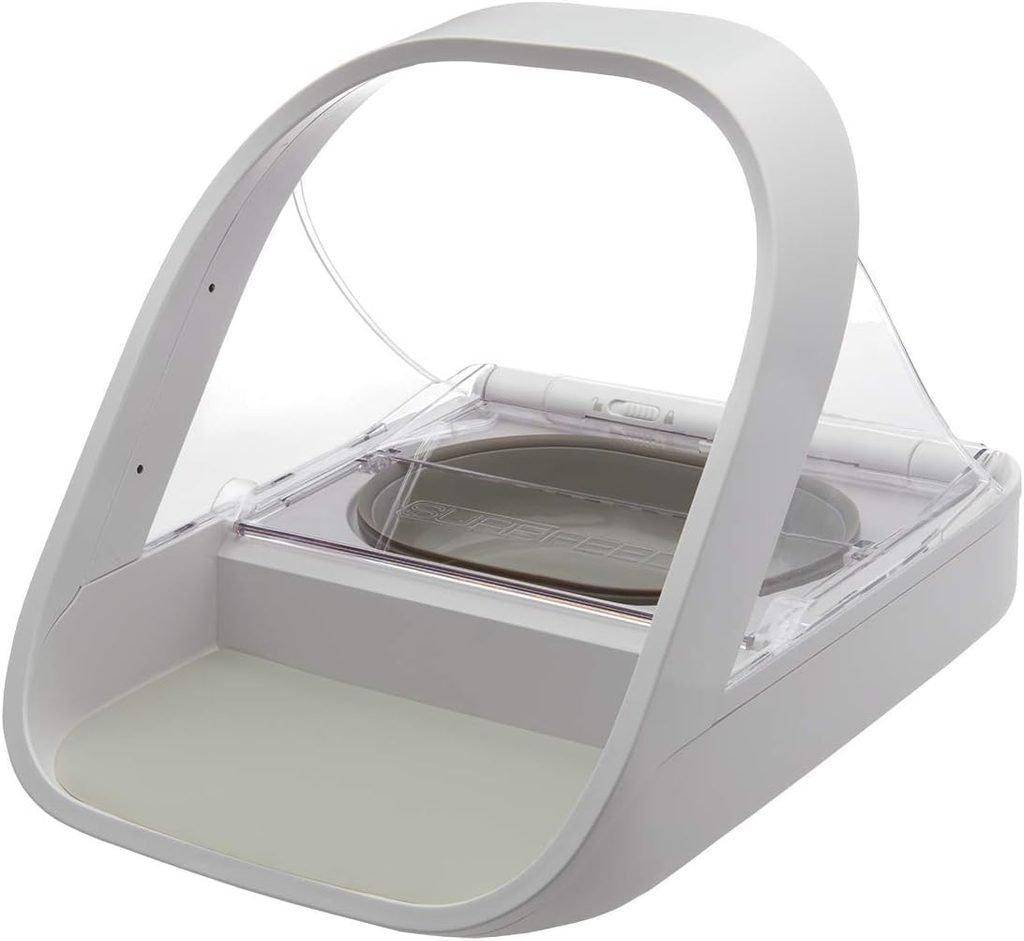
The SureFeed is the best known microchip feeder, with a 4.2 out of 5 rating from more than 13,000 ratings. The lid opens when your assigned pet’s microchip or collar tag approaches and closes when the pet moves away. It reads 9-digit (Avid Secure), 10-digit (FDXA), and 15-digit (FDXB) microchip numbers, and one tag comes in the box. It stores up to 32 IDs. It holds 13.5 fluid ounces of wet or dry food, and the lid closes against a neoprene lip to keep food fresher. The listing says it has a three-year warranty and calls it veterinarian recommended. The maker suggests one feeder per pet.
What we like
- Works with several microchip formats, or a collar tag
- Handles both wet and dry food
- Sealed lid, and a three-year warranty
- A large number of ratings
Watch out for
- It is a selective bowl, not a timed dispenser, so you fill it yourself
- The maker suggests one feeder per pet, which adds up
- Holds a small amount of food, so it suits meals and not all-day feeding
Best for: Homes with a cat on a prescription or weight-control diet, including cats that eat wet food.
2. SureFeed Microchip Pet Feeder Connect: Best for Tracking Portions
Price Range: $200 to $250 (the required hub costs extra)
The Connect version adds scales and the Sure Petcare app. You set a portion size in the app, and LEDs guide you to the right weight when you fill the bowl, to within about 1 gram, according to the listing. The built-in scales record what each pet eats, which may help you notice changes in feeding, though it is not a medical tool and you should talk to your vet about any concern. It reads microchips or a collar tag and holds 13.5 fluid ounces of wet or dry food. It has a 4.1 out of 5 rating from about 960 ratings. The listing says a hub, sold separately, is required to connect to the app.

What we like
- Built-in scales and portion guidance
- Feeding data in the app
- Works with microchips or a collar tag, and with wet or dry food
Watch out for
- The hub is required and sold separately, which raises the real cost
- Priced well above the standard version
- Fewer ratings than the standard feeder
Best for: Owners who want to track and control portions closely.
3. PAWSPIK Automatic Microchip RFID Cat Feeder: Best Large-Capacity Pick
Price Range: $200 to $300
The PAWSPIK is built to hold much more food than the SureFeed. It has a 16-cup capacity, a backup battery that keeps it running in a power cut, and app scheduling for up to 10 meals a day with set portions. It reads only ISO-compliant 15-digit microchips and comes with a PawsPik RFID tag for cats without a compatible chip. Each feeder pairs with a single chip or tag, so you need one feeder per pet. It has a closed mode, which opens only for the authorized pet, and an open mode, which stays open unless an unauthorized pet approaches. It has a 4.0 out of 5 rating from about 190 ratings.

What we like
- Large 16-cup capacity and a backup battery
- App scheduling and portion control
- Closed and open modes
- Includes an RFID tag
Watch out for
- Reads only 15-digit ISO microchips, so check your cat’s chip number
- One feeder per pet, and the highest price here
- Fewer ratings and a 4.0 average
Best for: One cat that needs its own scheduled, large-capacity feeder.
4. PETLIBRO RFID Automatic Cat Feeder: Best Collar-Tag Pick (No Microchip)
Price Range: $100 to $150
This PETLIBRO feeder does not read microchips. It works only with the collar tag in the box, and the feeder opens only when the designated cat approaches. The app tracks each cat’s eating, and dual-band WiFi (2.4 and 5 GHz) supports remote control and low-food alerts. It has a 3-liter container, which the listing says is about two weeks of food for one cat, and a backup battery for power or internet outages. Packs of two to four are available, with a 4.1 out of 5 rating from more than 19,000 ratings.

What we like
- The lowest price here, with packs for several cats
- App tracking and WiFi alerts
- Backup battery
- A very large number of ratings
Watch out for
- It does not read microchips, and works only with the provided collar tag
- Your cat has to wear the tag all the time
- A 4.1 rating
Best for: Cats that already wear a collar, and owners who want a lower price and app features.
5. Invengo RFID Automatic Cat Feeder: Best Scheduled Dispenser That Reads Microchips
Price Range: $250 to $350
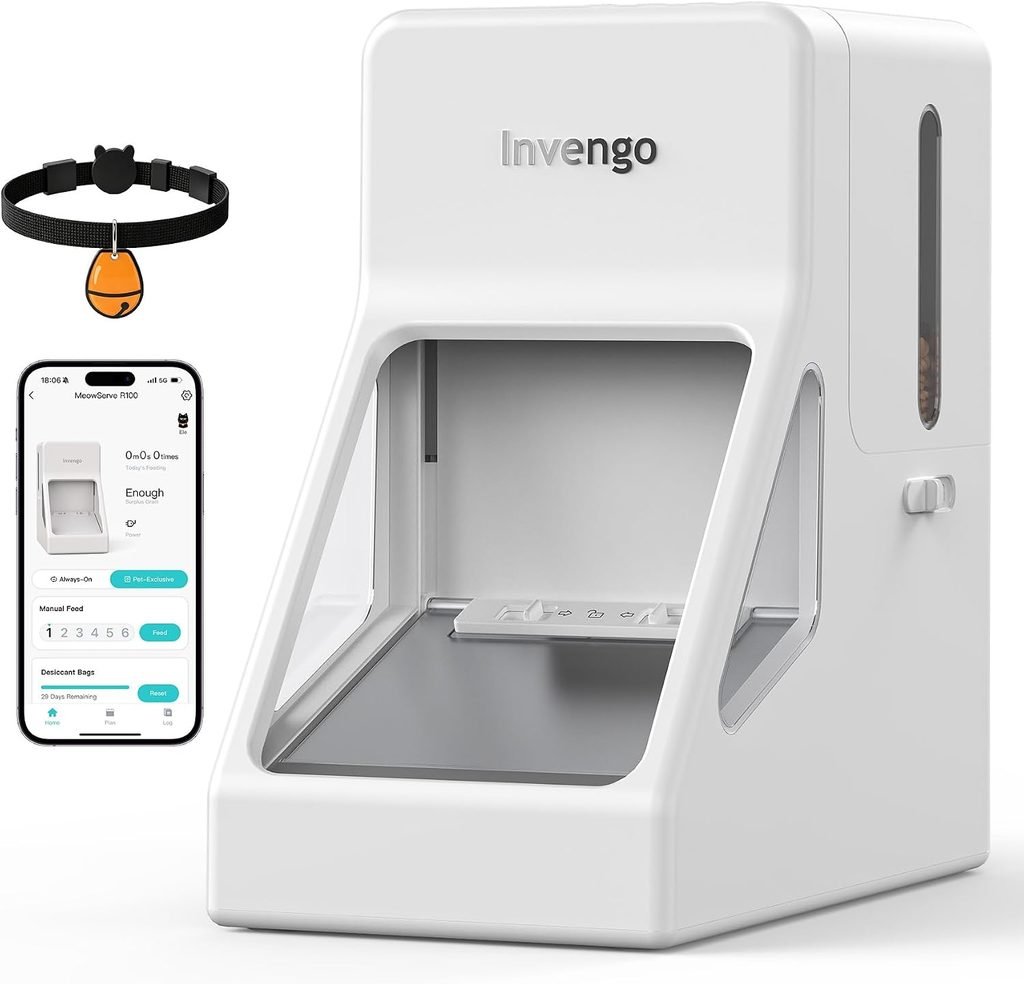
The Invengo is a scheduled dispenser that also reads microchips, which makes it different from the SureFeed bowls. The listing says it works with 125 kHz and 134.2 kHz microchips and with an RFID collar tag, and it unlocks only for the paired cat, with one feeder per cat. The app logs who ate, when, and how much, sends alerts, and gives daily and weekly feeding reports that may help you spot changes in appetite, though they are not a diagnosis, so talk to your vet about any concern. It supports 2.4 GHz and 5 GHz WiFi, scheduled meals with set portions, and has sensors that watch the food level and send low-food and jam alerts. The listing describes it as made for dry prescription food. It has a 4.7 out of 5 rating, but from only 14 ratings.
What we like
- Reads microchips or a collar tag, and dispenses on a schedule
- App tracking, reports, and alerts for low food and jams
- Dual-band WiFi
Watch out for
- Only 14 ratings, so durability and support are unproven
- The most expensive pick here, at about $300
- One feeder per cat, and made for dry food
Best for: Owners who want scheduled meals, tracking, and microchip access for a cat on a dry prescription diet.
How to Choose a Microchip Cat Feeder
Know your cat’s microchip number. Microchips use different formats, and not every feeder reads every one. Some read 9, 10, and 15-digit numbers, and others read only 15-digit ISO chips. Ask your vet or the registry if you are unsure, and check the listing before you buy.
Decide between microchip and collar tag. A microchip reader means no tag to lose, but some cats need the chip close to the reader. A collar tag is simple, but your cat has to wear it, and tags can get lost.
Plan for one feeder per cat. Most selective feeders pair with one pet, so a three-cat home may need three feeders. See our guide to automatic feeders for multiple cats for options that serve several cats at once.
Think about wet or dry food. Some selective feeders hold both, and some are for dry food only. Wet food should not sit out too long, so follow the food maker’s guidance, and see our guide to automatic wet food feeders.
Check the features. Some feeders dispense on a schedule, while others are selective bowls you fill yourself. For app control and WiFi, see our guide to WiFi automatic cat feeders, and for video, see our guide to automatic cat feeders with cameras.
Ask your vet about diets. A feeder keeps the right cat at the right bowl, but your vet should set portions and diet for any cat with a health condition or weight plan.
Train your cat. Most cats need a few days to learn a feeder. Start with the lid open, reward your cat for approaching, and close it gradually. If you are comparing options, see our guide on how to choose an automatic cat feeder, and on a tight budget, see our guide to budget automatic cat feeders. Keep it clean with our guide on how to clean an automatic cat feeder.
Frequently Asked Questions
How does a microchip cat feeder work? It has a reader that detects your cat’s microchip or collar tag. When your assigned cat approaches, the lid opens, and it closes when the cat leaves.
Do I need a microchip, or can I use a collar tag? Many feeders work with either. Some work with only a collar tag, and some read only certain microchip formats, so check the listing.
Can one feeder serve several cats? Most pair with one pet, so you usually need one feeder per cat. Some feeders store several IDs, but check the maker’s guidance.
Can I use a microchip feeder for wet food? Some can. Check that the feeder is made for wet food, and remember that wet food should not sit out too long.
How long does it take for a cat to learn a microchip feeder? It varies, from a few days to a few weeks. Go slowly, use treats, and keep the lid open at first.
Final Thoughts
For most multi-cat homes, the SureFeed is the best all-around pick, thanks to its many reviews and its ability to hold wet or dry food. If you want portion tracking, the Connect version adds scales, and the PAWSPIK offers a large capacity and scheduling. The Invengo is a scheduled dispenser that reads microchips, though it has few ratings so far. The PETLIBRO is the lowest-priced option, as long as your cat will wear a collar tag.
Looking for more? Browse our complete guide to the best automatic cat feeders, or see our reviews of feeders for multiple cats, wet food feeders, and WiFi feeders.